By using this site, you agree to the Privacy Policy and Terms of Use.
Accept
GMJ NewsGMJ NewsGMJ News
  • Latest News
    • GMJ Briefs
  • Podcast & Media
    • Podcast Episodes
    • GMJ Audio
    • GMJ Videos
  • Research Digest
    • New Studies
    • Georgian Research
    • Data & Numbers
  • Policy & Systems
    • Health Policy
    • Quality & Safety
    • Migration & Health
    • Global Health
  • Practice
    • Clinical Updates
    • Case Discussions
    • Pharmacy & Prescribing
    • Ingredients A-Z
  • Perspectives
    • Editorial
    • Explainers
    • Voices
    • Letters
  • GMJ Articles
    • Vol. 1 Issue 2 (2026)
    • Vol. 1 Issue 1 (2026)
    • Pre-Launch Articles (2025)
  • Read the Journal →
  • About GMJ News
Notification Show More
Font ResizerAa
GMJ NewsGMJ News
Font ResizerAa
  • Latest News
    • GMJ Briefs
  • Podcast & Media
    • Podcast Episodes
    • GMJ Audio
    • GMJ Videos
  • Research Digest
    • New Studies
    • Georgian Research
    • Data & Numbers
  • Policy & Systems
    • Health Policy
    • Quality & Safety
    • Migration & Health
    • Global Health
  • Practice
    • Clinical Updates
    • Case Discussions
    • Pharmacy & Prescribing
    • Ingredients A-Z
  • Perspectives
    • Editorial
    • Explainers
    • Voices
    • Letters
  • GMJ Articles
    • Vol. 1 Issue 2 (2026)
    • Vol. 1 Issue 1 (2026)
    • Pre-Launch Articles (2025)
  • Read the Journal →
  • About GMJ News
Follow US
GMJ News > GMJ Briefs > One Typhoon, 5,131 Cases: The Hidden Cost of Cyclone-Driven Dengue Outbreaks

One Typhoon, 5,131 Cases: The Hidden Cost of Cyclone-Driven Dengue Outbreaks

GMJ
Last updated: 24/07/2026 21:52
By
Prof. Giorgi Pkhakadze
Share
1 Min Read
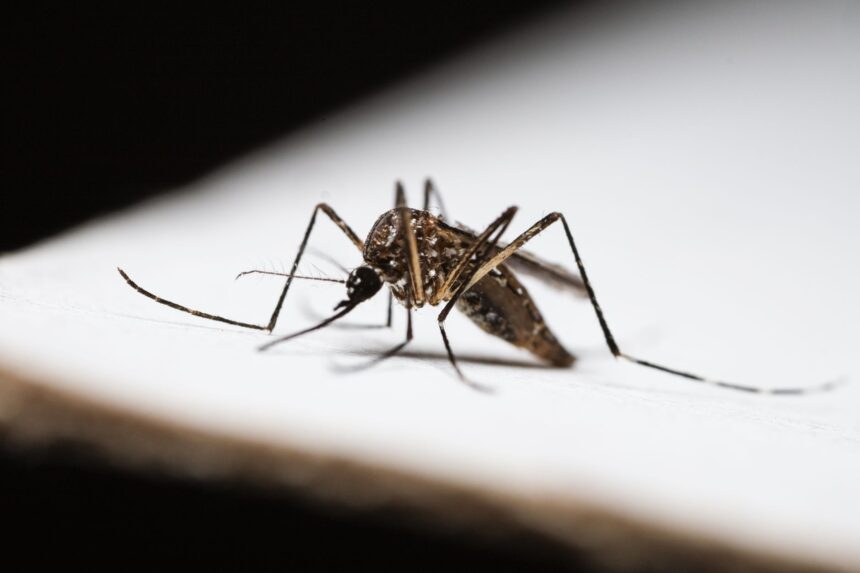
Aedes albopictus mosquito and typhoon weather pattern overlay showing transmission amplification
Field experiments in Guangzhou show that tropical cyclones increase dengue-transmitting mosquito flight distance by 63% and human contact rates by 30%, driving outbreaks that cost millions. Enhanced vector control during cyclone forecasts could avert tens of thousands of cases. — Photo by Ignacio Vazquez on Pexels (Pexels License)
SHARE
1 min read|114 words

A single tropical cyclone can trigger thousands of excess dengue cases—a finding that reshapes how epidemiologists view cyclone-disease interactions. During Typhoon Kalmaegi in Guangzhou, 2014, field entomology and dynamic modelling revealed a 63% increase in Aedes albopictus flight distance and a 30.1% rise in human-mosquito contact rates. These behavioral shifts drove an estimated 5,131 excess dengue cases beyond baseline projections, costing the health system US$1.93 million. The basic reproduction number (R₀) increased from 1.10 to 1.29 during the event. Most significantly, targeted vector control deployment during cyclone forecasts could have prevented 59,360 cases across multiple outbreak scenarios, saving US$20.91 million. These figures demonstrate that climate-aware vector management represents one of the most cost-effective public health interventions available to cyclone-prone regions.

Was this article helpful?

GMJ Brief · Key Finding

📰 Read the full article: Tropical Cyclones Dramatically Amplify Dengue Transmission, Study Finds →

Share This Article
Facebook LinkedIn Bluesky Copy Link Print
GMJ
ByProf. Giorgi Pkhakadze
Follow:
Prof. Giorgi Pkhakadze, MD, MPH, PhD, is Editor-in-Chief of the Georgian Medical Journal and Chair of the Public Health Institute of Georgia (PHIG). He is Professor and Head of the Department of Social and Behavioural Sciences at David Tvildiani Medical University, and Secretary/Treasurer of the UEMS Section of Public Health. ORCID: 0000-0001-7609-4515.

Submit Your Paper →

Georgia's peer-reviewed open-access medical journal. No APC until January 2027.
Submit Manuscript →
Taurine and Cancer: Separating Laboratory Findings from Dietary Risk

Recent headlines claimed taurine fuels cancer, but a Nature study of leukemia…

Sleep deprivation damages multiple body systems simultaneously, six controlled studies show

Six controlled studies show that sleep deprivation simultaneously disrupts hormonal regulation, metabolic…

How Vitamins and Minerals Power Brain Chemistry: The Neurotransmitter Connection

Vitamins B6, B12, folate, and minerals including zinc, magnesium, and iron function…

Submit Your Paper to GMJ

No APC until January 2027.
Submit Manuscript →

You Might Also Like

Global HIV/AIDS response challenges visualization showing funding cuts as primary threat

UN Sounds Alarm as Global HIV Response Faces Critical Funding Crisis

By
Prof. Giorgi Pkhakadze
04/07/2026
Scientific illustration showing amino acid pathways in brain neurotransmitter synthesis

What You Need to Know: How Amino Acids Directly Impact Your Brain Performance

By
Prof. Giorgi Pkhakadze
27/06/2026
Dexcom G7 continuous glucose monitoring sensor with FDA safety alert overlay

What Patients Should Know About the Dexcom G7 Sensor Theft

By
Prof. Giorgi Pkhakadze
07/07/2026
Medical professionals handling blood donation equipment in modern healthcare facility

Data Show Alarming Gap Between Blood Donation Targets and Reality Across Americas

By
Prof. Giorgi Pkhakadze
12/07/2026
Facebook Twitter Youtube Instagram
Company
  • Privacy Policy
  • Contact US
  • GMJ Journal
  • Submit Manuscript
  • Editorial Team
  • Register at GMJ
  • Terms of Use

Subscribe to GMJ News — Click here

Join Community
© 2026 Georgian Medical Journal (GMJ). Published by the Public Health Institute of Georgia (PHIG). All rights reserved.
Welcome Back!

Sign in to your account

Username or Email Address
Password

Lost your password?

Not a member? Sign Up