By using this site, you agree to the Privacy Policy and Terms of Use.
Accept
GMJ NewsGMJ NewsGMJ News
  • Latest News
    • GMJ Briefs
  • Podcast & Media
    • Podcast Episodes
    • GMJ Audio
    • GMJ Videos
  • Research Digest
    • New Studies
    • Georgian Research
    • Data & Numbers
  • Policy & Systems
    • Health Policy
    • Quality & Safety
    • Migration & Health
    • Global Health
  • Practice
    • Clinical Updates
    • Case Discussions
    • Pharmacy & Prescribing
    • Ingredients A-Z
  • Perspectives
    • Editorial
    • Explainers
    • Voices
    • Letters
  • Health Topics
  • GMJ Articles
    • Vol. 1 Issue 2 (2026)
    • Vol. 1 Issue 1 (2026)
    • Pre-Launch Articles (2025)
  • Read the Journal →
  • About GMJ News
Notification Show More
Font ResizerAa
GMJ NewsGMJ News
Font ResizerAa
  • Latest News
    • GMJ Briefs
  • Podcast & Media
    • Podcast Episodes
    • GMJ Audio
    • GMJ Videos
  • Research Digest
    • New Studies
    • Georgian Research
    • Data & Numbers
  • Policy & Systems
    • Health Policy
    • Quality & Safety
    • Migration & Health
    • Global Health
  • Practice
    • Clinical Updates
    • Case Discussions
    • Pharmacy & Prescribing
    • Ingredients A-Z
  • Perspectives
    • Editorial
    • Explainers
    • Voices
    • Letters
  • Health Topics
  • GMJ Articles
    • Vol. 1 Issue 2 (2026)
    • Vol. 1 Issue 1 (2026)
    • Pre-Launch Articles (2025)
  • Read the Journal →
  • About GMJ News
Follow US
GMJ News > GMJ Briefs > Plants Send Chemical SOS: How Glutamate Triggers Plant-Wide Distress Response

Plants Send Chemical SOS: How Glutamate Triggers Plant-Wide Distress Response

GMJ
Last updated: 03/08/2026 07:29
By
Prof. Giorgi Pkhakadze
Share
1 Min Read
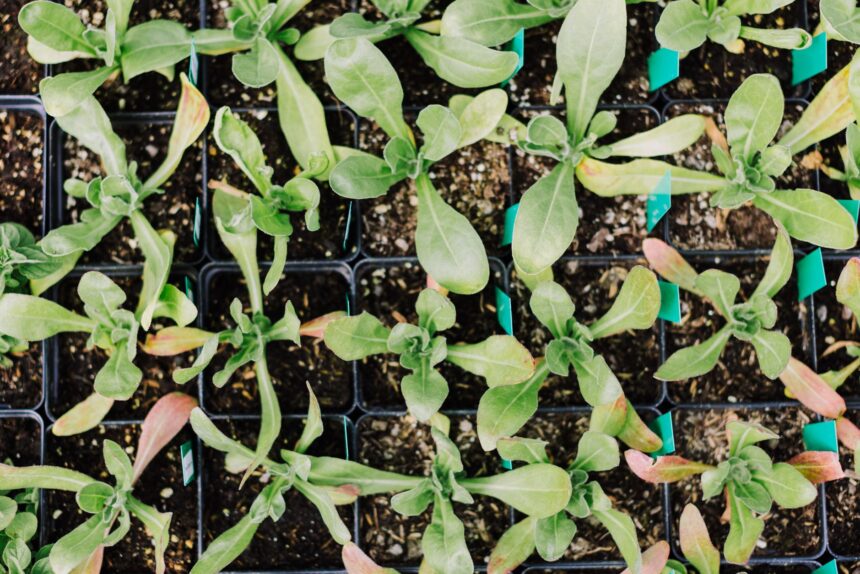
Diagram showing glutamate-mediated calcium signaling in plant leaf tissue after mechanical injury
Plants deploy a glutamate-mediated calcium signaling system to detect injury and coordinate rapid defensive responses—using the same amino acid neurotransmitter found in human brains, demonstrating convergent evolution of communication strategies across vastly different organisms. — Photo by K on Pexels (Pexels License)
SHARE
1 min read|111 words

When a plant leaf sustains injury, a sophisticated biochemical alarm system activates within seconds. Glutamate—the same neurotransmitter that mediates communication in the human brain—is released from damaged cells, spreading throughout the plant organism. This molecular messenger triggers rapid calcium waves that propagate through stems and leaves, orchestrating a coordinated defense response across distant tissues. Genes responsible for repair and protection are activated, allowing the plant to mount an effective biological defense against further damage. This remarkable parallel to human neural signaling demonstrates that evolution has independently arrived at identical molecular solutions to the fundamental problem of threat detection and response, despite plants and animals representing fundamentally different biological systems.

Was this article helpful?

GMJ Brief · Announcement

📰 Read the full article: How Plants Send Electrical Distress Signals After Injury—Using the Same Molecule as Human Nerves →

Related reference
  • Calcium · Ingredient
  • SAMe · Ingredient
Share This Article
Facebook LinkedIn Bluesky Copy Link Print
GMJ
ByProf. Giorgi Pkhakadze
Follow:
Prof. Giorgi Pkhakadze, MD, MPH, PhD, is Editor-in-Chief of the Georgian Medical Journal and Chair of the Public Health Institute of Georgia (PHIG). He is Professor and Head of the Department of Social and Behavioural Sciences at David Tvildiani Medical University, and Secretary/Treasurer of the UEMS Section of Public Health. ORCID: 0000-0001-7609-4515.

Submit Your Paper →

Georgia's peer-reviewed open-access medical journal. No APC until January 2027.
Submit Manuscript →
AI Mental Health Tools Are Not Therapy: Why Clinicians Warn Against Substitution

Mental health professionals warn that artificial intelligence conversational systems cannot replace clinical…

Late-life breast cancer screening reveals diagnosis in 79-year-old woman

A 79-year-old woman in the United Kingdom discovered breast cancer after self-initiating…

Rare pelvic tumour safely removed through interdepartmental collaboration at Hungarian teaching hospital

A young woman regained full mobility within 24 hours following laparoscopic removal…

Submit Your Paper to GMJ

No APC until January 2027.
Submit Manuscript →

You Might Also Like

Medical professional handling blood collection equipment in clinical setting

Millions Saved Daily by Safe Blood—Yet Access Remains Profoundly Unequal

By
Prof. Giorgi Pkhakadze
11/07/2026
Medical consultation showing gynecological examination room with healthcare equipment

5,000 Annual Vulvar Cancer Cases in the UK: Why Persistent Itching Demands Urgent Evaluation

By
Prof. Giorgi Pkhakadze
10/06/2026
Older adult consulting with healthcare provider about bone health supplementation and fracture prevention strategies

Data-Driven Insight: 154,000-Patient Review Reveals Limited Fracture Prevention from Calcium and Vitamin D Supplements

By
Prof. Giorgi Pkhakadze
25/07/2026
Infographic showing animal health funding represents tiny fraction of global health spending

Why Underfunding Animal Health Systems Creates Global Disease Risks: What You Need to Know

By
Prof. Giorgi Pkhakadze
27/06/2026
Facebook Twitter Youtube Instagram
Company
  • Privacy Policy
  • Contact US
  • GMJ Journal
  • Submit Manuscript
  • Editorial Team
  • Register at GMJ
  • Terms of Use

Subscribe to GMJ News — Click here

Join Community
© 2026 Georgian Medical Journal (GMJ). Published by the Public Health Institute of Georgia (PHIG). All rights reserved.
Welcome Back!

Sign in to your account

Username or Email Address
Password

Lost your password?

Not a member? Sign Up