Updated 14/09/2026
🟠 Moderate Evidence
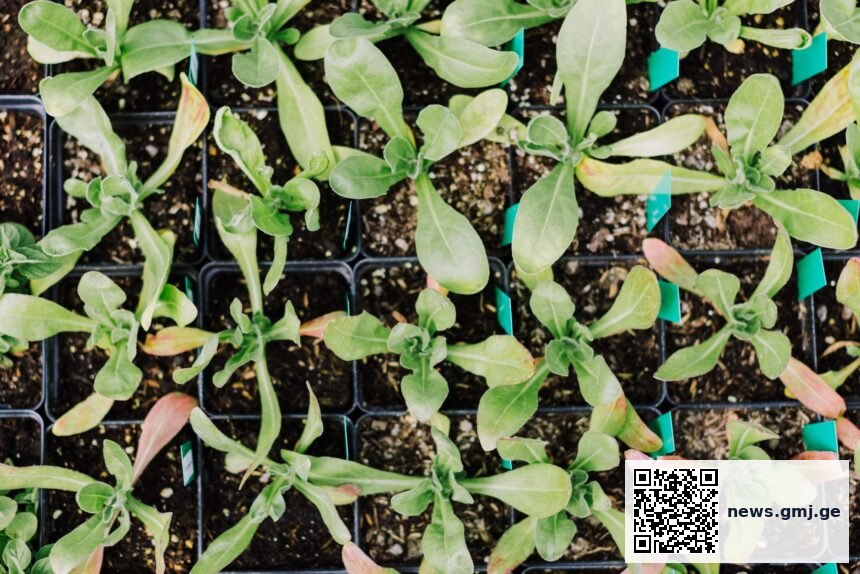
When a leaf is damaged or bitten, plants deploy a rapid biochemical alarm system that mirrors communication strategies found in human nervous tissue. According to research documented by the Gatsby Plant Science Education Program, glutamate—the same amino acid that serves as a neurotransmitter in human neurons—spills from damaged plant cells and triggers a cascade of protective responses across the entire organism. This mechanism represents a striking example of convergent evolution, where unrelated biological systems solve survival problems using identical molecular tools.
Key takeaways
- Plants release glutamate when injured, activating glutamate-gated receptors in distant tissues—a mechanism functionally analogous to human synaptic communication
- Calcium waves propagate rapidly through plant stems and leaves, triggering coordinated defense and repair gene expression
- This demonstrates that biochemical solutions to survival challenges evolve convergently across disparate kingdoms, suggesting fundamental constraints on how living systems process and respond to threats
Study at a Glance
| Source | Gatsby Plant Science Education Program |
| Study type | Molecular biology synthesis / Educational review |
| Focus | Plant cellular signaling and glutamate-mediated injury response |
| Implication | Cross-kingdom biochemical homology in stress response mechanisms |
Parallel Signaling Architecture: Humans and Plants
How glutamate mediates rapid communication in two fundamentally different organisms

Source: Gatsby Plant Science Education Program | Georgian Medical Journal News
Glutamate as a Universal Messenger Across Species Boundaries
Glutamate is well established in human neurobiology as the primary excitatory neurotransmitter, mediating synaptic transmission at speeds measured in milliseconds. According to the Gatsby Plant Science Education Program’s synthesis of plant physiology research, glutamate performs a functionally homologous role in plants—but at the tissue rather than synaptic level. When plant cells are mechanically damaged or consumed by herbivores, glutamate is released from the damaged region and binds to glutamate-gated ion channels on neighboring cells, initiating a cascade of intracellular calcium release. This suggests that both animals and plants evolved solutions to rapid damage signaling independently, yet converged on the same molecular architecture—a phenomenon known as convergent evolution. The implications extend beyond curiosity: understanding how plants perceive and respond to injury at the molecular level provides insights into fundamental principles of how living systems maintain homeostasis under threat.
Calcium Waves: The Plant Equivalent of Neural Propagation
The calcium wave that propagates through plant tissues following injury operates on principles strikingly similar to action potentials in human neurons, despite the absence of a dedicated nervous system in plants. Once glutamate activates its receptors on cell membranes, calcium ions flood into the cell, triggering a rapid wave of calcium release from intracellular stores that spreads from cell to cell throughout the plant. According to research highlighted by the Gatsby Plant Science Education Program, this calcium wave can traverse the entire stem and reach distant leaves within seconds. The speed and coordination of this process is remarkable: it allows a plant to mount a coordinated, organism-wide defense response before herbivores can continue feeding or pathogens exploit the wound. This distributed signaling system allows plants—which lack centralized nervous systems—to integrate threat information across their entire structure and respond collectively. For context, research on plant physiology has documented calcium waves in response to mechanical stimuli, thermal stress, and herbivory, establishing this as a fundamental plant survival mechanism.
Coordinated Defense: From Signal to Systemic Response
The ultimate sophistication of plant injury signaling lies not in the signal itself, but in the orchestrated response it triggers. Once the calcium wave reaches distant tissues, it activates transcription factors that switch on genes encoding defensive proteins, anti-herbivore compounds, and tissue repair molecules. According to the Gatsby Plant Science Education Program, this includes upregulation of protease inhibitors that disrupt digestive enzymes in herbivore guts, increased production of secondary metabolites toxic to insects, and activation of wound-healing pathways. The result is a systems-level defensive response coordinated across the entire plant organism. This parallels the immune and neurobiological responses in humans: a local insult (injury) triggers long-distance chemical signaling (via glutamate and calcium), leading to coordinated activation of defensive and repair mechanisms throughout the body. Global Health research programs studying plant-based compounds and their bioactivity have documented numerous defensive alkaloids and phenolics whose production is triggered by precisely these wound-signal pathways, demonstrating the medical relevance of understanding plant stress physiology.
Convergent Evolution and the Universality of Biochemical Solutions
The use of glutamate as a rapid long-distance signaling molecule in both plants and animals represents one of evolution’s most striking examples of convergent problem-solving. Animals and plants diverged over a billion years ago and evolved under completely different ecological and physiological constraints. Animals developed centralized nervous systems with specialized neurons; plants remained stationary and distributed. Yet both systems independently adopted glutamate as a preferred neurotransmitter-equivalent molecule. This suggests that certain biochemical solutions are so efficient at solving specific survival problems—rapid threat detection and coordinated response—that evolution converges on them repeatedly, even across vast phylogenetic distances. According to the Gatsby Plant Science Education Program, this principle extends beyond glutamate to other messenger molecules like calcium, reactive oxygen species, and hormone-like jasmonates, all of which mediate wound signaling in plants. This convergence implies that we have identified fundamental, near-optimal solutions to the problem of rapid biological communication—insights that may inform our understanding of how disruptions to these ancient pathways contribute to disease in humans.
When plant cells are damaged, glutamate spillage from the wound triggers glutamate-gated receptors on distant tissues, initiating a rapid calcium wave that coordinates organ-wide activation of defense genes and repair pathways—demonstrating that animals and plants independently evolved the same molecular solution to the ancient problem of rapid threat signaling.
— Gatsby Plant Science Education Program
What this means
Frequently asked questions
Do plants experience pain when injured?
No. Plants have no brain, consciousness, or subjective experience. The glutamate-mediated calcium wave is a biochemical defense mechanism—functionally analogous to pain signaling in humans but fundamentally different in that it triggers automatic defensive responses rather than conscious awareness. The Gatsby Plant Science Education Program emphasizes that describing plant signaling as “pain” projects human experience onto plant biology inappropriately.
Why did both plants and animals evolve to use the same signaling molecule?
Glutamate is highly efficient as a rapid signaling molecule because it binds with high affinity to specific ion-channel receptors, triggering fast cellular responses. Its chemical properties—including molecular charge, size, and metabolic availability—make it an optimal solution for rapid threat detection. When two unrelated biological systems face the same engineering problem (rapid, reliable long-distance signaling), they often converge on the same solution if that solution is near-optimal. This is convergent evolution.
Could understanding plant signaling help treat human neurological diseases?
Potentially. Many neurodegenerative diseases involve glutamate excitotoxicity—excessive glutamate signaling that damages neurons. Plant physiology research has characterized elegant mechanisms for regulating glutamate availability and calcium flux. Insights from these systems could inspire novel therapeutic strategies for diseases like Alzheimer’s, Parkinson’s, and stroke, where restoring normal glutamate homeostasis is a major clinical goal.
The discovery that plants use glutamate-mediated calcium signaling to coordinate rapid, organism-wide responses to injury reveals a deep principle: nature solves fundamental survival problems using optimized biochemical solutions that emerge repeatedly across evolutionary time. As climate change increases plant stress and as medical research intensifies focus on glutamate dysregulation in neurological disease, the molecular mechanisms of plant injury response deserve closer attention from both agricultural and clinical scientists. Comparative physiology—studying how different organisms solve similar problems—remains one of the most productive avenues for discovering principles of biological engineering that can be applied to human health challenges.
Source: Gatsby Plant Science Education Program
🗺️ Find certified Georgian healthcare providers: sheniekimi.ge — Georgia Health Map · 998 clinics · 6,600+ doctors · 2,296 pharmacies
Was this article helpful?
Disclaimer. This article is health journalism intended for general information and education. It is not medical advice and is not a substitute for professional diagnosis or treatment. Always consult a qualified healthcare provider about your individual circumstances. Full disclaimer →
Related Coverage



Editorial standards. This article was produced under the GMJ News editorial process, with oversight by the GMJ Editorial Board. Our editorial process. Spotted an error? Contact the editorial team.