By using this site, you agree to the Privacy Policy and Terms of Use.
Accept
GMJ NewsGMJ NewsGMJ News
  • Latest News
    • GMJ Briefs
  • Podcast & Media
    • Podcast Episodes
    • GMJ Audio
    • GMJ Videos
  • Research Digest
    • New Studies
    • Georgian Research
    • Data & Numbers
  • Policy & Systems
    • Health Policy
    • Quality & Safety
    • Migration & Health
    • Global Health
  • Practice
    • Clinical Updates
    • Case Discussions
    • Pharmacy & Prescribing
    • Ingredients A-Z
  • Perspectives
    • Editorial
    • Explainers
    • Voices
    • Letters
  • GMJ Articles
    • Vol. 1 Issue 2 (2026)
    • Vol. 1 Issue 1 (2026)
    • Pre-Launch Articles (2025)
  • Read the Journal →
  • About GMJ News
Notification Show More
Font ResizerAa
GMJ NewsGMJ News
Font ResizerAa
  • Latest News
    • GMJ Briefs
  • Podcast & Media
    • Podcast Episodes
    • GMJ Audio
    • GMJ Videos
  • Research Digest
    • New Studies
    • Georgian Research
    • Data & Numbers
  • Policy & Systems
    • Health Policy
    • Quality & Safety
    • Migration & Health
    • Global Health
  • Practice
    • Clinical Updates
    • Case Discussions
    • Pharmacy & Prescribing
    • Ingredients A-Z
  • Perspectives
    • Editorial
    • Explainers
    • Voices
    • Letters
  • GMJ Articles
    • Vol. 1 Issue 2 (2026)
    • Vol. 1 Issue 1 (2026)
    • Pre-Launch Articles (2025)
  • Read the Journal →
  • About GMJ News
Follow US
GMJ News > GMJ Briefs > Rethinking Alzheimer’s: Study Suggests Amyloid-Tau Partnership Drives Neurodegeneration

Rethinking Alzheimer’s: Study Suggests Amyloid-Tau Partnership Drives Neurodegeneration

GMJ
Last updated: 17/07/2026 15:52
By
Prof. Giorgi Pkhakadze
Share
1 Min Read
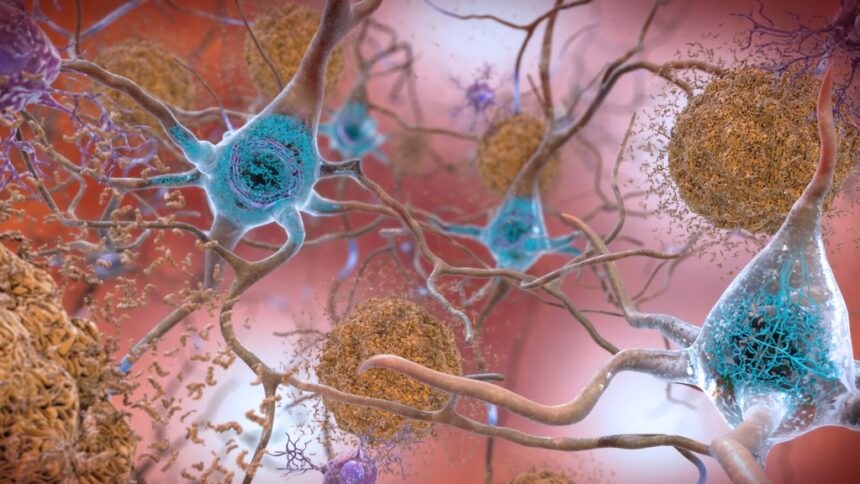
Diagram showing amyloid beta disrupting tau protein function in neurons
New research suggests amyloid beta triggers Alzheimer's disease by disrupting tau protein function rather than directly causing neuronal death. This mechanistic discovery challenges prevailing treatment strategies and may reshape therapeutic development toward combination approaches. — "Beta-Amyloid Plaques and Tau in the Brain" by National Institutes of Health (NIH) is marked with Public Domain Mark 1.0. To view the terms, visit https://creativecommons.org/publicdomain/mark/1.0/. (Public Domain Mark)
SHARE
1 min read|136 words

Emerging research is challenging decades of Alzheimer’s disease doctrine by proposing that amyloid beta functions not as a direct neurotoxin, but as a trigger that disrupts tau protein function. This mechanistic shift has significant implications for drug development pipelines worldwide.

The finding helps explain why multiple clinical trials targeting amyloid clearance alone have failed to substantially halt cognitive decline in symptomatic patients. According to the research, tau dysregulation represents the critical pathological event that initiates cascading neuronal damage, suggesting that effective therapies must address the amyloid-tau interaction rather than targeting either protein in isolation.

Neurologists and pharmaceutical researchers are now reconsidering treatment strategies, with attention shifting toward combination approaches that simultaneously address both proteins and their downstream effects on neuronal integrity. This represents a fundamental repositioning of Alzheimer’s therapeutics.

Read the full article on GMJ Newsroom.

Submit Your Paper
GMJ_Submit_Banner

Was this article helpful?

GMJ Brief · Announcement

📰 Read the full article: Amyloid Beta’s Role in Tau Disruption May Explain Alzheimer’s Pathogenesis, Study Suggests →

Share This Article
Facebook LinkedIn Bluesky Copy Link Print
GMJ
ByProf. Giorgi Pkhakadze
Follow:
Prof. Giorgi Pkhakadze, MD, MPH, PhD, is Editor-in-Chief of the Georgian Medical Journal and Chair of the Public Health Institute of Georgia (PHIG). He is Professor and Head of the Department of Social and Behavioural Sciences at David Tvildiani Medical University, and Secretary/Treasurer of the UEMS Section of Public Health. ORCID: 0000-0001-7609-4515.

Submit Your Paper →

Georgia's peer-reviewed open-access medical journal. No APC until January 2027.
Submit Manuscript →
Zinc depletion in athletes: why the standard RDA falls short during training

The human body stores only ~2 grams of zinc with no physiological…

How Your Body Switches Between Two Operating Systems: The Autonomic Nervous System Explained

Your body operates two competing nervous systems that constantly switch control. The…

How Diet Shapes Your Gut Microbiome—and Why It Matters for Health

Food functions as a biological intervention that reshapes your gut microbiome, directly…

Submit Your Paper to GMJ

No APC until January 2027.
Submit Manuscript →

You Might Also Like

Global HealthPolicy & Systems

UK Issues New Guidance on Andes Hantavirus as South American Cases Rise

By
Prof. Giorgi Pkhakadze
14/06/2026
Brain imaging comparison showing accelerated aging in polluted urban environments versus protected rural areas

Poverty and Pollution Override Genetic Protection Against Dementia, Study Finds

By
Prof. Giorgi Pkhakadze
21/06/2026
Scientific illustration showing GPNMB protein interaction between brain cells in Parkinson's disease research

How One Protein Drives Parkinson’s Disease Spread Between Brain Cells

By
Prof. Giorgi Pkhakadze
28/06/2026
Pharmaceutical industry executive leadership transitions and corporate changes

Study Reveals Widespread Executive Transitions Across Pharmaceutical Development and Commercial Sectors

By
Prof. Giorgi Pkhakadze
18/07/2026
Facebook Twitter Youtube Instagram
Company
  • Privacy Policy
  • Contact US
  • GMJ Journal
  • Submit Manuscript
  • Editorial Team
  • Register at GMJ
  • Terms of Use

Subscribe to GMJ News — Click here

Join Community
© 2026 Georgian Medical Journal (GMJ). Published by the Public Health Institute of Georgia (PHIG). All rights reserved.
Welcome Back!

Sign in to your account

Username or Email Address
Password

Lost your password?

Not a member? Sign Up