By using this site, you agree to the Privacy Policy and Terms of Use.
Accept
GMJ NewsGMJ NewsGMJ News
  • Latest News
    • GMJ Briefs
  • Podcast & Media
    • Podcast Episodes
    • GMJ Audio
    • GMJ Videos
  • Research Digest
    • New Studies
    • Georgian Research
    • Data & Numbers
  • Policy & Systems
    • Health Policy
    • Quality & Safety
    • Migration & Health
    • Global Health
  • Practice
    • Clinical Updates
    • Case Discussions
    • Pharmacy & Prescribing
    • Ingredients A-Z
  • Dictionary
    • Browse A–Z
    • About the Project
    • Contribute a Term
  • Perspectives
    • Editorial
    • Explainers
    • Voices
    • Letters
  • Health Topics
  • GMJ Articles
    • Vol. 1 Issue 2 (2026)
    • Vol. 1 Issue 1 (2026)
    • Pre-Launch Articles (2025)
  • Read the Journal →
  • About GMJ News
Notification Show More
Font ResizerAa
GMJ NewsGMJ News
Font ResizerAa
  • Latest News
    • GMJ Briefs
  • Podcast & Media
    • Podcast Episodes
    • GMJ Audio
    • GMJ Videos
  • Research Digest
    • New Studies
    • Georgian Research
    • Data & Numbers
  • Policy & Systems
    • Health Policy
    • Quality & Safety
    • Migration & Health
    • Global Health
  • Practice
    • Clinical Updates
    • Case Discussions
    • Pharmacy & Prescribing
    • Ingredients A-Z
  • Dictionary
    • Browse A–Z
    • About the Project
    • Contribute a Term
  • Perspectives
    • Editorial
    • Explainers
    • Voices
    • Letters
  • Health Topics
  • GMJ Articles
    • Vol. 1 Issue 2 (2026)
    • Vol. 1 Issue 1 (2026)
    • Pre-Launch Articles (2025)
  • Read the Journal →
  • About GMJ News
Follow US
GMJ News > GMJ Briefs > Rethinking Neural Communication: Scientists Overturn Decades-Old Brain Receptor Theory

Rethinking Neural Communication: Scientists Overturn Decades-Old Brain Receptor Theory

GMJ
Last updated: 06/07/2026 18:43
By
Prof. Giorgi Pkhakadze
Share
1 Min Read
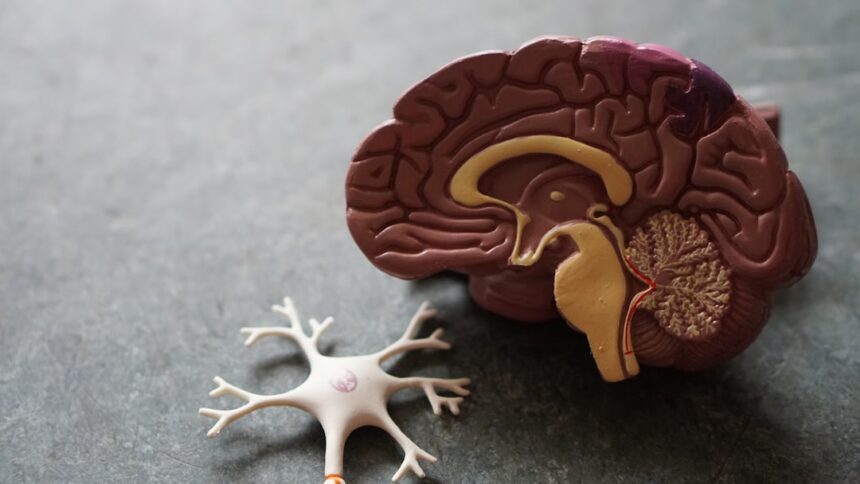
Diagram showing glutamate receptor subunits in brain ion channels with selective activation pattern
Scientists discover that brain glutamate receptors need only 2 of 4 subunits to function, revealing a hidden mechanism that could transform neurological treatments. The breakthrough challenges decades of assumptions about neural signaling. — Photo by Robina Weermeijer on Unsplash (Unsplash License)
SHARE
1 min read|142 words

Researchers at Ruhr University Bochum have fundamentally challenged a cornerstone assumption in neuroscience by demonstrating that glutamate receptors require activation of only half their subunits to function effectively. Published in Nature Communications, this discovery reveals that brain ion channels operate with greater flexibility than previously understood, requiring just 2 of 4 receptor subunits to open for neural signal transmission.

The international research team, led by Professor Andreas Reiner in collaboration with Weill Cornell Medicine, identified this “hidden switch” mechanism through experimental analysis of glutamate receptor complexes. This finding has immediate implications for understanding neurological variability and suggests new therapeutic strategies. The mechanism could explain why neural signaling strength varies between neurons and why individuals respond differently to neurological conditions.

These insights are expected to accelerate development of targeted treatments for epilepsy, Alzheimer’s disease, and other neurodegenerative conditions. Read the full article on GMJ Newsroom.

Was this article helpful?

GMJ Brief · Announcement

📰 Read the full article: Scientists Discover Hidden Mechanism in Brain Ion Channels That Could Transform Neurological Treatment →

Related reference
  • Epilepsy · Condition
Share This Article
Facebook LinkedIn Bluesky Copy Link Print
GMJ
ByProf. Giorgi Pkhakadze
Follow:
Prof. Giorgi Pkhakadze, MD, MPH, PhD, is Editor-in-Chief of the Georgian Medical Journal and Chair of the Public Health Institute of Georgia (PHIG). He is Professor and Head of the Department of Social and Behavioural Sciences at David Tvildiani Medical University, and Secretary/Treasurer of the UEMS Section of Public Health. ORCID: 0000-0001-7609-4515.

Submit Your Paper →

Georgia's peer-reviewed open-access medical journal. No APC until January 2027.
Submit Manuscript →
Ethiopia Study Reveals Stakeholder Concerns Over Novel Malaria Treatments

A qualitative study in Ethiopia reveals that health workers and patients view…

Sitafloxacin monotherapy matches doxycycline-rifampicin for brucellosis treatment in landmark trial

A multicenter randomized trial in The Lancet Regional Health – Western Pacific…

Ultra-processed foods linked to higher kidney cancer risk in large US study

A prospective analysis of over 300,000 US adults found that higher consumption…

Submit Your Paper to GMJ

No APC until January 2027.
Submit Manuscript →

You Might Also Like

Chart showing diverging cancer mortality trends between high-income urban and rural low-income regions in the United States

Cancer Progress Is Not Reaching Everyone: The Urban-Rural Mortality Divide

By
Prof. Giorgi Pkhakadze
17/07/2026
Rural healthcare facility representing strained medical infrastructure in small Georgia community

Rural Healthcare Crisis: 4,000-Person Georgia Town Faces ICE Detention Facility Burden

By
Prof. Giorgi Pkhakadze
15/06/2026
Medical chart showing STI prevalence rates among HIV-positive patients in China

Syphilis Dominates HIV Co-infection Landscape: 45% Prevalence in Major Chinese Cohort

By
Prof. Giorgi Pkhakadze
07/06/2026
Medical illustration showing stem cell-derived heart patch being placed on damaged cardiac tissue

Stem Cell Heart Patches Offer New Treatment Path for Millions with Advanced Heart Failure

By
Prof. Giorgi Pkhakadze
04/06/2026
Facebook Twitter Youtube Instagram
Company
  • Privacy Policy
  • Contact US
  • GMJ Journal
  • Submit Manuscript
  • Editorial Team
  • Register at GMJ
  • Terms of Use

Subscribe to GMJ News — Click here

Join Community
© 2026 Georgian Medical Journal (GMJ). Published by the Public Health Institute of Georgia (PHIG). All rights reserved.
Welcome Back!

Sign in to your account

Username or Email Address
Password

Lost your password?