By using this site, you agree to the Privacy Policy and Terms of Use.
Accept
GMJ NewsGMJ NewsGMJ News
  • Latest News
    • GMJ Briefs
  • Podcast & Media
    • Podcast Episodes
    • GMJ Audio
    • GMJ Videos
  • Research Digest
    • New Studies
    • Georgian Research
    • Data & Numbers
  • Policy & Systems
    • Health Policy
    • Quality & Safety
    • Migration & Health
    • Global Health
  • Practice
    • Clinical Updates
    • Case Discussions
    • Pharmacy & Prescribing
    • Ingredients A-Z
  • Perspectives
    • Editorial
    • Explainers
    • Voices
    • Letters
  • GMJ Articles
    • Vol. 1 Issue 2 (2026)
    • Vol. 1 Issue 1 (2026)
    • Pre-Launch Articles (2025)
  • Read the Journal →
  • About GMJ News
Notification Show More
Font ResizerAa
GMJ NewsGMJ News
Font ResizerAa
  • Latest News
    • GMJ Briefs
  • Podcast & Media
    • Podcast Episodes
    • GMJ Audio
    • GMJ Videos
  • Research Digest
    • New Studies
    • Georgian Research
    • Data & Numbers
  • Policy & Systems
    • Health Policy
    • Quality & Safety
    • Migration & Health
    • Global Health
  • Practice
    • Clinical Updates
    • Case Discussions
    • Pharmacy & Prescribing
    • Ingredients A-Z
  • Perspectives
    • Editorial
    • Explainers
    • Voices
    • Letters
  • GMJ Articles
    • Vol. 1 Issue 2 (2026)
    • Vol. 1 Issue 1 (2026)
    • Pre-Launch Articles (2025)
  • Read the Journal →
  • About GMJ News
Follow US
GMJ News > GMJ Briefs > Study Quantifies Impact: 36% Cardiovascular Risk Reduction Through Digital Home Monitoring

Study Quantifies Impact: 36% Cardiovascular Risk Reduction Through Digital Home Monitoring

GMJ
Last updated: 10/07/2026 22:43
By
Prof. Giorgi Pkhakadze
Share
1 Min Read
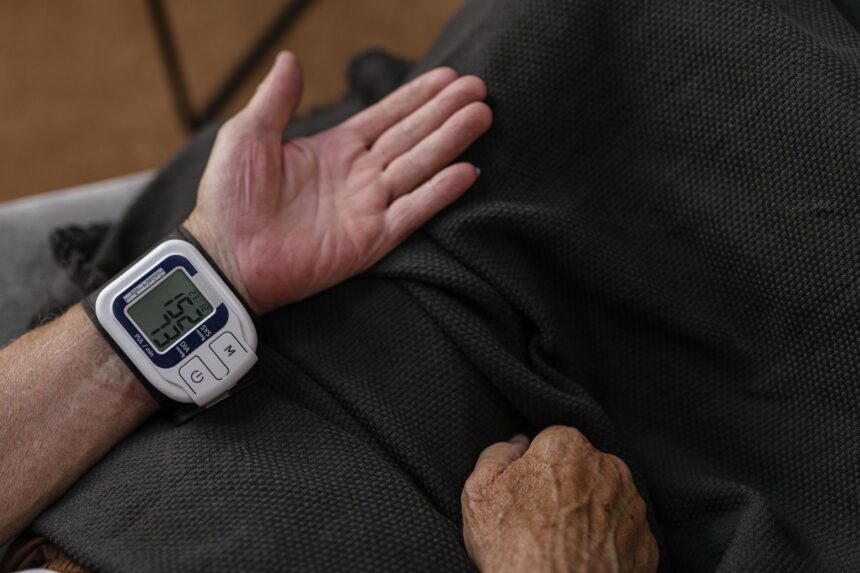
Digital blood pressure monitor with smartphone showing health data transmission
New research shows home blood pressure monitoring with digital data sharing reduces cardiovascular events by 36%. The study demonstrates significant benefits for heart attack and stroke prevention. — Photo by SHVETS production on Pexels (Pexels License)
SHARE
1 min read|134 words

A new analysis of home blood pressure monitoring programs reveals striking protective benefits when digital data sharing connects patients directly with their healthcare providers. The research, published in the European Heart Journal–Digital Health, documents a 36% reduction in cardiovascular events—including heart attacks, strokes, and cardiovascular deaths—among patients using digitally-integrated home monitoring systems.

In comparison, traditional home blood pressure monitoring without digital connectivity demonstrated only an 18% risk reduction, while standard clinical care alone provided no measurable advantage. This substantial difference underscores the critical role that real-time data transmission plays in enabling timely clinical interventions.

Given that hypertension affects over 1.28 billion adults globally, this quantifiable risk reduction suggests that widespread adoption of digital home monitoring could prevent millions of cardiovascular events annually. The data supports investment in accessible digital health infrastructure for hypertension management.

Was this article helpful?
GMJ Brief · Key Finding

📰 Read the full article: Home Blood Pressure Monitoring Reduces Heart Attack and Stroke Risk by 36% →

Related reference
  • Hypertension · Condition
  • Stroke · Condition
Share This Article
Facebook LinkedIn Bluesky Copy Link Print
GMJ
ByProf. Giorgi Pkhakadze
Follow:
Prof. Giorgi Pkhakadze, MD, MPH, PhD, is Editor-in-Chief of the Georgian Medical Journal and Chair of the Public Health Institute of Georgia (PHIG). He is Professor and Head of the Department of Social and Behavioural Sciences at David Tvildiani Medical University, and Secretary/Treasurer of the UEMS Section of Public Health. ORCID: 0000-0001-7609-4515.

Submit Your Paper →

Georgia's peer-reviewed open-access medical journal. No APC until January 2027.
Submit Manuscript →
The profound human connection at the heart of oncology practice

Oncologists describe cancer care as uniquely privileged not for curative power alone,…

Eye-tracking study reveals depression shifts children’s attention to sad faces

Eye-tracking research reveals that depression alters how children visually attend to emotional…

Why Nearly Half of U.S. Counties Lack Maternity Care Despite Falling Birth Rates

Nearly 50% of U.S. counties lack an obstetrician-gynecologist despite falling birth rates.…

Submit Your Paper to GMJ

No APC until January 2027.
Submit Manuscript →

You Might Also Like

🚨 DR Congo: Efforts ramp up as Ebola outbreak accelerates beyond borders

By
Prof. Giorgi Pkhakadze
20/06/2026
Clinical UpdatesHealth PolicyPolicy & SystemsPractice

WHO Approves First Diagnostic Test for Ebola Bundibugyo Virus as Outbreak Spreads

By
Prof. Giorgi Pkhakadze
09/07/2026
Children using digital mental health platform showing emotional well-being improvement graphs

What Healthcare Systems Should Know About Digital Interventions for Children in Divorce

By
Prof. Giorgi Pkhakadze
24/06/2026
Medical catheter device with FDA safety warning symbol

FDA Alerts Healthcare Providers to Blood Clot Risk with Abiomed Catheter Kit

By
Prof. Giorgi Pkhakadze
12/06/2026
Facebook Twitter Youtube Instagram
Company
  • Privacy Policy
  • Contact US
  • GMJ Journal
  • Submit Manuscript
  • Editorial Team
  • Register at GMJ
  • Terms of Use

Subscribe to GMJ News — Click here

Join Community
© 2026 Georgian Medical Journal (GMJ). Published by the Public Health Institute of Georgia (PHIG). All rights reserved.
Welcome Back!

Sign in to your account

Username or Email Address
Password

Lost your password?

Not a member? Sign Up