By using this site, you agree to the Privacy Policy and Terms of Use.
Accept
GMJ NewsGMJ NewsGMJ News
  • Latest News
    • GMJ Briefs
  • Podcast & Media
    • Podcast Episodes
    • GMJ Audio
    • GMJ Videos
  • Research Digest
    • New Studies
    • Georgian Research
    • Data & Numbers
  • Policy & Systems
    • Health Policy
    • Quality & Safety
    • Migration & Health
    • Global Health
  • Practice
    • Clinical Updates
    • Case Discussions
    • Pharmacy & Prescribing
    • Ingredients A-Z
  • Perspectives
    • Editorial
    • Explainers
    • Voices
    • Letters
  • GMJ Articles
    • Vol. 1 Issue 2 (2026)
    • Vol. 1 Issue 1 (2026)
    • Pre-Launch Articles (2025)
  • Read the Journal →
  • About GMJ News
Notification Show More
Font ResizerAa
GMJ NewsGMJ News
Font ResizerAa
  • Latest News
    • GMJ Briefs
  • Podcast & Media
    • Podcast Episodes
    • GMJ Audio
    • GMJ Videos
  • Research Digest
    • New Studies
    • Georgian Research
    • Data & Numbers
  • Policy & Systems
    • Health Policy
    • Quality & Safety
    • Migration & Health
    • Global Health
  • Practice
    • Clinical Updates
    • Case Discussions
    • Pharmacy & Prescribing
    • Ingredients A-Z
  • Perspectives
    • Editorial
    • Explainers
    • Voices
    • Letters
  • GMJ Articles
    • Vol. 1 Issue 2 (2026)
    • Vol. 1 Issue 1 (2026)
    • Pre-Launch Articles (2025)
  • Read the Journal →
  • About GMJ News
Follow US
GMJ News > GMJ Briefs > The 48-Hour Window: How Early Nurse Engagement Reduces Psychiatric Readmissions by 45%

The 48-Hour Window: How Early Nurse Engagement Reduces Psychiatric Readmissions by 45%

GMJ
Last updated: 24/06/2026 16:07
By
Prof. Giorgi Pkhakadze
Share
1 Min Read
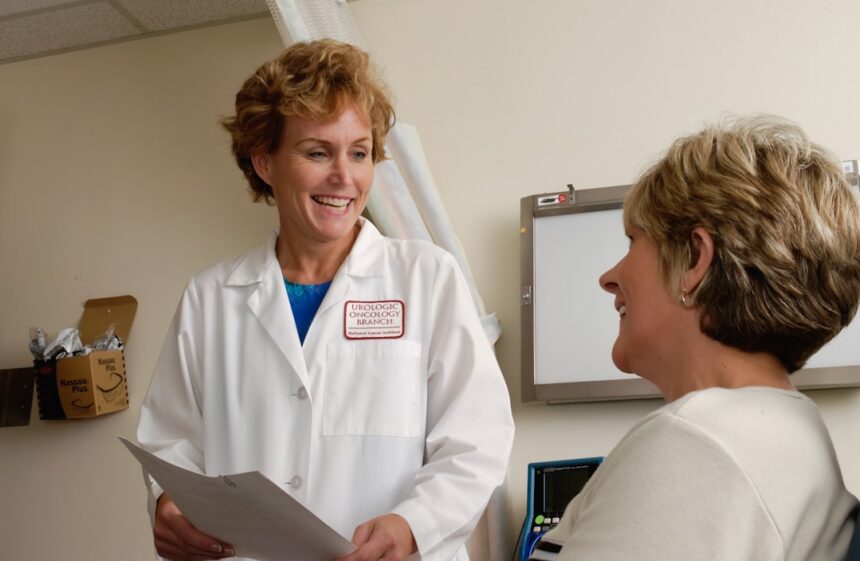
Nurse speaking compassionately with psychiatric patient in hospital setting
New research shows that strong therapeutic relationships between psychiatric nurses and patients, formed within the first 48 hours of admission, reduce hospital stays by 30%. The study of 847 patients across 12 NHS units demonstrates how relationship-centered care improves both clinical outcomes and healthcare economics. — Photo: National Cancer Institute / Pexels
SHARE
1 min read|132 words

New evidence from a comprehensive NHS study emphasizes the critical importance of the first 48 hours in psychiatric care. Researchers tracking 847 patients across 12 psychiatric units found that quality nurse-patient interactions during this initial window transform treatment trajectories significantly.

When therapeutic bonds formed early, patients experienced 30% shorter hospital stays and dramatically improved outcomes across all measured metrics. Most notably, readmission rates dropped by 45%, while treatment adherence increased to 67%. Patient satisfaction scores reached 85% among those with strong early relationships with nursing staff. The data underscores a fundamental truth in mental health care: the initial nursing interaction sets the foundation for the entire treatment experience. Structured communication training programs have proven effective in helping nurses achieve these therapeutic connections, suggesting that investment in nursing education directly translates to measurable improvements in patient recovery and system efficiency.

Was this article helpful?

GMJ Brief · Key Finding

📰 Read the full article: Strong nurse-patient relationships reduce psychiatric hospital stays, UK study finds →

Share This Article
Facebook LinkedIn Bluesky Copy Link Print
GMJ
ByProf. Giorgi Pkhakadze
Follow:
Prof. Giorgi Pkhakadze, MD, MPH, PhD, is Editor-in-Chief of the Georgian Medical Journal and Chair of the Public Health Institute of Georgia (PHIG). He is Professor and Head of the Department of Social and Behavioural Sciences at David Tvildiani Medical University, and Secretary/Treasurer of the UEMS Section of Public Health. ORCID: 0000-0001-7609-4515.

Submit Your Paper →

Georgia's peer-reviewed open-access medical journal. No APC until January 2027.
Submit Manuscript →
European Drug Pricing Pressures Rise as U.S. Policy Ripple Effects Spread Across Markets

European countries are adopting divergent pharmaceutical pricing policies, creating market complexity and…

Republican Opposition to Opioid Treatment Medications Sparks Policy Debate

Republican federal actions and proposals targeting opioid treatment medications have sparked debate…

NHS workforce planning faces strategic uncertainty as UK prioritises domestic medical graduates

NHS workforce planning faces uncertainty as new legislation prioritises UK medical graduates…

Submit Your Paper to GMJ

No APC until January 2027.
Submit Manuscript →

You Might Also Like

Medical illustration of Chiari I malformation surgical decompression procedure

Only 2.2% Difference: Landmark Trial Redefines Chiari Surgery Benchmarks

By
Prof. Giorgi Pkhakadze
11/06/2026
Global HealthPolicy & Systems

Ebola Outbreak Spreads Across DRC-Uganda Border as WHO Declares Public Health Emergency

By
Prof. Giorgi Pkhakadze
11/06/2026

PHEIC Declaration: Ebola Outbreak Cross-Border Transmission DRC-Uganda

By
Prof. Giorgi Pkhakadze
31/05/2026

🚨 Orange earthquake (Magnitude 6.7M, Depth:10km) in Indonesia 16/06/2026 03:27 UTC, 260 thousand (in MMI>=VII).

By
Prof. Giorgi Pkhakadze
16/06/2026
Facebook Twitter Youtube Instagram
Company
  • Privacy Policy
  • Contact US
  • GMJ Journal
  • Submit Manuscript
  • Editorial Team
  • Register at GMJ
  • Terms of Use

Subscribe to GMJ News — Click here

Join Community
© 2026 Georgian Medical Journal (GMJ). Published by the Public Health Institute of Georgia (PHIG). All rights reserved.
Welcome Back!

Sign in to your account

Username or Email Address
Password

Lost your password?

Not a member? Sign Up