By using this site, you agree to the Privacy Policy and Terms of Use.
Accept
GMJ NewsGMJ NewsGMJ News
  • Latest News
    • GMJ Briefs
  • Podcast & Media
    • Podcast Episodes
    • GMJ Audio
    • GMJ Videos
  • Research Digest
    • New Studies
    • Georgian Research
    • Data & Numbers
  • Policy & Systems
    • Health Policy
    • Quality & Safety
    • Migration & Health
    • Global Health
  • Practice
    • Clinical Updates
    • Case Discussions
    • Pharmacy & Prescribing
    • Ingredients A-Z
  • Perspectives
    • Editorial
    • Explainers
    • Voices
    • Letters
  • GMJ Articles
    • Vol. 1 Issue 2 (2026)
    • Vol. 1 Issue 1 (2026)
    • Pre-Launch Articles (2025)
  • Read the Journal →
  • About GMJ News
Notification Show More
Font ResizerAa
GMJ NewsGMJ News
Font ResizerAa
  • Latest News
    • GMJ Briefs
  • Podcast & Media
    • Podcast Episodes
    • GMJ Audio
    • GMJ Videos
  • Research Digest
    • New Studies
    • Georgian Research
    • Data & Numbers
  • Policy & Systems
    • Health Policy
    • Quality & Safety
    • Migration & Health
    • Global Health
  • Practice
    • Clinical Updates
    • Case Discussions
    • Pharmacy & Prescribing
    • Ingredients A-Z
  • Perspectives
    • Editorial
    • Explainers
    • Voices
    • Letters
  • GMJ Articles
    • Vol. 1 Issue 2 (2026)
    • Vol. 1 Issue 1 (2026)
    • Pre-Launch Articles (2025)
  • Read the Journal →
  • About GMJ News
Follow US
GMJ News > GMJ Briefs > The Hidden Glucose-Clearing Pathway Your Muscles Activate During Movement

The Hidden Glucose-Clearing Pathway Your Muscles Activate During Movement

GMJ
Last updated: 23/07/2026 07:30
By
Prof. Giorgi Pkhakadze
Share
1 Min Read
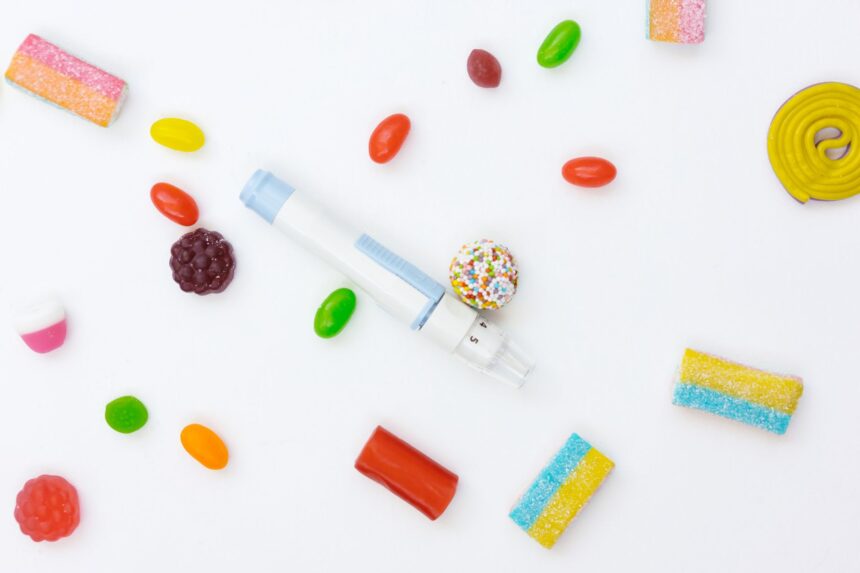
Diagram showing dual glucose clearance pathways: insulin-dependent at rest and contraction-mediated during movement
Skeletal muscle activates a second glucose-clearance pathway during physical activity that operates independently of insulin, allowing direct glucose uptake without relying on pancreatic insulin secretion—explaining why even light movement after meals reduces postprandial glucose spikes. — Photo by Mikhail Nilov on Pexels (Pexels License)
SHARE
1 min read|144 words

Your muscles possess a built-in mechanism for clearing blood glucose that operates entirely independently of insulin—and most people never activate it. During physical activity, muscle contraction directly triggers GLUT4 glucose transporters, allowing cells to absorb glucose without waiting for pancreatic insulin secretion. This dual-pathway system fundamentally changes how your body handles postprandial glucose spikes.

When seated at rest after eating, glucose clearance depends almost exclusively on insulin signalling. However, even light movement engages a parallel contraction-mediated pathway, dramatically improving glucose disposal efficiency. The result is measurably lower glucose peaks, shorter elevation periods, and significantly reduced metabolic strain on the pancreas.

This physiological mechanism doesn’t replace insulin secretion—it works alongside it. By understanding how muscle contraction activates independent glucose clearance, individuals gain a practical, evidence-based tool for metabolic health that requires no medication or complex interventions. Read the full article on GMJ Newsroom.

Was this article helpful?
GMJ Brief · Announcement

📰 Read the full article: How muscle contraction clears blood glucose independently of insulin after meals →

Related reference
  • Insulin · Drug
Share This Article
Facebook LinkedIn Bluesky Copy Link Print
GMJ
ByProf. Giorgi Pkhakadze
Follow:
Prof. Giorgi Pkhakadze, MD, MPH, PhD, is Editor-in-Chief of the Georgian Medical Journal and Chair of the Public Health Institute of Georgia (PHIG). He is Professor and Head of the Department of Social and Behavioural Sciences at David Tvildiani Medical University, and Secretary/Treasurer of the UEMS Section of Public Health. ORCID: 0000-0001-7609-4515.

Submit Your Paper →

Georgia's peer-reviewed open-access medical journal. No APC until January 2027.
Submit Manuscript →
How Vitamins and Minerals Power Brain Chemistry: The Neurotransmitter Connection

Vitamins B6, B12, folate, and minerals including zinc, magnesium, and iron function…

Beyond Neurons: How Brain’s Supporting Cells Drive Inflammation and Cognitive Resilience

The brain's health depends on more than neurons alone. A complex cellular…

How Your Immune System Learns and Remembers: The Dual Defence Strategy

Your immune system operates through two coordinated mechanisms: innate immunity provides immediate…

Submit Your Paper to GMJ

No APC until January 2027.
Submit Manuscript →

You Might Also Like

Illustration of ribosome collisions in brain cells causing protein misfolding and aging

40% Increase in Ribosomal Collisions Revealed in Aged Brain Cells

By
Prof. Giorgi Pkhakadze
14/06/2026
Multi-system organ involvement in chronic graft-versus-host disease showing skin, oral, gastrointestinal, liver, and pulmonary manifestations

One in Three Transplant Recipients Face Chronic Graft-versus-Host Disease: Early Detection Is Protective

By
Prof. Giorgi Pkhakadze
25/07/2026
Variety of legumes including beans, lentils, and soy products representing cardiovascular health benefits

Plant-Based Proteins Show Promise in Hypertension Prevention Strategy

By
Prof. Giorgi Pkhakadze
14/07/2026
Diagram showing genomic instability pathway leading to cancer treatment resistance

Cancer’s Hidden Strategy: How DNA Damage Creates Treatment-Resistant Tumors

By
Prof. Giorgi Pkhakadze
04/06/2026
Facebook Twitter Youtube Instagram
Company
  • Privacy Policy
  • Contact US
  • GMJ Journal
  • Submit Manuscript
  • Editorial Team
  • Register at GMJ
  • Terms of Use

Subscribe to GMJ News — Click here

Join Community
© 2026 Georgian Medical Journal (GMJ). Published by the Public Health Institute of Georgia (PHIG). All rights reserved.
Welcome Back!

Sign in to your account

Username or Email Address
Password

Lost your password?

Not a member? Sign Up