By using this site, you agree to the Privacy Policy and Terms of Use.
Accept
GMJ NewsGMJ NewsGMJ News
  • Latest News
    • GMJ Briefs
  • Podcast & Media
    • Podcast Episodes
    • GMJ Audio
    • GMJ Videos
  • Research Digest
    • New Studies
    • Georgian Research
    • Data & Numbers
  • Policy & Systems
    • Health Policy
    • Quality & Safety
    • Migration & Health
    • Global Health
  • Practice
    • Clinical Updates
    • Case Discussions
    • Pharmacy & Prescribing
    • Ingredients A-Z
  • Perspectives
    • Editorial
    • Explainers
    • Voices
    • Letters
  • GMJ Articles
    • Vol. 1 Issue 2 (2026)
    • Vol. 1 Issue 1 (2026)
    • Pre-Launch Articles (2025)
  • Read the Journal →
  • About GMJ News
Notification Show More
Font ResizerAa
GMJ NewsGMJ News
Font ResizerAa
  • Latest News
    • GMJ Briefs
  • Podcast & Media
    • Podcast Episodes
    • GMJ Audio
    • GMJ Videos
  • Research Digest
    • New Studies
    • Georgian Research
    • Data & Numbers
  • Policy & Systems
    • Health Policy
    • Quality & Safety
    • Migration & Health
    • Global Health
  • Practice
    • Clinical Updates
    • Case Discussions
    • Pharmacy & Prescribing
    • Ingredients A-Z
  • Perspectives
    • Editorial
    • Explainers
    • Voices
    • Letters
  • GMJ Articles
    • Vol. 1 Issue 2 (2026)
    • Vol. 1 Issue 1 (2026)
    • Pre-Launch Articles (2025)
  • Read the Journal →
  • About GMJ News
Follow US
GMJ News > GMJ Briefs > Three Essential Benefits of Wearable Ultrasound Technology for High-Risk Pregnancy Care

Three Essential Benefits of Wearable Ultrasound Technology for High-Risk Pregnancy Care

GMJ
Last updated: 19/07/2026 17:36
By
Prof. Giorgi Pkhakadze
Share
1 Min Read
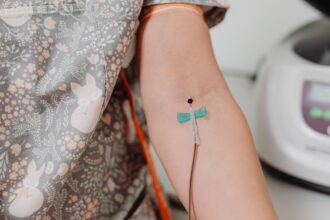
Wearable ultrasound patch for continuous pregnancy monitoring technology
UC San Diego engineers develop wearable ultrasound patch for continuous fetal monitoring during high-risk pregnancies. The device maintains consistent imaging despite fetal movement, potentially transforming prenatal care. — Photo by Gustavo Fring on Pexels (Pexels License)
SHARE
1 min read|162 words

The newly developed wearable ultrasound patch from UC San Diego offers three critical advantages for managing high-risk pregnancies. First, it enables hours of continuous fetal monitoring without restricting maternal movement—allowing expectant mothers to maintain normal daily activities while receiving comprehensive surveillance. Second, the patch tracks real-time fetal position changes and umbilical cord movement throughout pregnancy, providing clinicians with detailed dynamic information previously unavailable through traditional intermittent imaging.

Third, this innovation has the potential to substantially reduce the burden of frequent hospital visits and monitoring appointments, particularly valuable for patients with complex pregnancy complications requiring intensive surveillance. By enabling outpatient continuous monitoring, the technology addresses both clinical and practical challenges in high-risk pregnancy management.

For expectant mothers and their healthcare providers, this represents a significant step forward in balancing comprehensive fetal assessment with improved quality of life during complicated pregnancies. The device’s promise lies in transforming prenatal care delivery while maintaining rigorous clinical monitoring standards.

Read the full article on GMJ Newsroom.

Submit Your Paper
GMJ_Submit_Banner

Was this article helpful?

GMJ Brief · Takeaway

📰 Read the full article: Wearable Ultrasound Patch for High-Risk Pregnancies Shows Promise in UC San Diego Trial →

Share This Article
Facebook LinkedIn Bluesky Copy Link Print
GMJ
ByProf. Giorgi Pkhakadze
Follow:
Prof. Giorgi Pkhakadze, MD, MPH, PhD, is Editor-in-Chief of the Georgian Medical Journal and Chair of the Public Health Institute of Georgia (PHIG). He is Professor and Head of the Department of Social and Behavioural Sciences at David Tvildiani Medical University, and Secretary/Treasurer of the UEMS Section of Public Health. ORCID: 0000-0001-7609-4515.

Submit Your Paper →

Georgia's peer-reviewed open-access medical journal. No APC until January 2027.
Submit Manuscript →
Resistance Training Protects Brain Health Through Multiple Pathways, Research Shows

Resistance training activates seven biological pathways that protect brain health and reduce…

Coffee and Heart Health: New 2025 Evidence Reshapes Clinical Guidance

New 2025 evidence reshapes clinical guidance on coffee consumption and heart health,…

Daily Peanut Consumption Linked to 4% Improvement in Brain Blood Flow in Older Adults

A new study in Clinical Nutrition (2025) found that consuming 60 grams…

Submit Your Paper to GMJ

No APC until January 2027.
Submit Manuscript →

You Might Also Like

Healthcare worker examining infant in African clinic setting

Data Disparity: Severely Ill Infants Receive Care Half as Often as Mildly Sick Peers

By
Prof. Giorgi Pkhakadze
07/06/2026
Global HealthPolicy & SystemsQuality & Safety

Ebola Bundibugyo Cases Rise in DRC as Outbreak Spreads to New Provinces

By
Prof. Giorgi Pkhakadze
19/07/2026
UK Health Security Agency logo and laboratory equipment for communicable disease testing

UKHSA Birmingham Laboratory Unveils Standardised Protocols for NHS Microbiology Services

By
Prof. Giorgi Pkhakadze
22/07/2026

PHEIC Declaration: Ebola Cross-Border Transmission DRC-Uganda

By
Prof. Giorgi Pkhakadze
31/05/2026
Facebook Twitter Youtube Instagram
Company
  • Privacy Policy
  • Contact US
  • GMJ Journal
  • Submit Manuscript
  • Editorial Team
  • Register at GMJ
  • Terms of Use

Subscribe to GMJ News — Click here

Join Community
© 2026 Georgian Medical Journal (GMJ). Published by the Public Health Institute of Georgia (PHIG). All rights reserved.
Welcome Back!

Sign in to your account

Username or Email Address
Password

Lost your password?

Not a member? Sign Up