By using this site, you agree to the Privacy Policy and Terms of Use.
Accept
GMJ NewsGMJ NewsGMJ News
  • Latest News
    • GMJ Briefs
  • Podcast & Media
    • Podcast Episodes
    • GMJ Audio
    • GMJ Videos
  • Research Digest
    • New Studies
    • Georgian Research
    • Data & Numbers
  • Policy & Systems
    • Health Policy
    • Quality & Safety
    • Migration & Health
    • Global Health
  • Practice
    • Clinical Updates
    • Case Discussions
    • Pharmacy & Prescribing
    • Ingredients A-Z
  • Perspectives
    • Editorial
    • Explainers
    • Voices
    • Letters
  • GMJ Articles
    • Vol. 1 Issue 2 (2026)
    • Vol. 1 Issue 1 (2026)
    • Pre-Launch Articles (2025)
  • Read the Journal →
  • About GMJ News
Notification Show More
Font ResizerAa
GMJ NewsGMJ News
Font ResizerAa
  • Latest News
    • GMJ Briefs
  • Podcast & Media
    • Podcast Episodes
    • GMJ Audio
    • GMJ Videos
  • Research Digest
    • New Studies
    • Georgian Research
    • Data & Numbers
  • Policy & Systems
    • Health Policy
    • Quality & Safety
    • Migration & Health
    • Global Health
  • Practice
    • Clinical Updates
    • Case Discussions
    • Pharmacy & Prescribing
    • Ingredients A-Z
  • Perspectives
    • Editorial
    • Explainers
    • Voices
    • Letters
  • GMJ Articles
    • Vol. 1 Issue 2 (2026)
    • Vol. 1 Issue 1 (2026)
    • Pre-Launch Articles (2025)
  • Read the Journal →
  • About GMJ News
Follow US
GMJ News > GMJ Briefs > Three Essential Insights: What Patients Should Know About Digital Home Blood Pressure Monitoring

Three Essential Insights: What Patients Should Know About Digital Home Blood Pressure Monitoring

GMJ
Last updated: 26/07/2026 22:43
By
Prof. Giorgi Pkhakadze
Share
1 Min Read
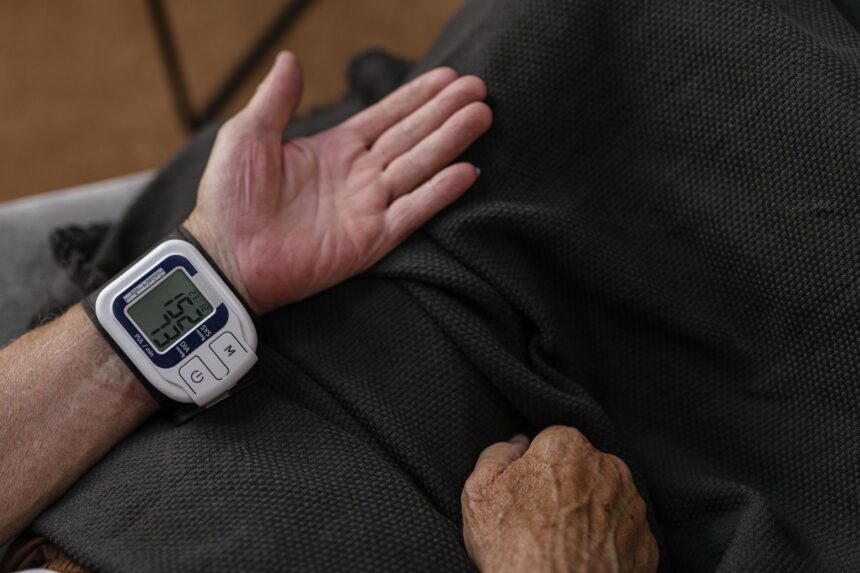
Digital blood pressure monitor with smartphone showing health data transmission
New research shows home blood pressure monitoring with digital data sharing reduces cardiovascular events by 36%. The study demonstrates significant benefits for heart attack and stroke prevention. — Photo by SHVETS production on Pexels (Pexels License)
SHARE
1 min read|134 words

New research reveals three critical advantages of home blood pressure monitoring with digital data sharing to healthcare providers. First, this integrated approach reduces cardiovascular events by 36%—a substantial improvement over standard care, demonstrating that technology-enabled self-monitoring delivers measurable health benefits.

Second, real-time digital data transmission enables healthcare providers to identify concerning trends immediately and adjust treatment strategies rapidly, rather than waiting months between clinic visits. This responsiveness is particularly valuable for detecting dangerous blood pressure fluctuations that might otherwise go unnoticed.

Third, home monitoring bridges a crucial gap in traditional hypertension management by capturing blood pressure variations in patients’ natural environments, providing clinicians with more comprehensive data than office-only measurements. For the millions living with hypertension, this accessible intervention represents a practical opportunity to significantly reduce personal cardiovascular risk while supporting better clinical decision-making.

Was this article helpful?
GMJ Brief · Takeaway

📰 Read the full article: Home Blood Pressure Monitoring Reduces Heart Attack and Stroke Risk by 36% →

Related reference
  • Hypertension · Condition
  • Stroke · Condition
  • Iron · Ingredient
Share This Article
Facebook LinkedIn Bluesky Copy Link Print
GMJ
ByProf. Giorgi Pkhakadze
Follow:
Prof. Giorgi Pkhakadze, MD, MPH, PhD, is Editor-in-Chief of the Georgian Medical Journal and Chair of the Public Health Institute of Georgia (PHIG). He is Professor and Head of the Department of Social and Behavioural Sciences at David Tvildiani Medical University, and Secretary/Treasurer of the UEMS Section of Public Health. ORCID: 0000-0001-7609-4515.

Submit Your Paper →

Georgia's peer-reviewed open-access medical journal. No APC until January 2027.
Submit Manuscript →
Brain and Immune System Aging Emerge as True Lifespan Predictors in Major UK Biobank Study

Only two of 11 organ-aging clocks independently predicted lifespan in 44,498 UK…

Heart’s First Beat Emerges From Collective Synchronisation, Not a Single ‘Starter Switch’

Scientists have identified that the heart's first beat emerges from collective electrical…

How a single dose of creatine protects cognitive function during sleep deprivation

A single high-dose oral creatine supplement preserved cognitive performance by up to…

Submit Your Paper to GMJ

No APC until January 2027.
Submit Manuscript →

You Might Also Like

Medical practice closure statistics showing rural hospital and clinic impacts on healthcare access

What Healthcare Practice Closures Mean for Patient Care: Critical Implications Explained

By
Prof. Giorgi Pkhakadze
18/07/2026
Chart showing declining healthcare cost security in the United States from 2021 to 2026

New Data: US Healthcare Affordability Declines 4 Points in Five Years

By
Prof. Giorgi Pkhakadze
25/07/2026
Amish community healthcare practices and public health policy considerations

Three Essential Lessons Healthcare Providers Must Learn From Amish Community Health Challenges

By
Prof. Giorgi Pkhakadze
07/07/2026

EBOLA OUTBREAK – DRC/UGANDA CROSS-BORDER TRANSMISSION CONFIRMED

By
Prof. Giorgi Pkhakadze
31/05/2026
Facebook Twitter Youtube Instagram
Company
  • Privacy Policy
  • Contact US
  • GMJ Journal
  • Submit Manuscript
  • Editorial Team
  • Register at GMJ
  • Terms of Use

Subscribe to GMJ News — Click here

Join Community
© 2026 Georgian Medical Journal (GMJ). Published by the Public Health Institute of Georgia (PHIG). All rights reserved.
Welcome Back!

Sign in to your account

Username or Email Address
Password

Lost your password?

Not a member? Sign Up