By using this site, you agree to the Privacy Policy and Terms of Use.
Accept
GMJ NewsGMJ NewsGMJ News
  • Latest News
    • GMJ Briefs
  • Podcast & Media
    • Podcast Episodes
    • GMJ Audio
    • GMJ Videos
  • Research Digest
    • New Studies
    • Georgian Research
    • Data & Numbers
  • Policy & Systems
    • Health Policy
    • Quality & Safety
    • Migration & Health
    • Global Health
  • Practice
    • Clinical Updates
    • Case Discussions
    • Pharmacy & Prescribing
    • Ingredients A-Z
  • Perspectives
    • Editorial
    • Explainers
    • Voices
    • Letters
  • GMJ Articles
    • Vol. 1 Issue 2 (2026)
    • Vol. 1 Issue 1 (2026)
    • Pre-Launch Articles (2025)
  • Read the Journal →
  • About GMJ News
Notification Show More
Font ResizerAa
GMJ NewsGMJ News
Font ResizerAa
  • Latest News
    • GMJ Briefs
  • Podcast & Media
    • Podcast Episodes
    • GMJ Audio
    • GMJ Videos
  • Research Digest
    • New Studies
    • Georgian Research
    • Data & Numbers
  • Policy & Systems
    • Health Policy
    • Quality & Safety
    • Migration & Health
    • Global Health
  • Practice
    • Clinical Updates
    • Case Discussions
    • Pharmacy & Prescribing
    • Ingredients A-Z
  • Perspectives
    • Editorial
    • Explainers
    • Voices
    • Letters
  • GMJ Articles
    • Vol. 1 Issue 2 (2026)
    • Vol. 1 Issue 1 (2026)
    • Pre-Launch Articles (2025)
  • Read the Journal →
  • About GMJ News
Follow US
GMJ News > GMJ Briefs > Three Essential Shifts in Rural Health Research: What Clinicians Need to Know

Three Essential Shifts in Rural Health Research: What Clinicians Need to Know

GMJ
Last updated: 30/06/2026 11:30
By
Prof. Giorgi Pkhakadze
Share
1 Min Read
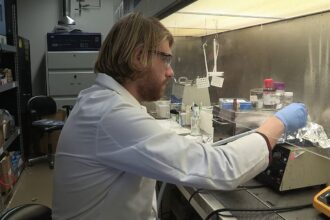
Rural healthcare facility with digital health monitoring equipment
New Griffith University research shows how real-world data and alternative methodologies could maintain scientific rigor in rural health studies where traditional randomized controlled trials face implementation barriers. Digital platforms and pragmatic trial designs offer promising solutions for evidence-based rural healthcare. — Photo: Charles Criscuolo / Pexels
SHARE
1 min read|151 words

Rural health research is undergoing a fundamental transformation as traditional randomized controlled trials prove impractical in remote settings. Griffith University researchers identify three critical developments that should inform clinical practice and policy decisions.

First, real-world evidence using electronic health records and patient registries now offers scientifically valid alternatives to RCTs, particularly for chronic disease management. Second, digital health platforms enable high-quality remote data collection without compromising research rigor, overcoming geographic barriers that previously limited rural participation. Third, regulatory agencies and the World Health Organization increasingly recognize diverse evidence methodologies as legitimate for clinical decision-making in underserved populations.

For practitioners in rural settings, these shifts mean stronger evidence bases for treatment decisions, greater opportunities to participate in health research, and improved access to evidence-based interventions developed with populations similar to their own. The field is moving toward inclusive, practical research approaches that serve all communities.

Read the full article on GMJ Newsroom.

Submit Your Paper
GMJ_Submit_Banner

Was this article helpful?

GMJ Brief · Takeaway

📰 Read the full article: Real-world data could revolutionize rural health research when RCTs prove impractical →

Share This Article
Facebook LinkedIn Bluesky Copy Link Print
GMJ
ByProf. Giorgi Pkhakadze
Follow:
Prof. Giorgi Pkhakadze, MD, MPH, PhD, is Editor-in-Chief of the Georgian Medical Journal and Chair of the Public Health Institute of Georgia (PHIG). He is Professor and Head of the Department of Social and Behavioural Sciences at David Tvildiani Medical University, and Secretary/Treasurer of the UEMS Section of Public Health. ORCID: 0000-0001-7609-4515.

Submit Your Paper →

Georgia's peer-reviewed open-access medical journal. No APC until January 2027.
Submit Manuscript →
Rare Lymphatic-Urinary Fistula Causes Milky Urine in NEJM Case Report

A rare case of chyluria caused by a lymphatic-urinary fistula demonstrates how…

Gene Therapy Shows Promise for Inherited Cholesterol Disorder in First-in-Human Trial

First-in-human gene therapy trial shows preliminary safety and efficacy for treating homozygous…

Teen Drug Use and Binge Drinking Linked to Severe Mental Health Crisis

UCLA research reveals dangerous links between teen substance use and mental health…

Submit Your Paper to GMJ

No APC until January 2027.
Submit Manuscript →

You Might Also Like

PHEIC Declaration: Ebola Outbreak – DRC with Cross-Border Transmission to Uganda

By
Prof. Giorgi Pkhakadze
31/05/2026

🚨 CDC Activates Emergency Operations Center for New World Screwworm Response

By
Prof. Giorgi Pkhakadze
20/06/2026
Nigerian food safety officials and WHO World Food Safety Day 2026 campaign materials

Nigeria Launches Coordinated Response to Global Food Safety Crisis

By
Prof. Giorgi Pkhakadze
25/06/2026
Digital interface showing UK MHRA electronic export certificate system for pharmaceutical companies

What UK Pharmaceutical Companies Need to Know About the New Export Certificate System

By
Prof. Giorgi Pkhakadze
27/06/2026
Facebook Twitter Youtube Instagram
Company
  • Privacy Policy
  • Contact US
  • GMJ Journal
  • Submit Manuscript
  • Editorial Team
  • Register at GMJ
  • Terms of Use

Subscribe to GMJ News — Click here

Join Community
© 2026 Georgian Medical Journal (GMJ). Published by the Public Health Institute of Georgia (PHIG). All rights reserved.
Welcome Back!

Sign in to your account

Username or Email Address
Password

Lost your password?

Not a member? Sign Up