
By using this site, you agree to the Privacy Policy and Terms of Use.
Accept
GMJ NewsGMJ NewsGMJ News
  • Latest News
    • GMJ Briefs
  • Podcast & Media
    • Podcast Episodes
    • GMJ Audio
    • GMJ Videos
  • Research Digest
    • New Studies
    • Georgian Research
    • Data & Numbers
  • Policy & Systems
    • Health Policy
    • Quality & Safety
    • Migration & Health
    • Global Health
  • Practice
    • Clinical Updates
    • Case Discussions
    • Pharmacy & Prescribing
    • Ingredients A-Z
  • Perspectives
    • Editorial
    • Explainers
    • Voices
    • Letters
  • GMJ Articles
    • Vol. 1 Issue 2 (2026)
    • Vol. 1 Issue 1 (2026)
    • Pre-Launch Articles (2025)
  • Read the Journal →
  • About GMJ News
Notification Show More
Font ResizerAa
GMJ NewsGMJ News
Font ResizerAa
  • Latest News
    • GMJ Briefs
  • Podcast & Media
    • Podcast Episodes
    • GMJ Audio
    • GMJ Videos
  • Research Digest
    • New Studies
    • Georgian Research
    • Data & Numbers
  • Policy & Systems
    • Health Policy
    • Quality & Safety
    • Migration & Health
    • Global Health
  • Practice
    • Clinical Updates
    • Case Discussions
    • Pharmacy & Prescribing
    • Ingredients A-Z
  • Perspectives
    • Editorial
    • Explainers
    • Voices
    • Letters
  • GMJ Articles
    • Vol. 1 Issue 2 (2026)
    • Vol. 1 Issue 1 (2026)
    • Pre-Launch Articles (2025)
  • Read the Journal →
  • About GMJ News
Follow US
GMJ News > GMJ Briefs > Three Essential Steps for Healthcare Professionals Responding to Colleague Misconduct

Three Essential Steps for Healthcare Professionals Responding to Colleague Misconduct

GMJ
Last updated: 24/07/2026 12:43
By
Prof. Giorgi Pkhakadze
Share
1 Min Read
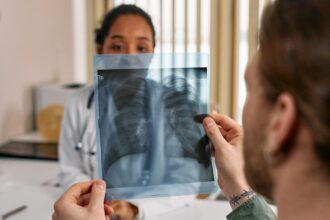
Healthcare professionals discussing patient care standards and professional conduct
New BMJ guidance provides healthcare professionals with a structured framework for addressing colleague's derogatory patient comments. Expert recommendations emphasize assessing intent and timing responses appropriately. — Photo by RDNE Stock project on Pexels (Pexels License)
SHARE
1 min read|151 words

When confronted with a colleague’s derogatory patient comment, healthcare professionals should follow three evidence-based steps to address the behavior constructively and effectively. First, assess the intent and emotional context surrounding the remark—recognizing whether the comment stems from deliberate harm or unintentional insensitivity, and identifying external stressors like fatigue or personal stress that may have contributed.

Second, resist the impulse toward immediate confrontation. Taking time to plan a measured response increases effectiveness and prevents escalation that can damage professional relationships. Finally, address the behavior by focusing on impact rather than attacking character. This approach maintains dignity for both the individual and supports learning and behavioral change.

This practical framework, grounded in BMJ guidance, empowers clinicians to become agents of positive cultural change within their institutions. By shifting from punitive to educational responses, healthcare teams can foster sustainable professionalism while supporting colleague growth and accountability. Read the full article on GMJ Newsroom.

Was this article helpful?
GMJ Brief · Takeaway

📰 Read the full article: When Colleagues Make Derogatory Comments About Patients: A Clinical Response Guide →

Share This Article
Facebook LinkedIn Bluesky Copy Link Print
GMJ
ByProf. Giorgi Pkhakadze
Follow:
Prof. Giorgi Pkhakadze, MD, MPH, PhD, is Editor-in-Chief of the Georgian Medical Journal and Chair of the Public Health Institute of Georgia (PHIG). He is Professor and Head of the Department of Social and Behavioural Sciences at David Tvildiani Medical University, and Secretary/Treasurer of the UEMS Section of Public Health. ORCID: 0000-0001-7609-4515.

Submit Your Paper →

Georgia's peer-reviewed open-access medical journal. No APC until January 2027.
Submit Manuscript →
How B Vitamins and Micronutrients Power the Brain’s Energy System

The brain consumes 20% of adult body energy—up to 50% in children—demanding…

Why Nutraceuticals Help Depression: Not by Acting as Drugs, but by Fixing What Antidepressants Miss

A 2025 meta-analysis reveals that nutraceuticals improve depression outcomes when added to…

Sleep Quality Drives Daily Movement More Than Exercise Boosts Rest, 2025 Data Shows

Wearable data from 71,000 adults over 3.5 years reveal that sleep quality…

Submit Your Paper to GMJ

No APC until January 2027.
Submit Manuscript →

You Might Also Like

Medical illustration showing geographic map with lung transplant access indicators across US regions

Data Shows Stark Regional Gaps in Lung Transplant Availability

By
Prof. Giorgi Pkhakadze
14/06/2026
Infographic showing 67% of daily water intake from beverages, 33% from food moisture, based on O'Connor et al. study data

The 8×8 Water Rule: A Health Myth Without Scientific Foundation

By
Prof. Giorgi Pkhakadze
26/07/2026
WOAH animal health status recognition programme milestone infographic

Three Decades of Global Animal Disease Control: WOAH Marks Historic Recognition Programme Milestone

By
Prof. Giorgi Pkhakadze
30/06/2026
Medical illustration showing placenta accreta spectrum condition in pregnancy

Announcement: Placenta Accreta Spectrum Research Challenges Traditional Understanding of High-Risk Pregnancy Condition

By
Prof. Giorgi Pkhakadze
11/07/2026
Facebook Twitter Youtube Instagram
Company
  • Privacy Policy
  • Contact US
  • GMJ Journal
  • Submit Manuscript
  • Editorial Team
  • Register at GMJ
  • Terms of Use

Subscribe to GMJ News — Click here

Join Community
© 2026 Georgian Medical Journal (GMJ). Published by the Public Health Institute of Georgia (PHIG). All rights reserved.
Welcome Back!

Sign in to your account

Username or Email Address
Password

Lost your password?

Not a member? Sign Up