
By using this site, you agree to the Privacy Policy and Terms of Use.
Accept
GMJ NewsGMJ NewsGMJ News
  • Latest News
    • GMJ Briefs
  • Podcast & Media
    • Podcast Episodes
    • GMJ Audio
    • GMJ Videos
  • Research Digest
    • New Studies
    • Georgian Research
    • Data & Numbers
  • Policy & Systems
    • Health Policy
    • Quality & Safety
    • Migration & Health
    • Global Health
  • Practice
    • Clinical Updates
    • Case Discussions
    • Pharmacy & Prescribing
    • Ingredients A-Z
  • Dictionary
    • Browse A–Z
    • About the Project
    • Contribute a Term
  • Perspectives
    • Editorial
    • Explainers
    • Voices
    • Letters
  • Health Topics
  • GMJ Articles
    • Vol. 1 Issue 2 (2026)
    • Vol. 1 Issue 1 (2026)
    • Pre-Launch Articles (2025)
  • Read the Journal →
  • About GMJ News
Notification Show More
Font ResizerAa
GMJ NewsGMJ News
Font ResizerAa
  • Latest News
    • GMJ Briefs
  • Podcast & Media
    • Podcast Episodes
    • GMJ Audio
    • GMJ Videos
  • Research Digest
    • New Studies
    • Georgian Research
    • Data & Numbers
  • Policy & Systems
    • Health Policy
    • Quality & Safety
    • Migration & Health
    • Global Health
  • Practice
    • Clinical Updates
    • Case Discussions
    • Pharmacy & Prescribing
    • Ingredients A-Z
  • Dictionary
    • Browse A–Z
    • About the Project
    • Contribute a Term
  • Perspectives
    • Editorial
    • Explainers
    • Voices
    • Letters
  • Health Topics
  • GMJ Articles
    • Vol. 1 Issue 2 (2026)
    • Vol. 1 Issue 1 (2026)
    • Pre-Launch Articles (2025)
  • Read the Journal →
  • About GMJ News
Follow US
GMJ News > GMJ Briefs > Three Reasons to Start Strength Training Now for Long-Term Brain Health

Three Reasons to Start Strength Training Now for Long-Term Brain Health

GMJ
Last updated: 24/08/2026 17:30
By
Prof. Giorgi Pkhakadze
Share
1 Min Read
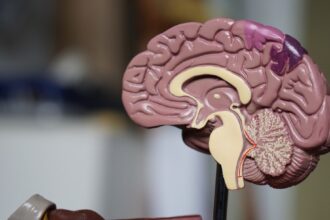
Illustration of muscle strength signalling neuroprotective mechanisms in the aging brain: endothelial function, neurotrophic factors, and neuroinflammation control.
Resistance training protects cognitive health through seven distinct biological pathways—vascular, molecular, and inflammatory. Greater muscle strength is associated with lower Alzheimer's and dementia risk, not because muscles and brain are directly connected, but because strength training remodels the systems that support brain aging. — Photo by Ketut Subiyanto on Pexels (Pexels License)
SHARE
1 min read|114 words

Evidence-based research identifies three compelling mechanisms explaining why resistance training should be a cornerstone of dementia prevention strategy. First, strength training reduces amyloid-beta and tau protein accumulation—the hallmark pathological features of Alzheimer’s disease—by modulating neuroinflammatory processes. Second, resistance exercise strengthens the blood-brain barrier, your brain’s critical defensive shield against toxic proteins and pathogens that accelerate neurodegeneration. Third, consistent strength training preserves white-matter integrity—the neural wiring that maintains cognitive processing speed and memory function throughout aging. Importantly, research emphasizes that consistency outweighs intensity; regular, moderate resistance training sessions provide greater long-term neuroprotection than sporadic high-intensity efforts. Starting a sustainable 2–3 session-per-week resistance program now may significantly reduce your cognitive decline risk decades later.

Was this article helpful?
GMJ Brief · Takeaway

📰 Read the full article: Resistance Training Protects Brain Health: How Muscle Strength Reduces Dementia Risk →

Share This Article
Facebook LinkedIn Bluesky Copy Link Print
GMJ
ByProf. Giorgi Pkhakadze
Follow:
Prof. Giorgi Pkhakadze, MD, MPH, PhD, is Editor-in-Chief of the Georgian Medical Journal and Chair of the Public Health Institute of Georgia (PHIG). He is Professor and Head of the Department of Social and Behavioural Sciences at David Tvildiani Medical University, and Secretary/Treasurer of the UEMS Section of Public Health. ORCID: 0000-0001-7609-4515.

Submit Your Paper →

Georgia's peer-reviewed open-access medical journal. No APC until January 2027.
Submit Manuscript →
Ethiopia Study Reveals Stakeholder Concerns Over Novel Malaria Treatments

A qualitative study in Ethiopia reveals that health workers and patients view…

Sitafloxacin monotherapy matches doxycycline-rifampicin for brucellosis treatment in landmark trial

A multicenter randomized trial in The Lancet Regional Health – Western Pacific…

Ultra-processed foods linked to higher kidney cancer risk in large US study

A prospective analysis of over 300,000 US adults found that higher consumption…

Submit Your Paper to GMJ

No APC until January 2027.
Submit Manuscript →

You Might Also Like

Scientific illustration of amygdala brain circuits involved in anxiety processing

Complete Anxiety Reversal Achieved Through Amygdala Circuit Restoration

By
Prof. Giorgi Pkhakadze
22/06/2026
Scientific illustration of cell division failure showing tetraploid cells with doubled DNA content

The Tetraploidy Puzzle: Understanding Why Abnormal Cells Don’t Always Die

By
Prof. Giorgi Pkhakadze
10/06/2026
Sunscreen ingredient approval timeline showing 25-year gap between FDA approvals

FDA Breaks 25-Year Drought: Bemotrizinol Approval Reshapes US Sunscreen Market

By
Prof. Giorgi Pkhakadze
19/07/2026
Conceptual illustration showing interconnected flags of middle power countries around health AI technology symbols

Big Tech Controls 62% of Health AI Market as Public Initiatives Lag Behind

By
Prof. Giorgi Pkhakadze
08/07/2026
Facebook Twitter Youtube Instagram
Company
  • Privacy Policy
  • Contact US
  • GMJ Journal
  • Submit Manuscript
  • Editorial Team
  • Register at GMJ
  • Terms of Use

Subscribe to GMJ News — Click here

Join Community
© 2026 Georgian Medical Journal (GMJ). Published by the Public Health Institute of Georgia (PHIG). All rights reserved.
Welcome Back!

Sign in to your account

Username or Email Address
Password

Lost your password?