By using this site, you agree to the Privacy Policy and Terms of Use.
Accept
GMJ NewsGMJ NewsGMJ News
  • Latest News
    • GMJ Briefs
  • Podcast & Media
    • Podcast Episodes
    • GMJ Audio
    • GMJ Videos
  • Research Digest
    • New Studies
    • Georgian Research
    • Data & Numbers
  • Policy & Systems
    • Health Policy
    • Quality & Safety
    • Migration & Health
    • Global Health
  • Practice
    • Clinical Updates
    • Case Discussions
    • Pharmacy & Prescribing
    • Ingredients A-Z
  • Perspectives
    • Editorial
    • Explainers
    • Voices
    • Letters
  • GMJ Articles
    • Vol. 1 Issue 2 (2026)
    • Vol. 1 Issue 1 (2026)
    • Pre-Launch Articles (2025)
  • Read the Journal →
  • About GMJ News
Notification Show More
Font ResizerAa
GMJ NewsGMJ News
Font ResizerAa
  • Latest News
    • GMJ Briefs
  • Podcast & Media
    • Podcast Episodes
    • GMJ Audio
    • GMJ Videos
  • Research Digest
    • New Studies
    • Georgian Research
    • Data & Numbers
  • Policy & Systems
    • Health Policy
    • Quality & Safety
    • Migration & Health
    • Global Health
  • Practice
    • Clinical Updates
    • Case Discussions
    • Pharmacy & Prescribing
    • Ingredients A-Z
  • Perspectives
    • Editorial
    • Explainers
    • Voices
    • Letters
  • GMJ Articles
    • Vol. 1 Issue 2 (2026)
    • Vol. 1 Issue 1 (2026)
    • Pre-Launch Articles (2025)
  • Read the Journal →
  • About GMJ News
Follow US
GMJ News > GMJ Briefs > Type 2 Diabetes Significantly Elevates Dementia Risk: What the Data Shows

Type 2 Diabetes Significantly Elevates Dementia Risk: What the Data Shows

GMJ
Last updated: 23/07/2026 22:52
By
Prof. Giorgi Pkhakadze
Share
1 Min Read
Brain imaging showing grey matter atrophy in diabetes-related cognitive decline
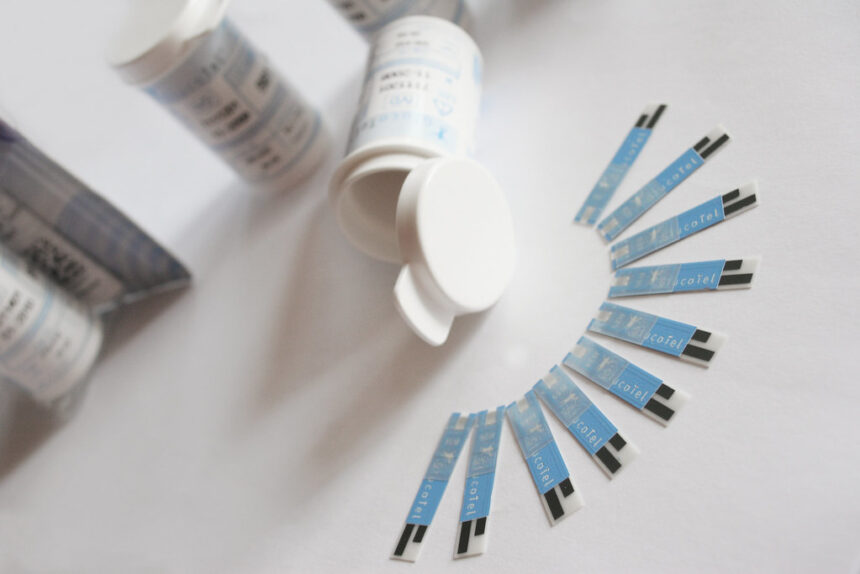
Mounting evidence reveals that diabetes and dementia share bidirectional pathophysiological pathways involving impaired glucose metabolism, chronic inflammation, and vascular dysfunction. Emerging research suggests select diabetes medications may confer neuroprotective benefits, opening new avenues for cognitive preservation in aging populations. — "Diabetes Testing Strips" by bodytel is licensed under CC BY-ND 2.0. To view a copy of this license, visit https://creativecommons.org/licenses/by-nd/2.0/. (CC BY-ND 2.0)
SHARE
1 min read|100 words

Meta-analyses of prospective cohort studies reveal a sobering epidemiological finding: individuals with type 2 diabetes face a 2-3 times higher relative risk of developing dementia compared to non-diabetic peers. This substantial elevation in risk reflects the cumulative impact of dysregulated insulin signalling and chronic hyperglycaemia on brain structure and function. The mechanistic pathways responsible include cerebrovascular damage, neuroinflammatory cascades, and compromised neuronal energy production. However, recent pharmacological research offers a counterpoint to this bleak outlook. Emerging evidence indicates that select diabetes medications confer neuroprotective benefits independent of glucose control alone, suggesting novel preventive strategies may soon extend beyond conventional metabolic management.

Was this article helpful?

GMJ Brief · Key Finding

📰 Read the full article: Diabetes and Dementia: New Evidence Reveals Bidirectional Risk and Potential Neuroprotection →

Related reference
  • Type 2 Diabetes · Condition
  • Insulin · Drug
Share This Article
Facebook LinkedIn Bluesky Copy Link Print
GMJ
ByProf. Giorgi Pkhakadze
Follow:
Prof. Giorgi Pkhakadze, MD, MPH, PhD, is Editor-in-Chief of the Georgian Medical Journal and Chair of the Public Health Institute of Georgia (PHIG). He is Professor and Head of the Department of Social and Behavioural Sciences at David Tvildiani Medical University, and Secretary/Treasurer of the UEMS Section of Public Health. ORCID: 0000-0001-7609-4515.

Submit Your Paper →

Georgia's peer-reviewed open-access medical journal. No APC until January 2027.
Submit Manuscript →
How the brain controls inflammation: The vagus nerve’s unexpected role in immune regulation

The brain controls inflammation through an electrical circuit called the inflammatory reflex,…

Brain Network Fragmentation at Legal Alcohol Limits Predicts Intoxication Severity, fMRI Study Shows

New fMRI research shows that at identical blood alcohol concentrations, individuals experience…

How Your Immune System Works: A Guide to Its Specialized Cells and Functions

Your immune system is an organized network of specialized cells—dendritic cells, T…

Submit Your Paper to GMJ

No APC until January 2027.
Submit Manuscript →

You Might Also Like

Community Trust Critical to Controlling Ebola Outbreak in DRC, UN Says

By
Prof. Giorgi Pkhakadze
17/06/2026
Global HIV/AIDS response challenges visualization showing funding cuts as primary threat

2030 AIDS Elimination Goal in Jeopardy, New Data Reveals

By
Prof. Giorgi Pkhakadze
11/07/2026
Scientific illustration showing genetic diversity mapping across Indigenous American populations

Indigenous Genetic Adaptations Offer Blueprint for Personalized Medicine and Health Equity

By
Prof. Giorgi Pkhakadze
30/06/2026
Medical illustration of bispecific antibody targeting cancer cells

67% Disease Control Rate: Bispecific Antibody Shows Efficacy in Checkpoint Inhibitor-Resistant Patients

By
Prof. Giorgi Pkhakadze
18/06/2026
Facebook Twitter Youtube Instagram
Company
  • Privacy Policy
  • Contact US
  • GMJ Journal
  • Submit Manuscript
  • Editorial Team
  • Register at GMJ
  • Terms of Use

Subscribe to GMJ News — Click here

Join Community
© 2026 Georgian Medical Journal (GMJ). Published by the Public Health Institute of Georgia (PHIG). All rights reserved.
Welcome Back!

Sign in to your account

Username or Email Address
Password

Lost your password?

Not a member? Sign Up