Updated 13/09/2026
🟠 Moderate Evidence
Two individuals consuming identical amounts of alcohol—reaching the same blood alcohol concentration (BAC)—may experience markedly different degrees of intoxication. New functional MRI research published in Drug and Alcohol Dependence (2025) suggests that the brain’s structural response to alcohol, not merely the blood level itself, determines subjective intoxication. The study found that alcohol-induced fragmentation of neural network connectivity correlates more strongly with perceived intoxication than BAC alone.
Key takeaways
- At identical BAC levels, individuals show variable brain network fragmentation measured by fMRI
- Greater disruption of connections between brain regions predicts higher subjective intoxication
- Brain imaging may eventually help assess functional impairment beyond traditional breathalyser readings
Study at a Glance
| Source | Drug and Alcohol Dependence |
| Study type | Observational neuroimaging study |
| Method | Functional MRI under controlled alcohol dosing |
| Focus | Neural network connectivity and subjective intoxication |
| Year | 2025 |
Neural Response Variability at Identical BAC Levels
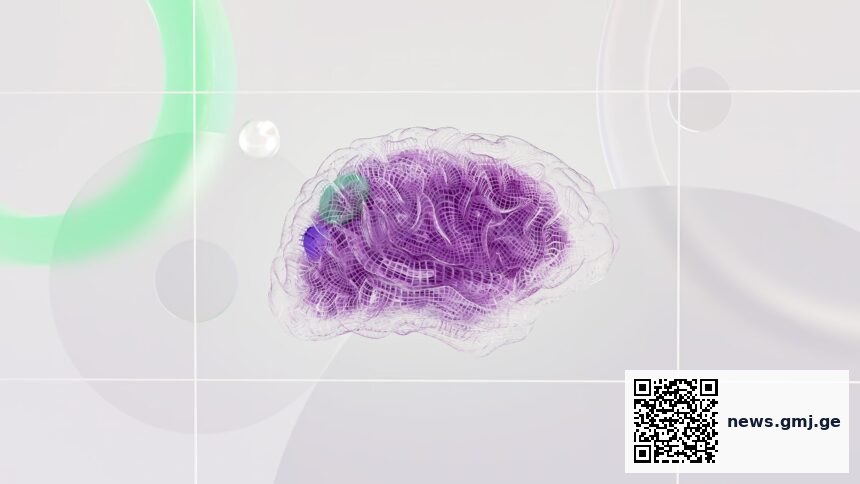
Brain network fragmentation correlates with subjective intoxication more strongly than blood alcohol concentration, according to fMRI analysis

Source: Biessenberger et al., Drug and Alcohol Dependence, 2025 | Georgian Medical Journal News
How alcohol reorganizes brain networks
Alcohol is widely understood as a central nervous system depressant, but the mechanism of intoxication extends beyond simple sedation. Research by Biessenberger and colleagues, published in Drug and Alcohol Dependence (2025), employed functional MRI to examine how alcohol alters communication between distinct brain regions. Participants consumed controlled doses of alcohol while undergoing brain imaging, allowing researchers to measure real-time changes in neural connectivity.
The findings reveal that alcohol does not uniformly depress all neural activity. Instead, it disrupts the coordinated firing patterns between brain regions—fragmenting integrated networks into isolated functional islands. This network disorganization occurs at the same BAC levels across individuals, yet with variable severity. Related neuroscience research has consistently shown that alcohol’s effects on cognition correlate with this network disruption rather than a simple dose-response model.
Individual variation in brain response predicts subjective intoxication
A critical finding from the Biessenberger study is that degree of network fragmentation—the extent to which alcohol severs inter-regional communication—shows substantial individual variation at identical BAC levels. Some individuals experience mild network disruption while others show marked fragmentation. This variation directly correlates with how intoxicated participants report feeling, independent of their measured blood alcohol level.
This observation has practical significance for understanding impairment. Two drivers with the same BAC may face identical legal consequences, yet neurologically—and functionally—experience different levels of cognitive compromise. The brain’s reorganization under alcohol, measured through network fragmentation metrics, may be a more accurate proxy for functional impairment than BAC alone. This aligns with emerging clinical evidence suggesting that individual pharmacodynamic responses to alcohol vary more than traditional toxicology models suggest.
Implications for intoxication assessment and driving safety
Current roadside and clinical assessments of alcohol impairment rely on BAC measurement via breath or blood testing, often coupled with behavioural observation. The Biessenberger findings suggest that these tools may miss important individual variation in actual neural dysfunction. Individuals with greater network fragmentation at a given BAC may face greater impairment in reaction time, decision-making, and motor control—the precise capacities required for safe driving.
The research raises questions about the adequacy of uniform BAC limits as measures of safe driving. If brain network reorganization is the true driver of functional impairment, then future roadside assessment tools might incorporate markers of neural disruption rather than—or in addition to—blood alcohol concentration. Such advances could improve the specificity and fairness of impairment detection, though substantial validation work would be required before clinical or legal implementation.
Alcohol-induced brain network fragmentation, measured by functional MRI, correlates more strongly with subjective intoxication than blood alcohol concentration alone, suggesting that neural reorganization—not sedation—characterises alcohol’s functional impact.
— Biessenberger et al., Drug and Alcohol Dependence, 2025
What this means
Frequently asked questions
Does this mean breathalyser tests are unreliable?
Not unreliable, but incomplete. Breathalysers accurately measure BAC, which remains a valid legal and clinical marker. However, the Biessenberger study shows that BAC alone does not fully predict functional impairment. Two individuals with identical BAC may have different brain network fragmentation and thus different actual impairment—a limitation of current BAC-focused assessment.
Can fMRI be used at roadside to assess impairment?
Practically, no. Functional MRI requires a hospital-grade scanner, trained operators, and 20–30 minutes of scanning time. It is not portable or rapid enough for roadside testing. However, the underlying science may eventually lead to simpler biomarkers or portable devices that measure neural disruption more directly than current BAC tests do.
Why do some people feel less drunk than others at the same BAC?
Tolerance, body composition, genetics, and individual metabolic variation all contribute. The Biessenberger study adds a neurobiological explanation: individuals differ in how much their brain networks fragment in response to a given BAC. Those with less fragmentation may feel—and actually be—less functionally impaired despite identical blood alcohol levels.
As alcohol research advances, the classical model of intoxication as simple sedation is giving way to a more nuanced understanding of how alcohol reorganises neural communication. The Biessenberger study exemplifies this shift, showing that the brain’s response to alcohol is far more individualised than BAC levels suggest. Future work may translate these neuroimaging insights into practical, rapid assessment tools that better capture true functional impairment—potentially improving both clinical diagnosis and public safety frameworks. The next phase will require large-scale validation studies and the development of non-imaging biomarkers that correlate with network fragmentation, bridging the gap between laboratory neuroscience and real-world impairment detection.
Source: Biessenberger et al., Drug and Alcohol Dependence, 2025
🗺️ Find certified Georgian healthcare providers: sheniekimi.ge — Georgia Health Map · 998 clinics · 6,600+ doctors · 2,296 pharmacies
Was this article helpful?
Disclaimer. This article is health journalism intended for general information and education. It is not medical advice and is not a substitute for professional diagnosis or treatment. Always consult a qualified healthcare provider about your individual circumstances. Full disclaimer →
Related Coverage
Editorial standards. This article was produced under the GMJ News editorial process, with oversight by the GMJ Editorial Board. Our editorial process. Spotted an error? Contact the editorial team.