By using this site, you agree to the Privacy Policy and Terms of Use.
Accept
GMJ NewsGMJ NewsGMJ News
  • Latest News
    • GMJ Briefs
  • Podcast & Media
    • Podcast Episodes
    • GMJ Audio
    • GMJ Videos
  • Research Digest
    • New Studies
    • Georgian Research
    • Data & Numbers
  • Policy & Systems
    • Health Policy
    • Quality & Safety
    • Migration & Health
    • Global Health
  • Practice
    • Clinical Updates
    • Case Discussions
    • Pharmacy & Prescribing
    • Ingredients A-Z
  • Perspectives
    • Editorial
    • Explainers
    • Voices
    • Letters
  • GMJ Articles
    • Vol. 1 Issue 2 (2026)
    • Vol. 1 Issue 1 (2026)
    • Pre-Launch Articles (2025)
  • Read the Journal →
  • About GMJ News
Notification Show More
Font ResizerAa
GMJ NewsGMJ News
Font ResizerAa
  • Latest News
    • GMJ Briefs
  • Podcast & Media
    • Podcast Episodes
    • GMJ Audio
    • GMJ Videos
  • Research Digest
    • New Studies
    • Georgian Research
    • Data & Numbers
  • Policy & Systems
    • Health Policy
    • Quality & Safety
    • Migration & Health
    • Global Health
  • Practice
    • Clinical Updates
    • Case Discussions
    • Pharmacy & Prescribing
    • Ingredients A-Z
  • Perspectives
    • Editorial
    • Explainers
    • Voices
    • Letters
  • GMJ Articles
    • Vol. 1 Issue 2 (2026)
    • Vol. 1 Issue 1 (2026)
    • Pre-Launch Articles (2025)
  • Read the Journal →
  • About GMJ News
Follow US
GMJ News > Practice > Clinical Updates > Orthostatic Hypotension in Parkinson’s Disease: New Clinical Practice Guidelines
Clinical UpdatesPractice

Orthostatic Hypotension in Parkinson’s Disease: New Clinical Practice Guidelines

GMJ
Last updated: 06/07/2026 02:05
By
GMJ Practice Desk
Share
5 Min Read
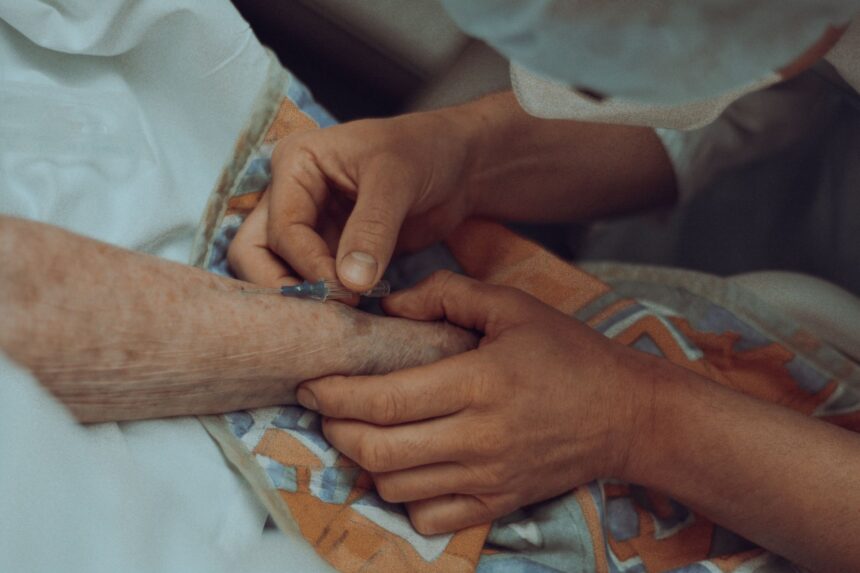
Medical illustration showing blood pressure measurement in Parkinson's patientIllustrative image · Photo by Stéf -b. on Pexels (Pexels License)
New clinical guidelines address orthostatic hypotension, which affects up to 70% of Parkinson's patients. Evidence-based recommendations emphasize systematic screening and non-pharmacological interventions as first-line treatment. — Photo by Stéf -b. on Pexels (Pexels License)
SHARE
3 min read|591 words
✓ Medically reviewed by Prof. Giorgi Pkhakadze, MD, MPH, PhD · ORCID 0000-0001-7609-4515

🟠 Moderate Evidence

Contents
    • Key takeaways
      • Orthostatic Hypotension Prevalence in Neurological Conditions
  • Understanding the Clinical Impact
  • Diagnostic Approach and Monitoring
  • Treatment Strategies and Management
    • What this means
  • Frequently asked questions
    • How is orthostatic hypotension diagnosed in Parkinson’s patients?
    • Can medications for Parkinson’s disease cause orthostatic hypotension?
    • What lifestyle changes can help manage orthostatic hypotension?

Orthostatic hypotension affects up to 70% of patients with Parkinson’s disease, yet remains underdiagnosed and undertreated in clinical practice. New clinical practice guidance published in the Canadian Medical Association Journal provides evidence-based recommendations for managing this common but serious complication.

Key takeaways

  • Orthostatic hypotension occurs in 40-70% of Parkinson’s patients, increasing fall risk by 3-fold
  • Blood pressure should be measured supine and standing in all Parkinson’s patients at each visit
  • Non-pharmacological interventions remain first-line treatment before considering medications
70%
of Parkinson’s patients develop orthostatic hypotension, according to CMAJ clinical guidance

Orthostatic Hypotension Prevalence in Neurological Conditions

Percentage of patients affected by condition

Parkinson’s Disease
70%
Multiple System Atrophy
85%
Diabetic Neuropathy
45%
Pure Autonomic Failure
95%

Source: CMAJ Clinical Practice Guidelines, 2024 | Georgian Medical Journal News

Submit Your Paper
GMJ_Submit_Banner

Understanding the Clinical Impact

Orthostatic hypotension in Parkinson’s disease results from autonomic nervous system dysfunction, a core non-motor feature of the condition. The CMAJ guidance emphasizes that this complication significantly increases fall risk and reduces quality of life.

🎙️ Related Podcast Episodes
🎧 #40 | GMJ Podcast | [Insert Article Title] — Evidence, Clinical Implications, and Public Health Perspective · 16m
🎧 #39 | GMJ Podcast | Acne and Metabolic Dysfunction — Insulin Resistance, IGF-1, and Clinical Implications · 15m
🎧 #29 | GMJ Podcast | GMJ Research: From Manuscript to Publication – How Medical Evidence Becomes Scientific Knowledge · 15m
🎧 #54 | GMJ Podcast | The Blueprint of a Medical Journal: Designing an Open-Access Scientific Platform · 19m
🎧 #53 | GMJ Podcast | Palliative Care in Georgia — Health System Gaps, Access Barriers, and Policy Implications · 16m

The condition is defined as a sustained drop in systolic blood pressure of at least 20 mmHg or diastolic blood pressure of 10 mmHg within three minutes of standing. For patients with clinical conditions like Parkinson’s disease, even smaller drops can be clinically significant.

Diagnostic Approach and Monitoring

The guidelines recommend systematic blood pressure measurement in both supine and standing positions for all Parkinson’s patients. According to the CDC’s blood pressure monitoring standards, patients should lie flat for at least 5 minutes before initial measurement.

Clinicians should also assess for symptoms including dizziness, lightheadedness, fatigue, and cognitive impairment that may indicate orthostatic hypotension. The guidance notes that up to 30% of patients may be asymptomatic, making routine screening essential for patient safety.

Treatment Strategies and Management

Non-pharmacological interventions form the cornerstone of management according to the CMAJ recommendations. These include increasing fluid and salt intake, wearing compression stockings, and implementing postural maneuvers such as leg crossing and muscle tensing.

When pharmacological intervention becomes necessary, the guidelines suggest considering medications like fludrocortisone or midodrine. However, treatment must be carefully balanced against the risk of supine hypertension, which affects up to 50% of patients with orthostatic hypotension. The National Institutes of Health emphasizes the importance of individualized treatment approaches.

Orthostatic hypotension increases fall risk by 3-fold in Parkinson’s patients and significantly impacts daily functioning and quality of life

— CMAJ Clinical Practice Guidelines (Canadian Medical Association Journal, 2024)

What this means

For patients: Regular blood pressure monitoring and lifestyle modifications can significantly reduce symptoms and fall risk
For clinicians: Systematic screening and evidence-based management protocols improve patient outcomes and safety
For policymakers: Healthcare systems should ensure adequate resources for comprehensive Parkinson’s care including autonomic assessment

Frequently asked questions

How is orthostatic hypotension diagnosed in Parkinson’s patients?

Diagnosis requires measuring blood pressure after lying flat for 5 minutes, then again after standing for 1-3 minutes. A drop of 20/10 mmHg or more indicates orthostatic hypotension.

Can medications for Parkinson’s disease cause orthostatic hypotension?

Yes, both dopamine medications and certain Parkinson’s treatments can worsen orthostatic hypotension. Medication adjustments may be necessary under medical supervision.

What lifestyle changes can help manage orthostatic hypotension?

Key strategies include increasing fluid intake, adding salt to diet, wearing compression stockings, rising slowly from sitting or lying positions, and performing counter-pressure maneuvers.

These clinical guidelines represent an important step forward in addressing a commonly overlooked complication of Parkinson’s disease. Implementation of systematic screening and evidence-based management strategies has the potential to significantly improve patient outcomes and reduce healthcare costs associated with falls and related injuries.

Source: L’hypotension orthostatique chez les personnes atteintes de la maladie de Parkinson [Pratique]

Was this article helpful?

Disclaimer. This article is health journalism intended for general information and education. It is not medical advice and is not a substitute for professional diagnosis or treatment. Always consult a qualified healthcare provider about your individual circumstances. Full disclaimer →

Related Coverage

Ebola Bundibugyo outbreak accelerates in DRC with 24.7% case surge; one case detected in FranceJul 6, 2026
Uganda Confirms First Marburg Case Amid Ongoing Ebola OutbreakJul 6, 2026
Mobile Vascular Clinic Prevents Amputations Among Homeless Patients in BostonJul 5, 2026
Minocycline Stroke Trial Debate Highlights Neuroprotection Research ChallengesJul 5, 2026
Related reference
  • Multiple system atrophy · Condition
  • Hypertension · Condition
PG
Written by
Prof. Giorgi Pkhakadze, MD, MPH, PhD
Editor-in-Chief, GMJ News
Full profile →  ·  ORCID 0000-0001-7609-4515
Medical disclaimer. This article is health journalism intended for general information. It is not medical advice and is not a substitute for consultation with a qualified healthcare professional. Always seek your physician's advice regarding any medical condition.
Medically reviewed by Prof. Giorgi Pkhakadze, MD, MPH, PhD. Spotted an error? Contact the editorial team.
Get the GMJ News digest
Evidence-based health journalism in your inbox. No spam; unsubscribe anytime.
TAGGED:autonomic dysfunctionclinical guidelinesfall preventionorthostatic hypotensionParkinson's disease
Share This Article
Facebook LinkedIn Bluesky Copy Link Print
GMJ
ByGMJ Practice Desk
Follow:
GMJ Practice Desk is part of GMJ News, the newsroom of the Georgian Medical Journal (gmj.ge), published by the Public Health Institute of Georgia. Every article is editorially reviewed before publication.
Leave a Comment Leave a Comment

Leave a Reply Cancel reply

Your email address will not be published. Required fields are marked *

Submit Your Paper →

Georgia's peer-reviewed open-access medical journal. No APC until January 2027.
Submit Manuscript →
CMAJ Issues Correction to Major Electronic Health Records Study Across Canada

CMAJ issues correction to comprehensive study examining electronic health record implementation and…

Autism Panel Promotes Controversial Telepathy-Based Spelling Therapy Despite Abuse Warnings

Kennedy's autism panel promotes facilitated communication methods debunked by research, with studies…

Ebola Bundibugyo outbreak accelerates in DRC with 24.7% case surge; one case detected in France

Bundibugyo virus cases in the Democratic Republic of the Congo surged 24.7%…

Submit Your Paper to GMJ

No APC until January 2027.
Submit Manuscript →

You Might Also Like

Medical professionals reviewing drug approval documents in regulatory meeting
Clinical UpdatesPractice

EU and US Drug Regulators Split Over AstraZeneca’s New Breast Cancer Treatment

By
GMJ Practice Desk
23/05/2026
Medical laboratory blood test tubes representing new endometriosis diagnostic technologyIllustrative image · Photo by www.kaboompics.com on Pexels (Pexels License)
Clinical UpdatesPractice

New Blood Test Could Cut Endometriosis Diagnosis Time From 8 Years to Months

By
GMJ Practice Desk
22/06/2026
Bronchoscopic view showing black carbon deposits in bronchial airways from coal dust exposure
Clinical UpdatesPractice

Bronchial Anthracosis: Coal Dust Exposure Leaves Distinctive Lung Patterns

By
GMJ Practice Desk
30/05/2026
Cancer patient exercising at home during chemotherapy treatment for cognitive protectionIllustrative image · Photo by Ivan S on Pexels (Pexels License)
Clinical UpdatesNew StudiesPracticeResearch Digest

Home Exercise Program Reduces Cognitive Decline During Cancer Chemotherapy

By
GMJ Practice Desk
25/06/2026
Facebook Twitter Youtube Instagram
Company
  • Privacy Policy
  • Contact US
  • GMJ Journal
  • Submit Manuscript
  • Editorial Team
  • Register at GMJ
  • Terms of Use

Subscribe to GMJ News — Click here

Join Community
© 2026 Georgian Medical Journal (GMJ). Published by the Public Health Institute of Georgia (PHIG). All rights reserved.
Welcome Back!

Sign in to your account

Username or Email Address
Password

Lost your password?

Not a member? Sign Up