By using this site, you agree to the Privacy Policy and Terms of Use.
Accept
GMJ NewsGMJ NewsGMJ News
  • Latest News
    • GMJ Briefs
  • Podcast & Media
    • Podcast Episodes
    • GMJ Audio
    • GMJ Videos
  • Research Digest
    • New Studies
    • Georgian Research
    • Data & Numbers
  • Policy & Systems
    • Health Policy
    • Quality & Safety
    • Migration & Health
    • Global Health
  • Practice
    • Clinical Updates
    • Case Discussions
    • Pharmacy & Prescribing
    • Ingredients A-Z
  • Perspectives
    • Editorial
    • Explainers
    • Voices
    • Letters
  • GMJ Articles
    • Vol. 1 Issue 2 (2026)
    • Vol. 1 Issue 1 (2026)
    • Pre-Launch Articles (2025)
  • Read the Journal →
  • About GMJ News
Notification Show More
Font ResizerAa
GMJ NewsGMJ News
Font ResizerAa
  • Latest News
    • GMJ Briefs
  • Podcast & Media
    • Podcast Episodes
    • GMJ Audio
    • GMJ Videos
  • Research Digest
    • New Studies
    • Georgian Research
    • Data & Numbers
  • Policy & Systems
    • Health Policy
    • Quality & Safety
    • Migration & Health
    • Global Health
  • Practice
    • Clinical Updates
    • Case Discussions
    • Pharmacy & Prescribing
    • Ingredients A-Z
  • Perspectives
    • Editorial
    • Explainers
    • Voices
    • Letters
  • GMJ Articles
    • Vol. 1 Issue 2 (2026)
    • Vol. 1 Issue 1 (2026)
    • Pre-Launch Articles (2025)
  • Read the Journal →
  • About GMJ News
Follow US
GMJ News > GMJ Briefs > Virtual Organ Models Set to Revolutionize Transplant Evaluation

Virtual Organ Models Set to Revolutionize Transplant Evaluation

GMJ
Last updated: 17/06/2026 06:07
By
Prof. Giorgi Pkhakadze
Share
1 Min Read
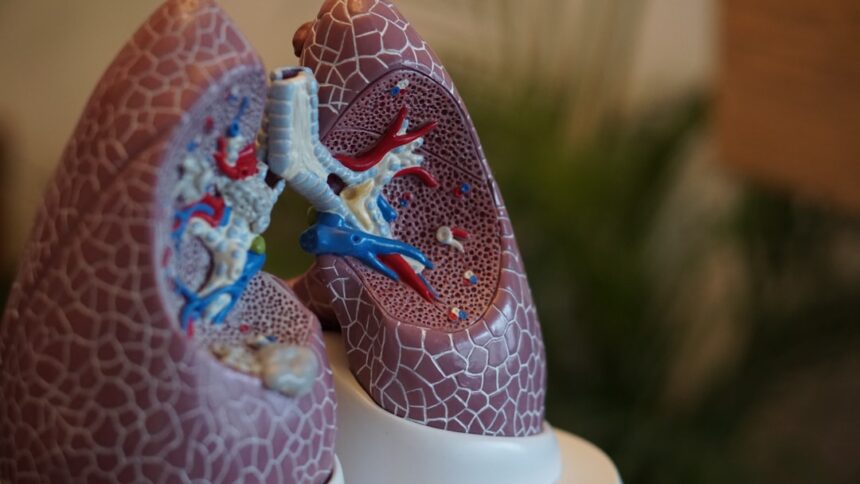
Digital representation of lung transplant technology and ex vivo perfusion systems
Researchers create digital twins of donor lungs using ex vivo perfusion data, enabling virtual testing of therapies and personalized transplant protocols. The breakthrough could revolutionize organ evaluation and improve patient outcomes. — Photo: Robina Weermeijer / Pexels
SHARE
1 min read|159 words

Researchers have achieved a significant milestone in precision transplantation by creating digital twin models of donor lungs using comprehensive data from hundreds of organs subjected to ex vivo perfusion. This innovative approach, published in Nature Medicine, enables transplant teams to virtually test therapeutic interventions before implementation, fundamentally changing how organ viability is assessed.

The digital twin technology integrates multimodal data collected during ex vivo lung perfusion procedures to create sophisticated computational models that accurately mirror real lung behavior. By simulating various treatment protocols and predicting therapeutic responses with unprecedented precision, clinicians can now tailor transplant strategies to specific donor-recipient combinations rather than relying on traditional one-size-fits-all approaches.

This breakthrough addresses a critical challenge in transplant medicine: optimizing limited donor organ resources while improving patient outcomes. As organ shortages remain a persistent global health concern, digital twin technology offers a promising pathway to enhance transplant success rates and expand access to life-saving procedures.

Read the full article on GMJ Newsroom.

Submit Your Paper
GMJ_Submit_Banner

Was this article helpful?

GMJ Brief · Announcement

📰 Read the full article: Digital Twins of Donor Lungs Could Transform Transplant Medicine →

Share This Article
Facebook LinkedIn Bluesky Copy Link Print
GMJ
ByProf. Giorgi Pkhakadze
Follow:
Prof. Giorgi Pkhakadze, MD, MPH, PhD, is Editor-in-Chief of the Georgian Medical Journal and Chair of the Public Health Institute of Georgia (PHIG). He is Professor and Head of the Department of Social and Behavioural Sciences at David Tvildiani Medical University, and Secretary/Treasurer of the UEMS Section of Public Health. ORCID: 0000-0001-7609-4515.

Submit Your Paper →

Georgia's peer-reviewed open-access medical journal. No APC until January 2027.
Submit Manuscript →
New US Grantmaking Rule Threatens Medical Research Independence, Warns Science Leader

AAMC president warns new federal grantmaking rule poses unprecedented threat to medical…

Tranexamic Acid Reduces Blood Transfusions by 11% in Major Surgery

Large randomized trial shows tranexamic acid reduces blood transfusions by 11% in…

CRISPR Gene Therapy Shows Promise for Children with Sickle Cell Disease and Beta-Thalassemia

CRISPR gene therapy exa-cel achieved 95% efficacy in eliminating blood transfusions for…

Submit Your Paper to GMJ

No APC until January 2027.
Submit Manuscript →

You Might Also Like

Medical professionals operating radiotherapy equipment in hospital treatment room

Safety Briefings Reduce Radiotherapy Incidents by 23%, New UK Data Shows

By
Prof. Giorgi Pkhakadze
15/06/2026

WHO Declares Public Health Emergency Over Ebola Outbreak With Cross-Border Spread

By
Prof. Giorgi Pkhakadze
31/05/2026
Global HealthPolicy & Systems

WHO Declares Emergency as Ebola Outbreak in Congo Exceeds 900 Cases with Uganda Spread

By
Prof. Giorgi Pkhakadze
31/05/2026
Healthcare professional reviewing vaccination guidelines and patient immunisation records

New UK Guidance Streamlines Vaccination Management for Patients with Lost or Uncertain Records

By
Prof. Giorgi Pkhakadze
20/06/2026
Facebook Twitter Youtube Instagram
Company
  • Privacy Policy
  • Contact US
  • GMJ Journal
  • Submit Manuscript
  • Editorial Team
  • Register at GMJ
  • Terms of Use

Subscribe to GMJ News — Click here

Join Community
© 2026 Georgian Medical Journal (GMJ). Published by the Public Health Institute of Georgia (PHIG). All rights reserved.
Welcome Back!

Sign in to your account

Username or Email Address
Password

Lost your password?

Not a member? Sign Up