By using this site, you agree to the Privacy Policy and Terms of Use.
Accept
GMJ NewsGMJ NewsGMJ News
  • Latest News
    • GMJ Briefs
  • Podcast & Media
    • Podcast Episodes
    • GMJ Audio
    • GMJ Videos
  • Research Digest
    • New Studies
    • Georgian Research
    • Data & Numbers
  • Policy & Systems
    • Health Policy
    • Quality & Safety
    • Migration & Health
    • Global Health
  • Practice
    • Clinical Updates
    • Case Discussions
    • Pharmacy & Prescribing
    • Ingredients A-Z
  • Perspectives
    • Editorial
    • Explainers
    • Voices
    • Letters
  • GMJ Articles
    • Vol. 1 Issue 2 (2026)
    • Vol. 1 Issue 1 (2026)
    • Pre-Launch Articles (2025)
  • Read the Journal →
  • About GMJ News
Notification Show More
Font ResizerAa
GMJ NewsGMJ News
Font ResizerAa
  • Latest News
    • GMJ Briefs
  • Podcast & Media
    • Podcast Episodes
    • GMJ Audio
    • GMJ Videos
  • Research Digest
    • New Studies
    • Georgian Research
    • Data & Numbers
  • Policy & Systems
    • Health Policy
    • Quality & Safety
    • Migration & Health
    • Global Health
  • Practice
    • Clinical Updates
    • Case Discussions
    • Pharmacy & Prescribing
    • Ingredients A-Z
  • Perspectives
    • Editorial
    • Explainers
    • Voices
    • Letters
  • GMJ Articles
    • Vol. 1 Issue 2 (2026)
    • Vol. 1 Issue 1 (2026)
    • Pre-Launch Articles (2025)
  • Read the Journal →
  • About GMJ News
Follow US
GMJ News > Uncategorized > FDA Recalls Omnicell Syringe Labels After Automated Compounding System Failures
Uncategorized

FDA Recalls Omnicell Syringe Labels After Automated Compounding System Failures

GMJ
Last updated: 28/06/2026 03:34
By
GMJ News Desk
Share
5 Min Read
SHARE
🎧 Listen to this article3:17 min · 456 words · GMJ Audio
2 min read|456 words

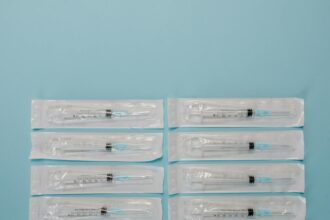
“`htmlThe U.S. Food and Drug Administration (FDA) has announced a Class I recall involving specific sterile syringe labels used with the Omnicell i.v.STATION Automated Compounding System. According to the FDA, inconsistent detection of certain syringe labels may result in unlabeled or mislabeled sterile filled syringes.

Contents
  • FDA Announces Class I Recall
  • Manufacturer Actions
    • Key takeaways
  • Frequently asked questions
    • Which Omnicell products are affected by this recall?
    • Why were these products recalled?
    • What should healthcare facilities do?
    • How serious is this recall?
Class I
FDA’s most serious recall classification

FDA Announces Class I Recall

According to the FDA recall notice, Omnicell is recalling specific sterile syringe labels used with the i.v.STATION Automated Compounding System because inconsistent detection of certain syringe labels may result in unlabeled or mislabeled sterile filled syringes.

The FDA states that use of an unlabeled or mislabeled sterile filled syringe may result in medication errors that could cause serious adverse health consequences or death.

Manufacturer Actions

According to the FDA, Omnicell notified customers to discontinue use of the affected sterile syringe labels, quarantine affected inventory, use the manufacturer’s recommended alternative labels, and contact Omnicell Technical Support for replacement products and additional guidance.

Submit Your Paper
GMJ_Submit_Banner
🎙️ Related Podcast Episodes
🎧 #44 | GMJ Podcast | Infant Formula Contamination — Global Food Safety Failure and the Cereulide Outbreak · 21m
🎧 #36 | GMJ Podcast | Artificial Intelligence and Doctor–Patient Communication — Evidence from Georgian Clinics · 18m
🎧 #13 | Six Years After COVID-19: Is the World Better Prepared for the Next Pandemic? · 19m
🎧 #3 Global Nestlé Infant Formula Recall: The Power of Modern Public Health in Practice | GMJ Official Podcast · 21m

According to the FDA, as of April 10, 2024, Omnicell had not reported any serious injuries or deaths associated with this issue.

Inconsistent detection of certain syringe labels may result in unlabeled or mislabeled sterile filled syringes.

— U.S. Food and Drug Administration

Key takeaways

  • FDA classified the recall as Class I, the agency’s most serious recall category.
  • The recall involves specific sterile syringe labels used with the Omnicell i.v.STATION Automated Compounding System.
  • Inconsistent detection of certain syringe labels may result in unlabeled or mislabeled sterile filled syringes.
  • Healthcare facilities should discontinue use of affected labels and follow Omnicell’s recall instructions.
  • According to the FDA, no serious injuries or deaths had been reported as of April 10, 2024.

Frequently asked questions

Which Omnicell products are affected by this recall?

The recall applies to specific sterile syringe labels used with the Omnicell i.v.STATION Automated Compounding System.

Why were these products recalled?

According to the FDA, inconsistent detection of certain syringe labels may result in unlabeled or mislabeled sterile filled syringes.

What should healthcare facilities do?

Healthcare facilities should follow Omnicell’s recall instructions, discontinue use of the affected sterile syringe labels, quarantine affected inventory, use the manufacturer’s recommended alternative labels, and contact Omnicell Technical Support for replacement products and additional guidance.

How serious is this recall?

The FDA has classified this action as a Class I recall, meaning there is a reasonable probability that use of the affected product will cause serious adverse health consequences or death.

Healthcare facilities using the affected products should follow the manufacturer’s recall instructions and implement the recommended corrective actions described in the FDA recall notice.

Source: U.S. Food and Drug Administration. Automated Compounding System Recall: Omnicell Removes Syringe Labels Used with the i.v.STATION Automated Compounding System.

“`

Was this article helpful?

Disclaimer. This article is health journalism intended for general information and education. It is not medical advice and is not a substitute for professional diagnosis or treatment. Always consult a qualified healthcare provider about your individual circumstances. Full disclaimer →

PG
Written by
Prof. Giorgi Pkhakadze, MD, MPH, PhD
Editor-in-Chief, GMJ News
Full profile →  ·  ORCID 0000-0001-7609-4515
Medical disclaimer. This article is health journalism intended for general information. It is not medical advice and is not a substitute for consultation with a qualified healthcare professional. Always seek your physician's advice regarding any medical condition.
Medically reviewed by Prof. Giorgi Pkhakadze, MD, MPH, PhD. Spotted an error? Contact the editorial team.

Get the GMJ News digest
Evidence-based health journalism in your inbox. No spam; unsubscribe anytime.
TAGGED:automated compoundingFDA alertmedical device recallOmnicellPatient Safety
Share This Article
Facebook LinkedIn Bluesky Copy Link Print
GMJ
ByGMJ News Desk
Follow:
GMJ News Desk is part of GMJ News, the newsroom of the Georgian Medical Journal (gmj.ge), published by the Public Health Institute of Georgia. Every article is editorially reviewed before publication.
Leave a Comment Leave a Comment

Leave a Reply Cancel reply

Your email address will not be published. Required fields are marked *

Submit Your Paper →

Georgia's peer-reviewed open-access medical journal. No APC until January 2027.
Submit Manuscript →
French Doctor’s Perspective on Treating Trauma While Living Through War Reveals Medical Community’s Hidden Struggles

A French physician's reflection in The Lancet reveals how healthcare professionals navigate…

New NEJM Analysis: States Lead Psychedelic Therapy Expansion Despite Federal Restrictions

New NEJM analysis examines how US states are advancing psychedelic therapy access…

Emergency Physician Challenges One-Size-Fits-All Suicide Prevention Approach

Emergency physician challenges traditional suicide prevention protocols, advocating for individualized approaches over…

Submit Your Paper to GMJ

No APC until January 2027.
Submit Manuscript →

You Might Also Like

Healthcare professionals discussing patient care in hospital settingPhoto by RDNE Stock project on Pexels (Pexels License)
Health PolicyPolicy & Systems

NHS workforce crisis threatens patient safety as early career doctors report severe burnout

By
GMJ Policy Desk
13/06/2026
FDA medical device alert notice for TRUE METRIX blood glucose monitor
Clinical Updates

FDA Issues Correction Notice for TRUE METRIX Blood Glucose Monitors Over Error Code Risk

By
GMJ Practice Desk
20/05/2026
Healthcare regulatory oversight and patient safety concept
Policy & SystemsQuality & Safety

UK Nursing Regulator Failed to Screen Criminal Records for 12 Years

By
GMJ Policy Desk
28/05/2026
Healthcare professionals and diverse patients illustrating language barrier challenges in medical settingsIllustrative image · Photo by Stéf -b. on Pexels (Pexels License)
Policy & SystemsQuality & Safety

Language Barriers in Healthcare: How Communication Gaps Affect Patient Safety and Quality of Care

By
GMJ Policy Desk
19/06/2026
Facebook Twitter Youtube Instagram
Company
  • Privacy Policy
  • Contact US
  • GMJ Journal
  • Submit Manuscript
  • Editorial Team
  • Register at GMJ
  • Terms of Use

Subscribe to GMJ News — Click here

Join Community
© 2026 Georgian Medical Journal (GMJ). Published by the Public Health Institute of Georgia (PHIG). All rights reserved.
Welcome Back!

Sign in to your account

Username or Email Address
Password

Lost your password?

Not a member? Sign Up