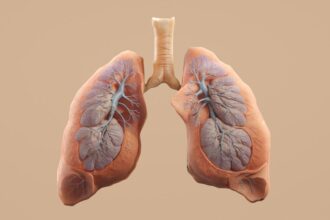
For nearly 50 years, epidemiological evidence has accumulated suggesting that naturally occurring lithium in drinking water at trace concentrations may be associated with lower rates of suicide, violent crime, and dementia. Beginning in the late 1970s with ecological studies of U.S. county-level data, researchers have documented this signal across multiple continents, though the mechanisms remain incompletely understood and the evidence remains observational rather than causal.
Key takeaways
- Ecological studies spanning Texas and other U.S. counties since the late 1970s found associations between naturally higher municipal water lithium concentrations (measured in micrograms per litre) and reduced self-harm and violent crime rates
- Registry-based cohort studies from Japan, Austria, Greece, and Nordic countries in the 1990s–2000s replicated population-level associations between trace lithium exposure and lower suicide rates
- Large-scale studies from the 2010s onward linked long-term drinking water lithium exposure to reduced dementia and Alzheimer’s disease incidence across millions of individuals, using multi-year follow-up
- These associations appear at environmental concentrations orders of magnitude below clinical lithium therapy doses, with non-linear and sometimes sex-specific patterns
Geographic and Temporal Expansion of Lithium–Health Associations
Timeline of major epidemiological signals across regions and clinical outcomes, 1970s–2010s
Source: Epidemiological literature review | Georgian Medical Journal News
Early Signal: Texas Counties and the 1970s–1980s Observations
The first systematic evidence emerged when researchers analyzed county-level data across Texas and other U.S. regions, finding that areas with naturally elevated lithium concentrations in municipal water supplies reported lower rates of suicide, violent crime, and drug-related arrests. These ecological observations, spanning hundreds of counties and collected over roughly a decade, were initially treated as curiosities by the scientific community rather than as indicators of a plausible biological mechanism.

The early studies were observational in design and subject to ecological fallacy—the risk that associations at the population level do not reflect individual-level causation—yet the consistency of the signal across geographically dispersed U.S. counties warranted further investigation. The trace lithium levels measured in these water supplies fell within the micrograms-per-litre range, far below the milligram-per-kilogram doses used in psychiatric clinical practice.
Global Replication: Japan, Europe, and the Standardisation of the Signal
Throughout the 1990s and 2000s, similar population-level associations emerged from independent research teams in Japan, Austria, Greece, and Scandinavian countries, again linking drinking water lithium exposure to lower suicide rates. This geographic replication across different healthcare systems, climate zones, and water treatment protocols strengthened the argument that the signal was not geographically or methodologically isolated. Each study maintained the same observation: regions or populations with higher natural lithium in water had lower documented suicide mortality.
The reproducibility across continents and decades suggested the association was not merely a statistical artefact or the result of regional confounding variables specific to Texas. However, the evidence remained correlational; no randomised controlled trials had tested whether lithium caused the reduction in self-harm.
Registry-Based Evidence and Dementia: The 2010s Expansion
Starting in the 2010s, the scientific focus broadened beyond suicide and violent behaviour. Large-scale registry-based studies and nationwide population cohorts began examining whether long-term lithium exposure in drinking water was associated with reduced incidence of neurodegenerative diseases. Multiple studies found associations between trace lithium exposure and lower dementia incidence, including Alzheimer’s disease, among millions of individuals followed over multi-year periods across health registries in Europe and Asia.
Critically, these neurological associations were observed at environmental concentrations orders of magnitude below clinical lithium therapy, which typically involves blood levels of 0.6–1.2 millimoles per litre. The observed effects also displayed non-linear dose–response patterns and, in some studies, sex-specific associations—characteristics inconsistent with simple pharmacological explanations and suggestive of complex environmental or developmental mechanisms.
Epidemiological associations between trace lithium in drinking water and lower suicide, violent crime, and dementia rates have been documented across six decades, multiple continents, and millions of individuals, yet the mechanism remains untested and causation unproven.
— Cumulative findings from ecological, cohort, and registry-based studies (1970s–2020s)
Current Research Direction: From Observation to Mechanism
Today, the combined literature spans nearly five decades, crosses multiple continents, encompasses diverse populations and healthcare systems, and extends beyond psychiatry into neurology and geriatrics. Yet the evidence base remains observational; no large-scale randomised controlled trial has tested whether increasing lithium in drinking water reduces suicide or dementia. Recent preclinical models and small clinical studies are now investigating whether the persistent epidemiological signal reflects genuine neurobiological effects of trace lithium on brain development, neuroprotection, or neuroinflammation, or whether it represents residual confounding by unmeasured socioeconomic, dietary, or environmental factors.
The non-linear dose–response patterns and sex-specific effects observed in some studies further complicate interpretation and suggest that any biological mechanism may operate through subtle developmental or age-dependent pathways rather than through the well-characterised pharmacology of clinical lithium therapy. Researchers in psychiatric epidemiology and neurology are now designing prospective studies and mechanistic investigations to test whether this long-standing signal has a causal basis.
What this means
Frequently asked questions
Does drinking water with more lithium prevent suicide or dementia?
Epidemiological studies have found associations between higher natural lithium in water and lower rates of suicide and dementia at the population level. However, these are observational studies and do not prove causation. No randomised controlled trial has yet tested whether increasing lithium in drinking water prevents these outcomes. Individuals should not drink lithium-rich water or use supplements based on this signal alone.
Is this related to lithium used in psychiatric treatment?
Clinical lithium therapy uses much higher doses (milligrams per kilogram of body weight, producing blood levels of 0.6–1.2 mM) than environmental exposure in drinking water (micrograms per litre). The epidemiological signal appears at levels orders of magnitude lower than therapeutic doses. It is unclear whether the mechanisms are related or whether the population-level associations reflect lithium’s effects or other confounding factors.
What is the next step in lithium research?
Researchers are designing prospective cohort studies, mechanistic laboratory experiments, and potentially small clinical trials to test whether trace lithium exposure causally reduces suicide or dementia risk, and to clarify the biological pathways involved. Recent studies continue to examine this question, but definitive evidence is likely years away.
The decades-long epidemiological signal linking trace lithium in drinking water to reduced suicide and dementia rates remains one of public health’s most intriguing but unresolved observations. As mechanistic research advances and prospective studies begin, the scientific community will determine whether this persistent correlation reflects a genuine biological phenomenon or a methodological artefact—an answer with profound implications for environmental health policy and neuropsychiatric prevention. See our Global Health coverage for related environmental epidemiology.
Source: Epidemiological literature review spanning 1970s–2020s, including ecological studies, cohort analyses, and registry-based investigations across the United States, Japan, Austria, Greece, and Nordic countries
Was this article helpful?
Disclaimer. This article is health journalism intended for general information and education. It is not medical advice and is not a substitute for professional diagnosis or treatment. Always consult a qualified healthcare provider about your individual circumstances. Full disclaimer →
Related Coverage




Editorial standards. This article was produced under the GMJ News editorial process, with oversight by the GMJ Editorial Board. Our editorial process. Spotted an error? Contact the editorial team.