By using this site, you agree to the Privacy Policy and Terms of Use.
Accept
GMJ NewsGMJ NewsGMJ News
  • Latest News
    • GMJ Briefs
  • Podcast & Media
    • Podcast Episodes
    • GMJ Audio
    • GMJ Videos
  • Research Digest
    • New Studies
    • Georgian Research
    • Data & Numbers
  • Policy & Systems
    • Health Policy
    • Quality & Safety
    • Migration & Health
    • Global Health
  • Practice
    • Clinical Updates
    • Case Discussions
    • Pharmacy & Prescribing
  • Perspectives
    • Editorial
    • Explainers
    • Voices
    • Letters
  • GMJ Articles
    • Vol. 1 Issue 2 (2026)
    • Vol. 1 Issue 1 (2026)
    • Pre-Launch Articles (2025)
  • Read the Journal →
  • About GMJ News
Notification Show More
Font ResizerAa
GMJ NewsGMJ News
Font ResizerAa
  • Latest News
    • GMJ Briefs
  • Podcast & Media
    • Podcast Episodes
    • GMJ Audio
    • GMJ Videos
  • Research Digest
    • New Studies
    • Georgian Research
    • Data & Numbers
  • Policy & Systems
    • Health Policy
    • Quality & Safety
    • Migration & Health
    • Global Health
  • Practice
    • Clinical Updates
    • Case Discussions
    • Pharmacy & Prescribing
  • Perspectives
    • Editorial
    • Explainers
    • Voices
    • Letters
  • GMJ Articles
    • Vol. 1 Issue 2 (2026)
    • Vol. 1 Issue 1 (2026)
    • Pre-Launch Articles (2025)
  • Read the Journal →
  • About GMJ News
Follow US
GMJ News > Research Digest > New Studies > Nanotechnology Innovation Promises to Transform Diabetes Monitoring and Care
New StudiesResearch Digest

Nanotechnology Innovation Promises to Transform Diabetes Monitoring and Care

GMJ
Last updated: 28/05/2026 13:55
By
GMJ News Desk
Share
5 Min Read
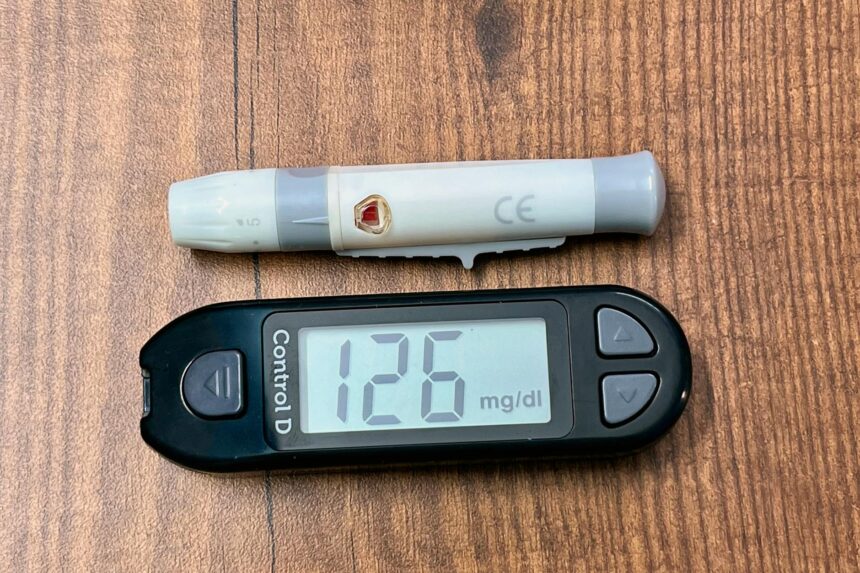
Illustration of nanotechnology sensors being used for diabetes glucose monitoring
Australian researchers develop nanotechnology sensors that could revolutionize diabetes monitoring by making glucose testing more accurate and less invasive. The innovation could benefit 537 million adults worldwide living with diabetes. — Photo: Arunangshu Banerjee / Pexels
SHARE
🎧 Listen to this article4:40 min · 446 words · GMJ Audio

Contents
      • Global Diabetes Prevalence by Region
  • Breakthrough in Glucose Sensing Technology
  • Clinical Applications and Patient Impact
  • Technology Development and Future Implementation
    • Key takeaways
  • Frequently asked questions
    • How does nanotechnology improve diabetes monitoring?
    • When will this technology be available to patients?
    • Could this technology help prevent diabetes complications?

Researchers at Australian National University have developed groundbreaking nanotechnology that could revolutionize diabetes management by making blood glucose monitoring more accessible and less invasive. The innovation represents a significant advancement in point-of-care diagnostics for the 537 million adults worldwide living with diabetes.

537 million
adults worldwide living with diabetes in 2021, according to International Diabetes Federation data

Global Diabetes Prevalence by Region

Number of adults (20-79 years) with diabetes, 2021 estimates

Western Pacific
206m
South-East Asia
90m
Middle East & North Africa
73m
Europe
61m
North America & Caribbean
51m
Africa

24m

Source: International Diabetes Federation, 2021 | Georgian Medical Journal News

Submit Your Paper
GMJ_Submit_Banner

Breakthrough in Glucose Sensing Technology

The Australian National University research team has developed nanoscale sensors that can detect glucose levels. The technology addresses critical limitations in existing diabetes monitoring systems, particularly the need for frequent finger-stick blood samples that many patients find burdensome.

🎙️ Related Podcast Episodes
🎧 #42 | GMJ Podcast | IT Service Management in Healthcare — Governance, Procurement, and Service Delivery · 16m

Clinical Applications and Patient Impact

According to the World Health Organization, diabetes was the direct cause of 1.5 million deaths in 2019. Enhanced monitoring technology could potentially improve patient outcomes by enabling better diabetes management.

Technology Development and Future Implementation

The ANU team’s nanotechnology approach represents interdisciplinary research combining materials science, bioengineering, and clinical medicine. While the technology shows promise, researchers acknowledge that significant development work remains before clinical implementation. Regulatory approval processes for medical devices typically require extensive safety and efficacy testing.

The research aligns with broader trends in personalized medicine and point-of-care diagnostics, where portable testing devices are becoming increasingly important for chronic disease management.

The nanotechnology platform demonstrates glucose detection capabilities that could transform routine diabetes monitoring from an invasive procedure to a seamless, continuous process integrated into daily life.

— Research Team, Australian National University College of Science and Medicine

Key takeaways

  • Nanotechnology sensors may offer improved glucose monitoring capabilities
  • 537 million adults worldwide could potentially benefit from improved diabetes monitoring technology
  • Clinical implementation will require regulatory approval and extensive safety testing

Frequently asked questions

How does nanotechnology improve diabetes monitoring?

Nanotechnology enables the creation of extremely small sensors that can detect glucose levels. These sensors could potentially reduce the need for frequent finger-stick blood tests.

When will this technology be available to patients?

The technology is still in research phases and requires extensive clinical testing and regulatory approval before becoming commercially available. This process typically takes several years for medical devices.

Could this technology help prevent diabetes complications?

Better glucose monitoring generally leads to improved diabetes management, which can reduce the risk of long-term complications.

The advancement represents a step forward in diabetes care technology, with potential implications extending beyond glucose monitoring to other biomarker detection applications. As the technology moves through development phases, it could become part of a new generation of diagnostic tools for chronic disease management.

Source: Life changing nanotechnology makes diabetes care a breeze – ANU College of Science and Medicine

TAGGED:Australian researchdiabetesglucose monitoringmedical devicesnanotechnology
Share This Article
Facebook LinkedIn Bluesky Copy Link Print
Leave a Comment Leave a Comment

Leave a Reply Cancel reply

Your email address will not be published. Required fields are marked *

Submit Your Paper →

Georgia's peer-reviewed open-access medical journal. No APC until January 2027.
Submit Manuscript →
Ecuador study reveals triple burden of malnutrition affecting 73% of children

New research reveals that 73.3% of Ecuadorian children under 5 experience overlapping…

Ethiopia Integrates Oxytocin into Vaccine Cold Chain to Prevent Maternal Deaths

Ethiopia successfully integrated oxytocin storage into its vaccine cold chain system through…

AI Tool Detects Silent Bone Loss from Routine Chest X-rays Before Fractures Strike

New AI technology can detect early bone loss from routine chest X-rays,…

Submit Your Paper to GMJ

No APC until January 2027.
Submit Manuscript →

You Might Also Like

Medical professional performing ultrasound screening on infant for hip dysplasia detection
New StudiesResearch Digest

Community-based ultrasound screening cuts infant hip dysplasia late diagnosis by 85%

By
GMJ News Desk
24/05/2026
Scientific illustration showing insulin receptor signaling pathway with magnesium cofactor highlighted
New StudiesResearch Digest

Magnesium Deficiency May Impair Insulin Sensitivity Through Receptor Signaling

By
GMJ News Desk
27/05/2026
Illustration of brain's glymphatic system showing waste clearance pathways and cellular networks
New StudiesResearch Digest

Brain’s Hidden Cleanup System Works Around the Clock to Prevent Neurodegeneration

By
GMJ News Desk
23/05/2026
Fluorescent microscopy image showing muscle cells with green nuclei and red membranes during fusion process
New Studies

Scientists Capture Muscle Cell Fusion in Real-Time for First Time

By
GMJ News Desk
22/05/2026
Facebook Twitter Youtube Instagram
Company
  • Privacy Policy
  • Contact US
  • GMJ Journal
  • Submit Manuscript
  • Editorial Team
  • Register at GMJ
  • Terms of Use

Subscribe to GMJ News — Click here

Join Community
© 2026 Georgian Medical Journal (GMJ). Published by the Public Health Institute of Georgia (PHIG). All rights reserved.
Welcome Back!

Sign in to your account

Username or Email Address
Password

Lost your password?

Not a member? Sign Up