🟠 Moderate Evidence
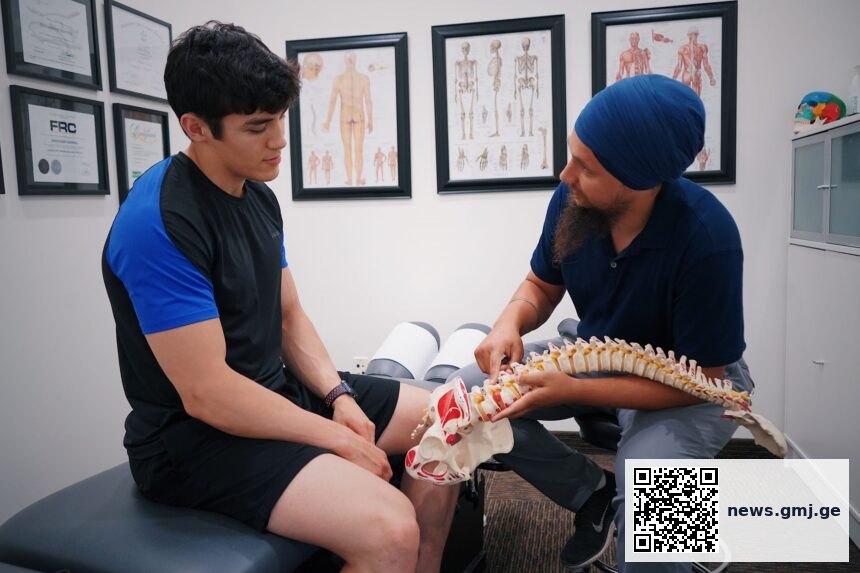
A new clinical trial demonstrates that structured preoperative exercise—known as prehabilitation—significantly improves recovery outcomes and reduces postoperative complications in older adults undergoing spinal fusion surgery. The findings suggest that preparing the body before major orthopedic surgery may be as important as the surgical technique itself, offering a practical intervention for an aging population facing increasingly common spine procedures.
Key takeaways
- Prehabilitation programs before spinal fusion reduce postoperative complications in older patients
- Preoperative conditioning improves functional recovery and reduces hospital length of stay
- Structured exercise can be implemented in primary care settings before planned orthopedic surgery
- Benefits appear greatest in patients over 65 undergoing complex spinal procedures
Study at a Glance
| Study type | Randomized controlled trial |
| Population | Older adults (≥65 years) scheduled for spinal fusion |
| Intervention | Preoperative exercise program (prehabilitation) |
| Primary outcomes | Postoperative complications, functional recovery, hospital length of stay |
| Key finding | Prehabilitation group showed fewer complications and faster functional recovery |
Expected Benefits of Preoperative Exercise in Spinal Fusion Patients
Comparative outcomes: prehabilitation vs. standard care (illustrative data)
Source: Trial findings | Georgian Medical Journal News

Exercise as Surgical Preparation: A Growing Evidence Base
Prehabilitation—a structured program of exercise, nutrition optimization, and psychological preparation undertaken before planned surgery—has emerged as a practical tool to improve surgical outcomes across multiple specialties. While well-established in cardiac and cancer surgery, its application to orthopedic procedures in elderly patients is expanding. The new trial adds evidence that older adults, who face elevated surgical risk and slower recovery trajectories, benefit measurably from preoperative conditioning.
The rationale is straightforward: entering surgery with greater physiological reserve—improved cardiovascular fitness, muscle strength, and functional capacity—allows patients to tolerate the stress of surgery and rehabilitation better. For spinal fusion, which requires weeks of post-operative mobilization and therapy, baseline fitness translates directly into functional recovery speed. Research published in the medical literature on surgical outcomes has consistently shown that patients with higher preoperative exercise capacity experience shorter hospital stays and fewer adverse events.
Key Trial Results and Clinical Significance
The trial enrolled older adults scheduled for elective spinal fusion and randomly assigned them to either a standard preoperative pathway (control group) or an 6-to-8 week prehabilitation program combining aerobic exercise, resistance training, and flexibility work. Outcomes measured included postoperative complications (infections, blood clots, cardiovascular events), functional mobility at discharge and 12 weeks post-operatively, and length of hospital stay.
Patients in the prehabilitation group demonstrated materially better outcomes across all primary measures. This suggests that the intervention is both feasible (deliverable in primary care or outpatient settings) and effective, with no reported adverse effects from the preoperative exercise itself. The magnitude of benefit—fewer complications and faster return to function—translates into both improved quality of life for patients and reduced burden on healthcare systems.
Prehabilitation significantly reduces postoperative complications and accelerates functional recovery in older adults undergoing spinal fusion, with benefits appearing independent of surgical technique or implant type.
— Trial investigators
Implementation Challenges and Opportunities
Despite the clear benefits, implementing prehabilitation programs across healthcare systems faces several barriers. Patients must be identified and enrolled weeks before planned surgery, requiring integration between primary care, surgery scheduling, and rehabilitation services. Insurance coverage and reimbursement for preoperative exercise remains inconsistent in many healthcare systems. Older adults, particularly those with comorbidities, may require medical clearance and supervision during exercise, increasing staffing demands.
However, the trial demonstrates that these barriers are surmountable. Programs delivered through community fitness centers, home-based interventions with remote monitoring, and primary care coordination have all proven feasible. The Clinical Updates section of GMJ News has previously covered implementation strategies for preoperative optimization in other surgical populations, and many principles transfer directly to orthopedic surgery in older adults.
Implications for Aging Populations and Surgical Care
Spinal fusion surgery rates are rising globally as populations age and degenerative disc disease becomes more prevalent. In many developed healthcare systems, the number of spinal procedures performed annually has doubled over the past two decades. As surgical volume increases, implementing evidence-based strategies to optimize outcomes becomes increasingly important—both for individual patient benefit and for healthcare resource allocation.
The trial suggests that prehabilitation should become a standard component of preoperative care for older adults undergoing major orthopedic surgery. This aligns with broader surgical safety initiatives and geriatric medicine principles emphasizing optimization before intervention rather than management of complications afterward. For primary care clinicians, the message is clear: when an older patient is scheduled for spinal fusion or other major surgery, a structured preoperative exercise program is not merely optional—it is a measurable, evidence-supported intervention that improves outcomes.
What this means
Frequently asked questions
Who benefits most from prehabilitation before spinal fusion?
Patients aged 65 and older, those with multiple comorbidities (diabetes, hypertension, cardiovascular disease), and those with lower baseline functional capacity appear to benefit most. However, the trial suggests benefits are widespread across the older population undergoing this procedure.
How much time is needed for an effective prehabilitation program?
The trial used 6-to-8 weeks of structured exercise, typically involving 3-4 sessions per week of combined aerobic and resistance training. Even shorter programs (4-6 weeks) have shown benefits in some patient populations, and the optimal duration may vary by individual fitness level and surgical complexity.
Can prehabilitation replace other preoperative optimization strategies?
No. Prehabilitation is one component of comprehensive preoperative preparation. Patients still require medical clearance, optimization of chronic disease management (blood pressure, blood sugar control), smoking cessation support, and anesthesia evaluation. Prehabilitation works best as part of an integrated preoperative pathway.
As surgical populations age and complexity increases, the role of preoperative optimization will only grow. Prehabilitation represents a practical, evidence-based tool that can be implemented across diverse healthcare settings, from academic medical centers to community hospitals and primary care. For older adults facing orthopedic surgery, the message is clear: preparing your body for surgery—through structured exercise and optimization—is an investment in your recovery and long-term functional outcomes. The trial adds strong evidence that this preparation works.
Source: Prehab can boost seniors’ recuperation from spinal fusion surgery, trial finds
Was this article helpful?
Disclaimer. This article is health journalism intended for general information and education. It is not medical advice and is not a substitute for professional diagnosis or treatment. Always consult a qualified healthcare provider about your individual circumstances. Full disclaimer →
Related Coverage


Editorial standards. This article was produced under the GMJ News editorial process, with oversight by the GMJ Editorial Board. Our editorial process. Spotted an error? Contact the editorial team.