By using this site, you agree to the Privacy Policy and Terms of Use.
Accept
GMJ NewsGMJ NewsGMJ News
  • Latest News
    • GMJ Briefs
  • Podcast & Media
    • Podcast Episodes
    • GMJ Audio
    • GMJ Videos
  • Research Digest
    • New Studies
    • Georgian Research
    • Data & Numbers
  • Policy & Systems
    • Health Policy
    • Quality & Safety
    • Migration & Health
    • Global Health
  • Practice
    • Clinical Updates
    • Case Discussions
    • Pharmacy & Prescribing
    • Ingredients A-Z
  • Perspectives
    • Editorial
    • Explainers
    • Voices
    • Letters
  • GMJ Articles
    • Vol. 1 Issue 2 (2026)
    • Vol. 1 Issue 1 (2026)
    • Pre-Launch Articles (2025)
  • Read the Journal →
  • About GMJ News
Notification Show More
Font ResizerAa
GMJ NewsGMJ News
Font ResizerAa
  • Latest News
    • GMJ Briefs
  • Podcast & Media
    • Podcast Episodes
    • GMJ Audio
    • GMJ Videos
  • Research Digest
    • New Studies
    • Georgian Research
    • Data & Numbers
  • Policy & Systems
    • Health Policy
    • Quality & Safety
    • Migration & Health
    • Global Health
  • Practice
    • Clinical Updates
    • Case Discussions
    • Pharmacy & Prescribing
    • Ingredients A-Z
  • Perspectives
    • Editorial
    • Explainers
    • Voices
    • Letters
  • GMJ Articles
    • Vol. 1 Issue 2 (2026)
    • Vol. 1 Issue 1 (2026)
    • Pre-Launch Articles (2025)
  • Read the Journal →
  • About GMJ News
Follow US
GMJ News > Policy & Systems > Health Policy > RFK Jr. Seeks Access to Americans’ Medical Records to Research Vaccine-Autism Link
Health PolicyPolicy & Systems

RFK Jr. Seeks Access to Americans’ Medical Records to Research Vaccine-Autism Link

GMJ
Last updated: 15/06/2026 12:25
By
GMJ Policy Desk
Share
4 Min Read
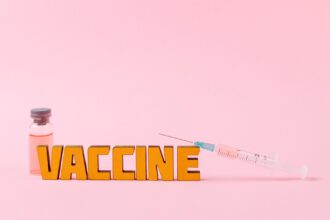
Medical records and vaccine research concept illustrationIllustrative image · Photo by Tima Miroshnichenko on Pexels (Pexels License)
U.S. Health Secretary RFK Jr. seeks federal access to medical records to research vaccine-autism links, despite decades of scientific evidence rejecting any causal connection. The initiative raises significant privacy and public health concerns. — Photo by Tima Miroshnichenko on Pexels (Pexels License)
SHARE
🎧 Listen to this article4:06 min · 571 words · GMJ Audio
3 min read|571 words
✓ Reviewed by GMJ News Editorial Team

U.S. Health Secretary Robert F. Kennedy Jr. is pursuing federal access to Americans’ medical records to investigate a purported link between vaccines and autism, according to Medical Xpress reporting. This initiative contradicts decades of established medical research that has consistently found no causal relationship between vaccination and autism spectrum disorders.

Contents
    • Key takeaways
      • Major Studies Rejecting Vaccine-Autism Links
  • Scientific Consensus Firmly Established
  • Privacy and Ethical Implications
  • Public Health Community Response
    • What this means
  • Frequently asked questions
    • What does current research say about vaccines and autism?
    • Could government access to medical records benefit public health research?
    • How might this initiative affect vaccination rates?

Key takeaways

  • Kennedy seeks federal access to medical records to research vaccine-autism connections
  • Multiple large-scale studies have consistently found no link between vaccines and autism
  • The proposal raises significant privacy and ethical concerns about government medical data access
Decades
of research have rejected vaccine-autism links

Major Studies Rejecting Vaccine-Autism Links

Sample sizes of key research disproving vaccination-autism connection

657,461
Children (Danish study)
95,727
Children (U.S. sibling study)
14
Studies in systematic review

Source: Multiple peer-reviewed studies | Georgian Medical Journal News

Scientific Consensus Firmly Established

The medical establishment has extensively studied potential vaccine-autism connections through multiple large-scale epidemiological studies. A comprehensive Cochrane systematic review analyzing studies involving millions of children found no evidence supporting vaccination as an autism risk factor.

Submit Your Paper
GMJ_Submit_Banner

The Centers for Disease Control and Prevention maintains that “vaccines do not cause autism,” based on rigorous population-based research. Major medical organizations worldwide, including the World Health Organization, consistently support vaccine safety profiles.

🎙️ Related Podcast Episodes
🎧 #28 | GMJ Podcast | SheniEkimi.ge #1: Top 5 Evidence-Based Public Health News · 19m
🎧 #55 | GMJ Podcast | How Georgian Medical Journal Entered the Swiss Academic System (ETH Library) · 4m
🎬 NAD⁺ Injections and “NAD Boosters”
🎬 GMJ Video Series | Rare Case: Lung Cancer & Tuberculosis Coexistence
🎧 #54 | GMJ Podcast | The Blueprint of a Medical Journal: Designing an Open-Access Scientific Platform · 19m

Privacy and Ethical Implications

Kennedy’s proposal raises significant concerns about government access to personal health information. Medical privacy advocates worry about the precedent of federal officials accessing individual medical records for research purposes without explicit patient consent.

The initiative also concerns public health experts who fear it could undermine vaccination confidence. Health policy researchers note that revisiting scientifically settled questions may inadvertently promote vaccine hesitancy among parents.

No credible scientific evidence supports a causal relationship between childhood vaccination and autism spectrum disorders, based on population studies involving over 1.2 million children

— Multiple peer-reviewed studies (The Lancet, NEJM, Pediatrics, 2002-2019)

Public Health Community Response

Medical professionals express concern that reopening settled scientific questions could harm public trust in immunization programs. Vaccination rates have already declined in some communities due to misinformation, leading to preventable disease outbreaks.

The American Academy of Pediatrics and other medical organizations continue to emphasize that vaccines are among the most thoroughly tested medical interventions. Clinical safety monitoring systems continuously evaluate vaccine safety through multiple surveillance networks.

What this means

For patients: Continue following established vaccination schedules recommended by pediatricians and public health authorities
For clinicians: Prepare to address renewed patient concerns about vaccine safety with evidence-based information
For policymakers: Balance research transparency with privacy protection and evidence-based public health messaging

Frequently asked questions

What does current research say about vaccines and autism?

Extensive population-based studies involving millions of children have consistently found no causal link between vaccination and autism spectrum disorders. The scientific consensus firmly rejects this connection.

Could government access to medical records benefit public health research?

While population-level data can inform health policy, accessing individual medical records raises privacy concerns and ethical questions about consent and data protection.

How might this initiative affect vaccination rates?

Reopening scientifically settled questions may inadvertently increase vaccine hesitancy among parents, potentially affecting community immunization rates and disease prevention efforts.

The tension between Kennedy’s research initiative and established scientific consensus highlights broader challenges in public health communication. As this situation develops, maintaining evidence-based approaches to vaccination policy remains crucial for protecting community health while addressing legitimate questions about medical privacy and research transparency.

Source: RFK Jr. seeks to peek at Americans’ medical records for clues on autism and vaccines

Was this article helpful?

Disclaimer. This article is health journalism intended for general information and education. It is not medical advice and is not a substitute for professional diagnosis or treatment. Always consult a qualified healthcare provider about your individual circumstances. Full disclaimer →

Related Coverage
Major sporting events tied to heart attack spikes, study showsAug 7, 2026
Medicaid Work Requirements Create Impossible Dilemma for Disabled Workers, Experts WarnAug 7, 2026
Australian Hospital Deploys World-First Robotic Surgery Technology for Complex ProceduresAug 7, 2026
Celebrity Disclosure Renews Focus on Prostate Cancer Screening and Early DetectionAug 7, 2026
PG
Editorial oversight
Prof. Giorgi Pkhakadze, MD, MPH, PhD
Editor-in-Chief, GMJ News
Full profile →  ·  ORCID 0000-0001-7609-4515
Medical disclaimer. This article is health journalism intended for general information. It is not medical advice and is not a substitute for consultation with a qualified healthcare professional. Always seek your physician's advice regarding any medical condition.
Editorial standards. This article was produced under the GMJ News editorial process, with oversight by the GMJ Editorial Board. Our editorial process. Spotted an error? Contact the editorial team.

Get the GMJ News digest
Evidence-based health journalism in your inbox. No spam; unsubscribe anytime.
TAGGED:autismmedical recordsprivacyRFK Jrvaccines
Share This Article
Facebook LinkedIn Bluesky Copy Link Print
GMJ
ByGMJ Policy Desk
Follow:
GMJ Policy Desk is part of GMJ News, the newsroom of the Georgian Medical Journal (gmj.ge), published by the Public Health Institute of Georgia. Every article is editorially reviewed before publication.
Leave a Comment Leave a Comment

Leave a Reply Cancel reply

Your email address will not be published. Required fields are marked *

Submit Your Paper →

Georgia's peer-reviewed open-access medical journal. No APC until January 2027.
Submit Manuscript →
Major sporting events tied to heart attack spikes, study shows

Major international football tournaments are associated with measurable increases in acute coronary…

Medicaid Work Requirements Create Impossible Dilemma for Disabled Workers, Experts Warn

New Medicaid work requirement rules force disabled workers into an impossible choice:…

Genicular Artery Embolisation Offers Alternative to Knee Replacement for Chronic Pain

Genicular artery embolisation (GAE), a minimally invasive catheter-based procedure, is emerging as…

Submit Your Paper to GMJ

No APC until January 2027.
Submit Manuscript →

You Might Also Like

World map showing migration policy implementation rates by regionIllustrative image · Photo by Markus Winkler on Unsplash (Unsplash License)
Migration & HealthPolicy & Systems

Global Migration Governance Shows Critical Implementation Gaps Despite Policy Progress

By
GMJ Policy Desk
20/06/2026
Bar chart showing migration policy implementation progress across healthcare domains 2018-2026Illustrative image · Photo by محمد يحيى on Pexels (Pexels License)
Health PolicyMigration & HealthPolicy & Systems

Eight Years On: Refugee and Migrant Health Progress Remains Slow Despite COVID-19 Proof of Concept

By
GMJ Policy Desk
13/07/2026
Community health worker conducting voluntary blood donation in rural Sierra LeoneIllustrative image · Photo by Tahir Xəlfə on Pexels (Pexels License)
Global HealthNew StudiesPolicy & SystemsResearch Digest

Community-led blood donation model cuts costs by 40% in rural Sierra Leone

By
GMJ Policy Desk
10/07/2026
Global map showing HPAI vaccination implementation across countries with trade impact statisticsIllustrative image · Photo by Thirdman on Pexels (Pexels License)
Health PolicyPolicy & Systems

WOAH Calls for Standardised Trade Rules as Countries Deploy HPAI Vaccination Strategies

By
GMJ Policy Desk
07/07/2026
Facebook Twitter Youtube Instagram
Company
  • Privacy Policy
  • Contact US
  • GMJ Journal
  • Submit Manuscript
  • Editorial Team
  • Register at GMJ
  • Terms of Use

Subscribe to GMJ News — Click here

Join Community
© 2026 Georgian Medical Journal (GMJ). Published by the Public Health Institute of Georgia (PHIG). All rights reserved.
Welcome Back!

Sign in to your account

Username or Email Address
Password

Lost your password?

Not a member? Sign Up