Updated 13/09/2026
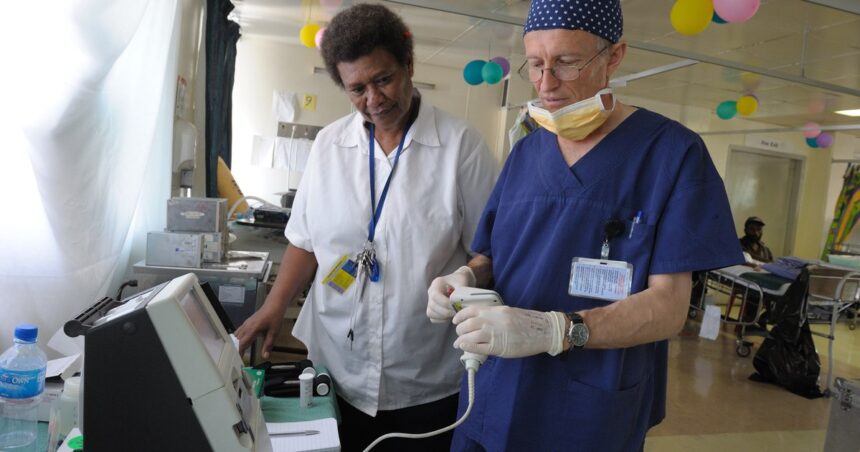
Photo: Operation Open Heart surgical visit (10711532684), by Rocky Roe/AusAID (Wikimedia), cropped for layout · Licensed CC BY 2.0 · Source
Plain-language summary of research published in the Georgian Medical Journal. Written for the general public by the GMJ News editorial team.
Infections around an aortic graft after major aortic surgery are uncommon but carry reported mortality of 25 to 75% — and there’s limited standardised guidance on how to treat them. A case report in the Georgian Medical Journal documents a successful rescue, and the clinical reasoning behind a genuinely difficult decision: keep the graft, or take it out entirely.

A Complication Five Months Later
The patient, a 61-year-old man with type 2 diabetes and obesity, had undergone major aortic reconstruction — ascending aorta and complete arch replacement — for a life-threatening aortic dissection. Five months later, he developed recurrent high fever and Pseudomonas aeruginosa bloodstream infection despite antibiotic therapy. CT imaging showed a progressive infected collection surrounding both prosthetic grafts.
Preserve or Remove: The Central Decision
The case met formal diagnostic criteria for aortic graft infection under the MAGIC classification system (two major criteria and one minor). That confirmed diagnosis forced a genuinely contested choice in this field: attempt to preserve the existing graft, or perform complete surgical explantation and replacement. For early-onset, deep infection involving a virulent gram-negative organism like this one, the report concludes complete removal was the more reliable strategy.
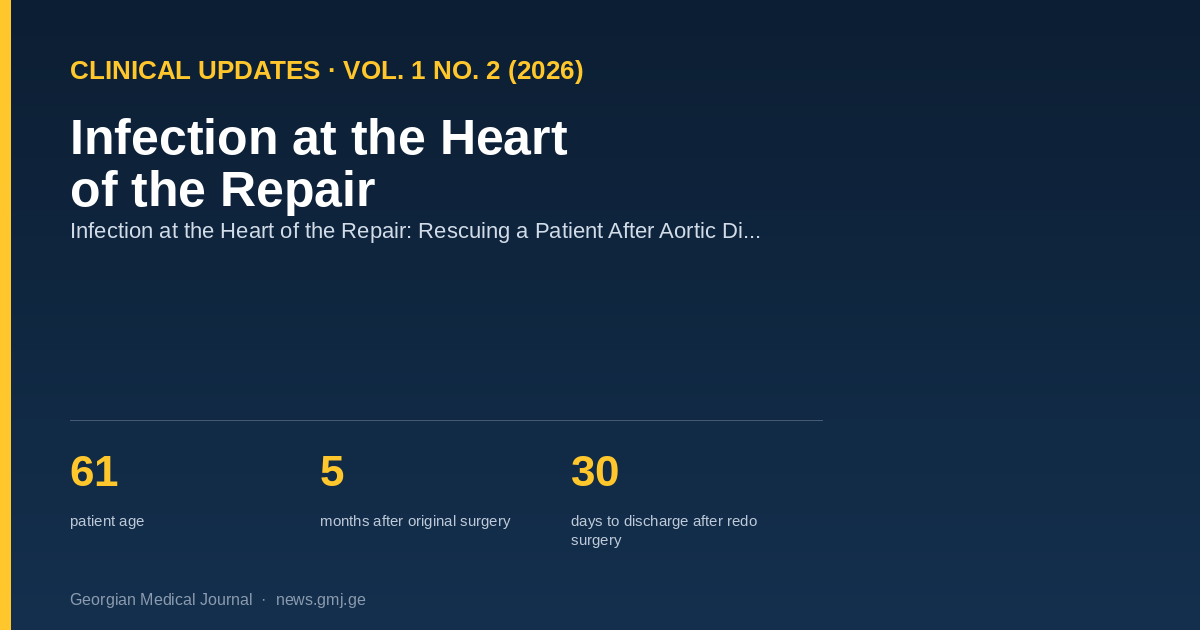
At a glance — the headline figures.
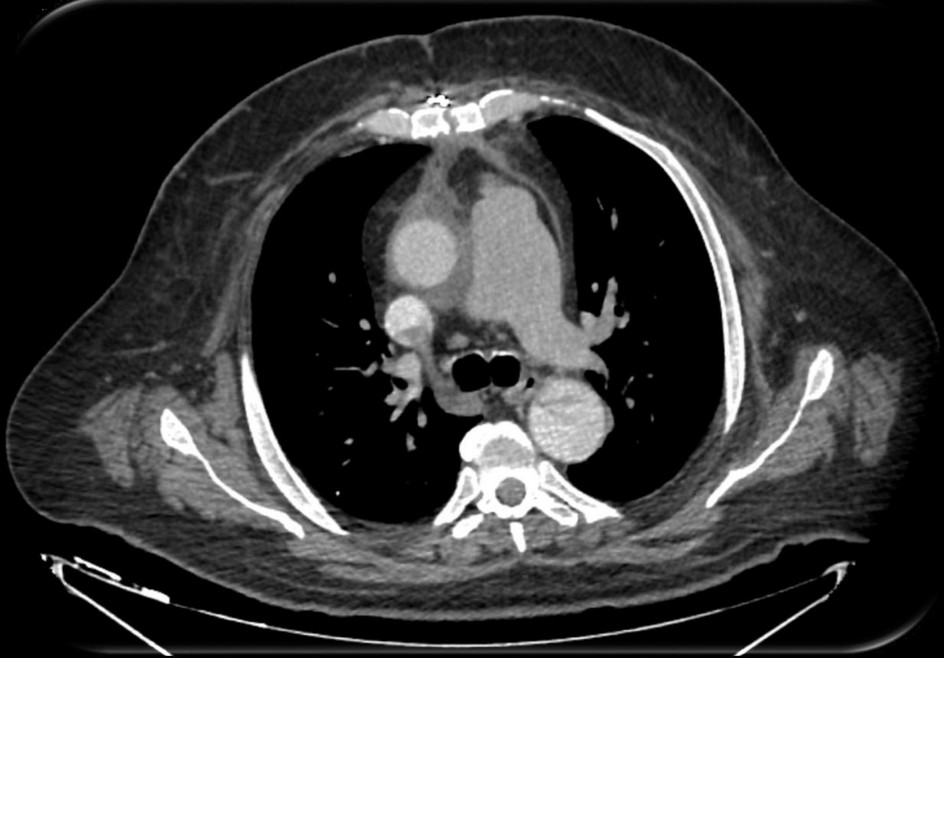
CT imaging showing the infected collection surrounding the aortic grafts. Figure from the case report. Source: Georgian Medical Journal, Vol. 1 No. 2 (2026), DOI: 10.66636/gmj.v1.i2.a118.
Redo sternotomy with abscess evacuation and complete replacement of both grafts confirmed the same pathogen on repeat cultures. The patient was discharged on day 30 on lifelong, culture-directed ciprofloxacin, with follow-up imaging confirming the infection had cleared. The authors distil the case into a clear management principle: successful treatment of an established aortic graft infection requires high clinical suspicion, MAGIC-criteria-anchored diagnosis, complete graft explantation when infection is confirmed, targeted long-term antibiotics, and structured surveillance to catch any recurrence early.
🗺️ Find certified Georgian healthcare providers: sheniekimi.ge — Georgia Health Map · 998 clinics · 6,600+ doctors · 2,296 pharmacies
Read the Original Research
Original article: Infection at the Heart of the Repair: Rescuing a Patient After Aortic Dissection Surgery
Published in: Georgian Medical Journal, Vol. 1 No. 2 (2026)
DOI: 10.66636/gmj.v1.i2.a118
📄 Read the full article at gmj.ge →
Georgian Medical Journal (GMJ) · ISSN 3088-4322 · gmj.ge · Open Access CC BY 4.0 · Published by the Public Health Institute of Georgia (PHIG). This summary is an independent editorial product of GMJ News; for clinical decisions, consult the original peer-reviewed article and a qualified professional.
Was this article helpful?
Disclaimer. This article is health journalism intended for general information and education. It is not medical advice and is not a substitute for professional diagnosis or treatment. Always consult a qualified healthcare provider about your individual circumstances. Full disclaimer →
Related Coverage



Editorial standards. This article was produced under the GMJ News editorial process, with oversight by the GMJ Editorial Board. Our editorial process. Spotted an error? Contact the editorial team.