


Home › Topics › COVID Vaccine Safety Debates
COVID Vaccine Safety Debates
GMJ News knowledge hub · last reviewed September 2026 · Georgian Medical Journal
SummaryStatisticsGlossaryGMJ newsFAQDocumentsOrganizationsResearch
No medical products in history have been more scrutinised — or more disputed — than the COVID-19 vaccines: billions of doses, real but rare harms, and a claims economy that outran both. The evidence file separates the bins: myocarditis after mRNA vaccination in young males is real (roughly 1-3 per 100,000 doses, mostly mild and resolving, mitigated by longer dose intervals and no longer elevated with current formulations), thrombosis ended the adenovirus vaccines’ use in the young, and the headline claims beyond that — mass ‘died suddenly’ deaths, fertility damage, DNA alteration — have failed under data from dozens of countries, even as the US advisory system itself became the story in 2025-26. All of it, scored, is below (see the WHO COVID-19 vaccine Q&A).
Key messages
THE SCALE AND THE STAKES: the most scrutinised products in medical history
COVID-19 vaccines were given in over 13 billion doses across essentially every country, under the largest safety-surveillance operation ever mounted — passive reporting systems, active cohort monitoring, health-record linkage across dozens of national databases — which is precisely why this hub can score claims with unusual confidence in both directions: real harms were detected, quantified and acted on (the system working), while the catastrophic claims that dominate online discourse have had every opportunity to appear in mortality, fertility and cancer statistics across rival health systems with no incentive to agree — and have not. The honest frame is neither reverence nor suspicion but ledger-keeping: enormous documented benefit against severe outcomes, small quantified risks, and a claims economy that requires sorting.
THE REAL SIGNALS: myocarditis and the clotting story
Two genuine safety findings anchor the settled column. mRNA-vaccine myocarditis: concentrated in adolescent and young-adult males after second doses, at roughly 1.3-3.1 per 100,000 doses in that group — typically presenting within days, mostly mild, with follow-up studies showing the large majority recover and a prognosis substantially better than viral or conventional myocarditis; risk fell with longer dose intervals, and with current formulations and schedules rates have returned to background. Adenovirus-vector thrombosis (TTS/VITT): a rare but sometimes fatal clotting-with-low-platelets syndrome that led to age restrictions and then effective withdrawal of those vaccines in most wealthy markets — the clearest case of surveillance detecting a real harm and regulation responding. Both findings were characterised by the same systems the catastrophist narrative claims are hiding everything.
THE FAILED CLAIMS: where the data refused to cooperate
The unsupported column is populated by claims tested against exactly the outcomes they predict. Mass vaccine deaths ("died suddenly"): all-cause and cardiac mortality analyses across dozens of countries show no vaccination-timed excess in the vaccinated versus unvaccinated beyond the rare identified syndromes; excess-death waves track infection waves and health-system disruption, not rollout curves. Fertility: no effect on conception rates, IVF outcomes, sperm parameters or miscarriage in large cohorts — while COVID infection itself transiently degrades sperm quality. DNA integration: mRNA is transient cytoplasmic material; the residual-DNA-fragment claims of 2023-24 involve quantities and mechanisms with no demonstrated integration or harm. Turbo cancer: not an oncological entity; cancer registries show no vaccine-timed incidence shift. Each claim thrives on anecdote aggregation — the reporting-system misread this hub's glossary dissects.
THE 2025-26 INSTITUTIONAL STORY: when the referee became the controversy
The US advisory apparatus itself became contested terrain: in mid-2025 the HHS Secretary dismissed the entire sitting vaccine advisory committee and reconstituted it, recommendations for children and pregnant women shifted from universal to shared clinical decision-making, hepatitis-B birth-dose and MMRV recommendations were revised, and a 2026 agenda item proposed revisiting the GRADE evidence framework itself — moves critics (including former officials and the academic community that produced an independent NEJM evidence review for the 2025-26 season) read as predetermined conclusions in search of process, and supporters read as overdue correction of captured institutions. This hub's doctrine cuts both ways here: institutional consensus earns trust through transparent method, not authority — and institutional revisionism earns the same scrutiny it demands of its predecessors. The independent evidence reviews now exist precisely so readers need not take either faction on faith.
WHAT BOTH TRENCHES GET WRONG
The maximalist error: treating every question as settled and every safety concern as misinformation — a posture that delayed frank myocarditis communication in 2021, fed the credibility collapse it feared, and handed the catastrophists their establishment-coverup narrative on documented occasions (dose-interval changes, age restrictions arriving after other countries acted). The catastrophist error: anecdote aggregation over denominator thinking, reporting-system dumps read as causal ledgers, autopsy claims immune to peer review, and a moving target of predicted catastrophes (mass death by 2022, fertility collapse, cancer waves) that quietly reschedule as each fails to arrive. The transferable lesson is the collection's oldest: both manufactured doubt and premature certainty are failure modes, and the correction for both is the same — public data, rival systems, and claims specific enough to fail.
PRACTICAL BOTTOM LINE
For individual decisions now: the risk calculus is age- and condition-stratified — clear ongoing benefit for older and high-risk groups against severe outcomes; genuinely small absolute stakes in either direction for healthy young adults in the current immunity landscape, which is why reasonable countries now differ on universal versus targeted boosting; and for young males specifically, the historical myocarditis signal is mitigated by current intervals and formulations and remains far below infection-associated cardiac risk. For parents: the paediatric question is now legitimately shared decision-making in several systems — discuss your child's risk profile rather than importing either trench. For everyone: judge claims by whether they survived linked-data testing across countries, not by testimonial volume — and judge institutions, old and new, by whether they show their evidence work.
Key statistics
13B+
COVID vaccine doses administered globally — under the largest safety-surveillance operation in medical history
WHO vaccination dashboards1.3-3.1
per 100,000 doses — myocarditis in male adolescents after mRNA vaccination; mostly mild, risk lower with longer dose intervals, background rates with current formulations
NEJM independent evidence review, 2025-26 season511
studies in the independent NEJM systematic review conducted after the 2025 US advisory disruption — reaffirming effectiveness against severe outcomes and the established safety profile
NEJM 2025Withdrawn
the adenovirus-vector vaccines' fate in most wealthy markets after rare thrombosis (TTS/VITT) was detected — surveillance finding a real harm and acting
Regulatory record 2021-222025
the year the entire US vaccine advisory committee was dismissed and reconstituted, with COVID recommendations shifted to shared clinical decision-making
Congressional Research Service summaryNo signal
in fertility, all-cause mortality or cancer-registry data across dozens of countries for the headline catastrophic claims
Multi-country linked-data analysesWhere the disagreement actually lies
Each claim scored by strength of evidence — not by popularity.
Protection against severe outcomes (settled)Strong · 90
mRNA myocarditis in young males — real, rare, mostly recoveringStrong · 85
Adenovirus-vector thrombosis — real, acted uponStrong · 90
Mass vaccine deaths / died-suddenly claims (refuted by mortality data)Weak · 8
Fertility harm (refuted by cohort data)Weak · 8
Optimal current boosting breadth (genuinely debated by honest systems)Contested · 50
Strong settledContested genuinely openWeak unsupported
Source: Editorial synthesis of surveillance data, linked-registry studies and independent reviews
Glossary of key terms
Latest GMJ coverage

FDA Advisory Panel Endorses Moderna mRNA Flu Vaccine After Earlier Controversy
12/07/2026
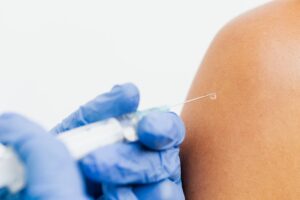
Diphtheria Cases Rise Across Americas: PAHO Calls for Urgent Vaccination Push
10/07/2026
Frequently asked questions 12 Q&A — structured for Google featured snippets and AI discovery
Knowledge hub: guidelines, conventions and reports
Organizations working in migration and health
Related health topics
Vaccine HesitancyCOVID-19Masks and Respiratory VirusesPost-COVID ConditionThe Lab Leak QuestionHealth Misinformation
About this hub. Produced by the GMJ News Editorial Team as a public-good service. Every statistic is linked to its primary source. Documents are preserved in the GMJ Repository with full attribution. Georgian Medical Journal · Contact the editorial team