By using this site, you agree to the Privacy Policy and Terms of Use.
Accept
GMJ NewsGMJ NewsGMJ News
  • Latest News
    • GMJ Briefs
  • Podcast & Media
    • Podcast Episodes
    • GMJ Audio
    • GMJ Videos
  • Research Digest
    • New Studies
    • Georgian Research
    • Data & Numbers
  • Policy & Systems
    • Health Policy
    • Quality & Safety
    • Migration & Health
    • Global Health
  • Practice
    • Clinical Updates
    • Case Discussions
    • Pharmacy & Prescribing
    • Ingredients A-Z
  • Perspectives
    • Editorial
    • Explainers
    • Voices
    • Letters
  • Health Topics
  • GMJ Articles
    • Vol. 1 Issue 2 (2026)
    • Vol. 1 Issue 1 (2026)
    • Pre-Launch Articles (2025)
  • Read the Journal →
  • About GMJ News
Notification Show More
Font ResizerAa
GMJ NewsGMJ News
Font ResizerAa
  • Latest News
    • GMJ Briefs
  • Podcast & Media
    • Podcast Episodes
    • GMJ Audio
    • GMJ Videos
  • Research Digest
    • New Studies
    • Georgian Research
    • Data & Numbers
  • Policy & Systems
    • Health Policy
    • Quality & Safety
    • Migration & Health
    • Global Health
  • Practice
    • Clinical Updates
    • Case Discussions
    • Pharmacy & Prescribing
    • Ingredients A-Z
  • Perspectives
    • Editorial
    • Explainers
    • Voices
    • Letters
  • Health Topics
  • GMJ Articles
    • Vol. 1 Issue 2 (2026)
    • Vol. 1 Issue 1 (2026)
    • Pre-Launch Articles (2025)
  • Read the Journal →
  • About GMJ News
Follow US
GMJ News > Practice > Clinical Updates > How vitamin B12 absorption works: two competing pathways explain why high-dose pills can rival injections
Clinical UpdatesExplainersPerspectivesPractice

How vitamin B12 absorption works: two competing pathways explain why high-dose pills can rival injections

GMJ
Last updated: 12/07/2026 13:29
By
GMJ Practice Desk
Share
10 Min Read
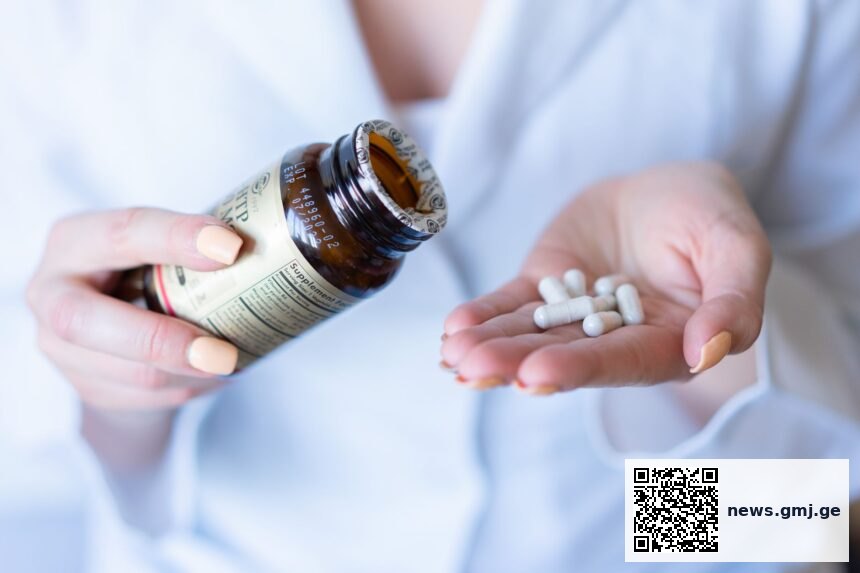
Diagram showing vitamin B12 absorption via intrinsic factor and passive diffusion pathwaysIllustrative image · Photo by Atlantic Ambience on Pexels (Pexels License)
Vitamin B12 is absorbed via two pathways: intrinsic factor, which saturates at 1.5 µg per dose, and passive intestinal diffusion, which becomes dominant at supplement doses. At 1,000 µg, passive diffusion alone delivers roughly 10 µg of B12—more than four times the daily requirement—explaining why high-dose oral supplements can rival intramuscular injections for pernicious anaemia. — Photo by Atlantic Ambience on Pexels (Pexels License)
SHARE
6 min read|1,247 words
✓ Reviewed by GMJ News Editorial Team

🟠 Moderate Evidence

Contents
    • Key takeaways
      • Study at a Glance
      • Vitamin B12 absorption efficiency collapses—but total delivery rises with dose
  • Pathway one: intrinsic factor hits a hard ceiling
  • Pathway two: passive diffusion takes over at high doses
  • Clinical implication: oral high-dose B12 as an alternative to injection
    • What this means
  • Frequently asked questions
    • Why does high-dose oral B12 work if intrinsic factor is broken?
    • Can I just take a higher dose of oral B12 instead of injections?
    • Is 1,000 µg oral B12 safe?

Vitamin B12 absorption is not a single process but a competition between two physiological pathways—one efficient but capacity-limited, the other slow but functionally unlimited at high doses. This dual-pathway model explains why high-dose oral supplementation can deliver therapeutic amounts of B12 in patients who cannot absorb it via the conventional route, offering a non-invasive alternative to intramuscular injection in select cases.

Key takeaways

  • Intrinsic factor, a stomach protein, saturates at approximately 1.5 µg per dose—its absolute ceiling for B12 transport
  • Passive diffusion across the intestinal lining absorbs only 1–2% of any dose but becomes the dominant route at supplement doses (500–1,000 µg)
  • At 1,000 µg, passive diffusion alone delivers roughly 10 µg of B12, more than four times the recommended daily intake of 2.4 µg
  • High-dose oral B12 is recognised by the NIH Office of Dietary Supplements as a potential alternative to injections for pernicious anaemia, though injection remains first-line

Study at a Glance

Source Scandinavian Journal of Gastroenterology
Study type Pharmacokinetic study (radiolabelled isotope retention)
Sample Human subjects receiving doses from 1 µg to 1,000 µg
Measurement Whole-body retention of radiolabelled cyanocobalamin (B12)
Year 1971
1.5 µg
The saturation ceiling for intrinsic factor–mediated B12 absorption per oral dose

Vitamin B12 absorption efficiency collapses—but total delivery rises with dose

Percentage of oral dose retained versus absolute amount absorbed (µg), across increasing doses. Data from Adams et al. (1971).

50%
Retained at 1 µg
20%
Retained at 5 µg
1.3%
Retained at 1,000 µg

Source: Adams et al., Scand J Gastroenterol, 1971 | NIH Office of Dietary Supplements | Georgian Medical Journal News

Submit Your Paper
GMJ_Submit_Banner

Pathway one: intrinsic factor hits a hard ceiling

The primary route of B12 absorption is mediated by intrinsic factor (IF), a glycoprotein synthesised by parietal cells in the stomach fundus. Intrinsic factor binds B12 in the small intestine and escorts it to a specific receptor, cubilin, located in the distal ileum epithelium. This pathway is efficient—at low dietary doses, it recovers roughly half of the ingested vitamin—but it has a critical limitation: it saturates. According to the absorption kinetics measured by Adams and colleagues in the Scandinavian Journal of Gastroenterology (1971), intrinsic factor cannot transport more than approximately 1.5 µg per dose, regardless of how much B12 enters the mouth.

🎙️ Related Podcast Episodes
🎧 #52 | GMJ Podcast | Health and Migration Knowledge Hub — A Global Resource for Evidence-Based Practice · 17m
🎧 #39 | GMJ Podcast | Acne and Metabolic Dysfunction — Insulin Resistance, IGF-1, and Clinical Implications · 15m
🎧 #38 | GMJ Podcast | Acne and Metabolic Dysfunction — Insulin Resistance, IGF-1, and Clinical Implications · 21m
🎧 #8 | WHO Food Safety Surveillance: Strengthening Global Systems to Detect and Prevent Foodborne Diseases · 19m
🎧 #4 Patient-Centred Care in Liver Transplantation in Georgia Professionalism, Communication, and Quality Standards in Transplant Services | GMJ Official Podcast · 17m

This ceiling explains why patients with pernicious anaemia—a condition in which the immune system destroys parietal cells and IF production collapses—cannot absorb sufficient B12 through oral intake alone using conventional doses. At 1 µg, the IF pathway works well. At 5 µg, it is already saturated, and absorption drops to 20%. The receptor is simply full.

Pathway two: passive diffusion takes over at high doses

The second route is passive, concentration-dependent diffusion across the intestinal mucosa. This is not an active transport mechanism; it requires no protein carrier and operates along the entire length of the small intestine and colon. At dietary levels (2–3 µg), passive diffusion contributes negligibly to total B12 acquisition. But at supplement doses—500 µg, 1,000 µg, or higher—this pathway becomes dominant.

The NIH Office of Dietary Supplements reports absorption rates of approximately 2% at 500 µg and 1.3% at 1,000 µg. These percentages sound trivial, but the arithmetic is instructive: 1% of 1,000 µg equals 10 µg. The recommended dietary allowance (RDA) for B12 is 2.4 µg daily. A single 1,000 µg supplement, absorbed at just 1.3%, delivers more than five times the daily requirement.

At 1,000 µg, approximately 13 µg of B12 is absorbed in total, of which roughly 10 µg comes from passive diffusion alone—more than four times the RDA, without any contribution from the intrinsic factor pathway.

— Adams et al., Scandinavian Journal of Gastroenterology (1971); NIH Office of Dietary Supplements

Clinical implication: oral high-dose B12 as an alternative to injection

This two-pathway model has reshaped clinical practice for B12 deficiency in selected patients. Intramuscular injection bypasses the gut entirely, delivering B12 directly into the bloodstream and thus remains the standard first-line therapy for pernicious anaemia and severe B12 deficiency. However, injections require clinic attendance, are inconvenient for patients, and carry a small infection risk.

The NIH Office of Dietary Supplements recognises that high-dose oral supplementation may be another treatment option for patients with pernicious anaemia who decline injections or have adequate renal function to handle high oral loads. Some clinical guidelines—notably those from European haematology societies—now list high-dose oral B12 (1,000–2,000 µg daily) as an acceptable second-line option, though the evidence base for direct equivalence is limited. Randomised controlled trials comparing high-dose oral and intramuscular B12 are few and generally small; more robust long-term data are needed to establish non-inferiority definitively.

Clinicians should note an important nuance: absorption efficiency depends on dose, but it also varies by individual metabolic factors—renal function, transit time, and residual IF production (even partial). A patient with zero parietal cell function will differ from one with partial autoimmune damage. Monitoring serum B12 and methylmalonic acid levels during oral supplementation is therefore prudent.

What this means

For patients: If you have pernicious anaemia or B12 deficiency and injections are inconvenient, high-dose oral supplements (1,000 µg daily) can deliver adequate B12 via passive intestinal diffusion—but only with regular blood-level monitoring and your clinician’s approval. Do not self-treat; clinical guidance is essential.
For clinicians: High-dose oral B12 is a viable non-injectable option for selected pernicious anaemia patients who refuse or cannot tolerate injections. However, verify absorption adequacy via serum B12 and methylmalonic acid; passive diffusion efficiency varies individually. Current evidence supports its use but is not yet conclusive on long-term non-inferiority.
For policymakers: Consider guidelines that legitimise high-dose oral B12 as a second-line option for pernicious anaemia in resource-limited settings where frequent clinic visits are infeasible. However, ensure that oral and injectable formulations are both accessible, as injection remains the gold standard for severe or acute B12 deficiency. Investment in more rigorous comparative trials would strengthen future recommendations.

Frequently asked questions

Why does high-dose oral B12 work if intrinsic factor is broken?

Because intrinsic factor is not the only absorption route. Passive diffusion—the simple leakage of B12 across cell membranes—occurs even without any carrier protein. It is slow and inefficient (1–2% absorption), but at doses of 1,000 µg, even 1% absorption yields 10 µg, far exceeding daily needs. This backup pathway compensates for the loss of intrinsic factor, as documented by Adams et al. (1971).

Can I just take a higher dose of oral B12 instead of injections?

Not without medical supervision. While high-dose oral B12 can deliver adequate amounts for some patients, absorption varies due to individual factors—renal function, gut transit time, and baseline B12 status. Your clinician must verify that your serum B12 levels are rising appropriately. Additionally, injections remain the standard first-line therapy and are still necessary for acute severe deficiency. Discuss this option with your doctor before switching.

Is 1,000 µg oral B12 safe?

Yes. B12 is water-soluble, and excess amounts are excreted in urine. Toxicity from high oral doses is not documented. However, patients with kidney disease should discuss high-dose supplementation with their nephrologist, as there is theoretical concern about accumulation in severe renal failure. For most people, high-dose oral B12 is safe; the issue is efficacy, not safety.

The two-pathway model of B12 absorption—intrinsic factor as the efficient but saturating route and passive diffusion as the unlimited but slow backup—has redefined how clinicians approach B12 deficiency. Future research should focus on identifying which patients are candidates for high-dose oral therapy and establishing robust equivalence data with injection. For now, both routes remain valuable, and the choice depends on clinical context, patient preference, and confirmed adequacy of absorption.

Source: Adams et al., Scandinavian Journal of Gastroenterology (1971); NIH Office of Dietary Supplements

Was this article helpful?

Disclaimer. This article is health journalism intended for general information and education. It is not medical advice and is not a substitute for professional diagnosis or treatment. Always consult a qualified healthcare provider about your individual circumstances. Full disclaimer →

Related Coverage
Copper deficiency may explain iron-resistant anaemia: why the overlooked mineral matters for oxygen transportAug 14, 2026
How Vitamins and Minerals Power Brain Chemistry: The Nutritional Foundations of Neurotransmitter HealthAug 14, 2026
Bedroom Light at Night Linked to Metabolic Harm: What the Evidence ShowsAug 14, 2026
Creatine and Kidney Damage: What the Evidence Actually ShowsAug 14, 2026
Explore more on this topic:🧭 Nutrition hub🧭 Supplements & Nutraceuticals hub🧭 Anaemia and Blood Disorders hub
🔥 Most read this week
1Creatine Kidney Damage Myth Debunked by Major Safety Review of 26,000 Participants
2Why High-Dose Vitamin B12 Supplements Work Despite Poor Absorption
3Magnesium Form May Not Matter for Cognitive Benefits, New Meta-Analysis Suggests
4How Coffee Brewing Method Affects Cholesterol: The Science Behind Diterpenes and Filters
Related reference
  • Vitamin B12 · Ingredient
  • Cobalamin · Ingredient
PG
Editorial oversight
Prof. Giorgi Pkhakadze, MD, MPH, PhD
Editor-in-Chief, GMJ News
Full profile →  ·  ORCID 0000-0001-7609-4515
Medical disclaimer. This article is health journalism intended for general information. It is not medical advice and is not a substitute for consultation with a qualified healthcare professional. Always seek your physician's advice regarding any medical condition.
Editorial standards. This article was produced under the GMJ News editorial process, with oversight by the GMJ Editorial Board. Our editorial process. Spotted an error? Contact the editorial team.

📬 GMJ Health Digest
Evidence-based medical news, once a week. Free, no spam, unsubscribe anytime.
TAGGED:absorptionintrinsic factororal supplementationpernicious anaemiavitamin B12
Share This Article
Facebook LinkedIn Bluesky Copy Link Print
GMJ
ByGMJ Practice Desk
Follow:
GMJ Practice Desk is part of GMJ News, the newsroom of the Georgian Medical Journal (gmj.ge), published by the Public Health Institute of Georgia. Every article is editorially reviewed before publication.
Leave a Comment Leave a Comment

Leave a Reply Cancel reply

Your email address will not be published. Required fields are marked *

Submit Your Paper →

Georgia's peer-reviewed open-access medical journal. No APC until January 2027.
Submit Manuscript →
Copper deficiency may explain iron-resistant anaemia: why the overlooked mineral matters for oxygen transport

Copper deficiency may explain why some patients develop anaemia despite adequate iron…

How Vitamins and Minerals Power Brain Chemistry: The Nutritional Foundations of Neurotransmitter Health

B vitamins, iron, zinc, and magnesium serve as essential biochemical cofactors in…

Coffee’s Dose-Response Puzzle: Why 2–3 Cups Daily May Shield Against Dementia

Moderate coffee consumption—2 to 3 cups daily—is associated with the lowest dementia…

Submit Your Paper to GMJ

No APC until January 2027.
Submit Manuscript →

You Might Also Like

Illustration of brain waves showing L-theanine effect on alpha and beta frequency patternsIllustrative image · Photo by Kostas Dimopoulos on Pexels (Pexels License)
Clinical UpdatesExplainersPerspectivesPractice

L-Theanine Shifts Brain Waves Toward Calm Focus Without Sedation, Research Shows

By
GMJ Practice Desk
02/08/2026
Comparison of flavanol content in blackberries, apples, cherries, plums, and other produce—illustrated bar chart showing nutritional density differencesIllustrative image · Photo by Vanessa Loring on Pexels (Pexels License)
Clinical UpdatesExplainersNew StudiesPerspectivesPracticeResearch Digest

Flavanols in fruits and vegetables offer measurable cardiovascular protection, research shows

By
GMJ Practice Desk
13/07/2026
Bar chart showing caffeine effects on back squat and bench press strength across different intensity levelsIllustrative image · Photo by Homegrounds.co on Pexels (Pexels License)
Clinical UpdatesNew StudiesPracticeResearch Digest

Caffeine Boosts Strength Through Neural Drive, Not Muscle Growth—New Evidence

By
GMJ Practice Desk
27/07/2026
Illustration showing point-of-care G6PD testing workflow for risk-stratified primaquine dosing in vivax malaria treatmentIllustrative image · Photo by Jan Kopřiva on Pexels (Pexels License)
Clinical UpdatesNew StudiesPracticeResearch Digest

Point-of-care G6PD testing safely enables primaquine treatment for vivax malaria in Southeast Asia

By
GMJ Practice Desk
10/07/2026
Facebook Twitter Youtube Instagram
Company
  • Privacy Policy
  • Contact US
  • GMJ Journal
  • Submit Manuscript
  • Editorial Team
  • Register at GMJ
  • Terms of Use

Subscribe to GMJ News — Click here

Join Community
© 2026 Georgian Medical Journal (GMJ). Published by the Public Health Institute of Georgia (PHIG). All rights reserved.
Welcome Back!

Sign in to your account

Username or Email Address
Password

Lost your password?

Not a member? Sign Up