By using this site, you agree to the Privacy Policy and Terms of Use.
Accept
GMJ NewsGMJ NewsGMJ News
  • Latest News
    • GMJ Briefs
  • Podcast & Media
    • Podcast Episodes
    • GMJ Audio
    • GMJ Videos
  • Research Digest
    • New Studies
    • Georgian Research
    • Data & Numbers
  • Policy & Systems
    • Health Policy
    • Quality & Safety
    • Migration & Health
    • Global Health
  • Practice
    • Clinical Updates
    • Case Discussions
    • Pharmacy & Prescribing
    • Ingredients A-Z
  • Perspectives
    • Editorial
    • Explainers
    • Voices
    • Letters
  • GMJ Articles
    • Vol. 1 Issue 2 (2026)
    • Vol. 1 Issue 1 (2026)
    • Pre-Launch Articles (2025)
  • Read the Journal →
  • About GMJ News
Notification Show More
Font ResizerAa
GMJ NewsGMJ News
Font ResizerAa
  • Latest News
    • GMJ Briefs
  • Podcast & Media
    • Podcast Episodes
    • GMJ Audio
    • GMJ Videos
  • Research Digest
    • New Studies
    • Georgian Research
    • Data & Numbers
  • Policy & Systems
    • Health Policy
    • Quality & Safety
    • Migration & Health
    • Global Health
  • Practice
    • Clinical Updates
    • Case Discussions
    • Pharmacy & Prescribing
    • Ingredients A-Z
  • Perspectives
    • Editorial
    • Explainers
    • Voices
    • Letters
  • GMJ Articles
    • Vol. 1 Issue 2 (2026)
    • Vol. 1 Issue 1 (2026)
    • Pre-Launch Articles (2025)
  • Read the Journal →
  • About GMJ News
Follow US
GMJ News > Policy & Systems > Global Health > Women’s Empowerment Programs in Poor Countries Lack Clear Measurement Standards
Global HealthPolicy & Systems

Women’s Empowerment Programs in Poor Countries Lack Clear Measurement Standards

GMJ
Last updated: 09/06/2026 02:40
By
GMJ News Desk
Share
6 Min Read
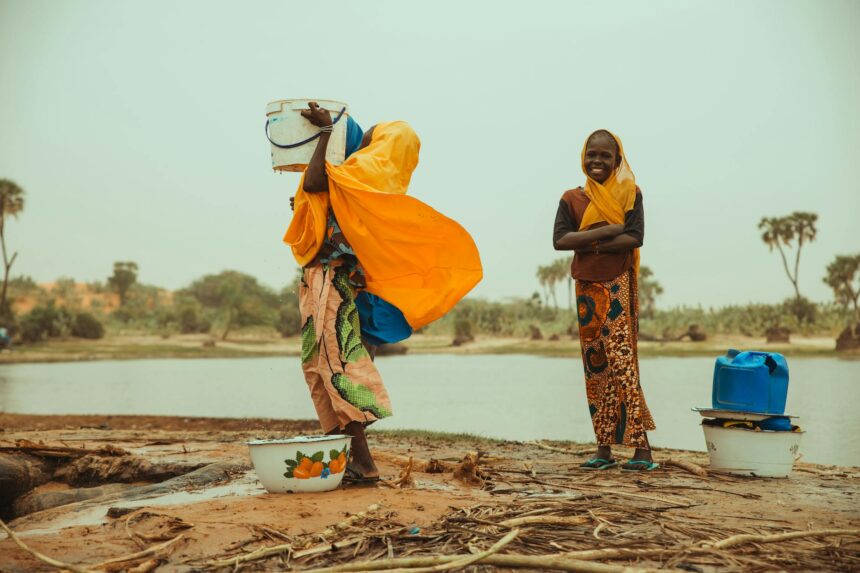
Women participating in community empowerment program discussion
A comprehensive scoping review reveals significant gaps in how women's empowerment programs in developing countries define, measure, and evaluate their effectiveness. Inconsistent frameworks limit program comparison and evidence-based improvements. — Photo: alameen .ng / Pexels
SHARE
4 min read|711 words
✓ Editorially Reviewed by Prof. Giorgi Pkhakadze, MD, MPH, PhD — GMJ News Desk

🟠 Moderate Evidence

Contents
    • Key takeaways
      • Study at a Glance
  • Fragmented Approaches Undermine Global Progress
  • Measurement Challenges Persist Across Programs
  • Evidence Gaps Limit Program Effectiveness
  • Implications for Future Research and Policy
    • What this means
  • Frequently asked questions
    • Why is standardized measurement important for women’s empowerment programs?
    • What are the main challenges in measuring women’s empowerment?
    • How could improved measurement benefit women in developing countries?

Women’s empowerment interventions in low- and middle-income countries suffer from inconsistent theoretical frameworks and measurement approaches, limiting their effectiveness and comparability across programs. A comprehensive scoping review published in Global Health Action reveals significant gaps in how capacity-building programs define, implement, and evaluate women’s empowerment initiatives.

Key takeaways

  • Most women’s empowerment programs in developing countries use different measurement frameworks, making comparison difficult
  • Lack of standardized theoretical approaches undermines program effectiveness and evidence-based improvements
  • Better measurement tools could improve outcomes for millions of women in capacity-building interventions

Study at a Glance

Source Global Health Action
Study type Scoping review
Sample size Multiple interventions across LMICs
Population Women in low- and middle-income countries
Country Multiple LMICs globally

Fragmented Approaches Undermine Global Progress

The scoping review, published in the December 2026 issue of Global Health Action, systematically examined theoretical and measurement approaches used in women’s empowerment interventions across multiple low- and middle-income countries. The analysis found that programs often operate without unified frameworks, creating challenges for evidence synthesis and program improvement.

This fragmentation occurs despite growing recognition that women’s empowerment is crucial for achieving global health and development goals. The review highlights how inconsistent measurement approaches prevent researchers and policymakers from identifying which interventions work best for different populations and contexts.

Submit Your Paper
GMJ_Submit_Banner
🎙️ Related Podcast Episodes
🎬 The Architecture of Migration Health: Inside the GMJ Knowledge Hub | Georgian Medical Journal
🎧 #52 | GMJ Podcast | Health and Migration Knowledge Hub — A Global Resource for Evidence-Based Practice · 17m
🎧 #50 | GMJ Podcast | Inclusive Health for Refugees and Migrants: WHO Reports Global Progress and Remaining Gaps · 17m
🎧 #26 | Denmark Becomes First EU Country to Eliminate Mother-to-Child Transmission of HIV and · 14m
🎧 #23 | WHO: Next-Generation Influenza Vaccines Could Save Millions of Lives · 18m

Measurement Challenges Persist Across Programs

The analysis revealed that capacity-building interventions targeting women’s empowerment frequently lack standardized measurement tools and theoretical foundations. This creates significant barriers to program evaluation, comparison, and scaling of successful interventions across different settings and populations.

Many programs define empowerment differently, ranging from economic participation to decision-making autonomy to social mobility. Without consistent definitions and measurement approaches, it becomes difficult to assess program effectiveness or replicate successful models in new contexts, according to the Global Health Action study.

Evidence Gaps Limit Program Effectiveness

The review identified substantial gaps in how women’s empowerment outcomes are measured and reported in capacity-building interventions. These gaps limit the ability of program implementers, funders, and policymakers to make evidence-based decisions about which approaches deliver the greatest impact for women and communities.

The study authors emphasized that improved measurement frameworks could enhance program design, implementation, and evaluation processes. This could lead to more effective interventions that better serve women in low- and middle-income countries where empowerment initiatives are most needed.

Implications for Future Research and Policy

The findings suggest an urgent need for standardized theoretical frameworks and measurement tools in women’s empowerment programming. Such standardization could improve program comparability, enable better evidence synthesis, and support more effective policy development at national and international levels.

The research also highlights opportunities for capacity-building programs to adopt more rigorous evaluation methods. This could include standardized outcome indicators, validated measurement instruments, and consistent reporting protocols that facilitate cross-program learning and evidence-based improvements.

Current approaches to measuring women’s empowerment in capacity-building interventions lack the theoretical consistency and methodological rigor needed to generate robust evidence for program improvement and scaling

— Global Health Action scoping review (2026)

What this means

For patients: Women participating in empowerment programs may benefit from more effective interventions once measurement standards improve
For clinicians: Healthcare providers working in community programs should advocate for evidence-based empowerment interventions with clear outcome measures
For policymakers: Investment in standardized measurement frameworks could significantly improve the effectiveness of women’s empowerment initiatives and development outcomes

Frequently asked questions

Why is standardized measurement important for women’s empowerment programs?

Standardized measurement allows programs to be compared, evaluated, and improved based on evidence. Without consistent approaches, it’s difficult to identify which interventions work best and scale successful programs to help more women.

What are the main challenges in measuring women’s empowerment?

The main challenges include lack of agreed-upon definitions, inconsistent theoretical frameworks, limited validated measurement tools, and poor comparability across different programs and contexts.

How could improved measurement benefit women in developing countries?

Better measurement could lead to more effective empowerment programs by identifying successful approaches, enabling evidence-based improvements, and supporting the development of interventions that deliver greater impact for women and communities.

The research underscores the critical need for coordinated efforts among researchers, program implementers, and policymakers to develop and adopt standardized approaches to women’s empowerment measurement. Such coordination could significantly enhance the effectiveness of capacity-building interventions and accelerate progress toward gender equality goals in low- and middle-income countries worldwide.

Source: A scoping review of theoretical and measurement approaches to women’s empowerment in low-and middle-income countries’ capacity-building interventions

Was this article helpful?

Related Coverage

Brown Dog Tick Linked to Fatal SFTS Case with Multiorgan Failure in ThailandJun 9, 2026
Sleep Quality Emerges as Critical Factor in Trauma Recovery for Forced MigrantsJun 8, 2026
Multi-country study reveals critical gaps in Chagas disease data systems across Bolivia and ParaguayJun 8, 2026
UK approves 342 parallel drug import licences in 2026 amid post-Brexit medicine access challengesJun 8, 2026
PG
Written by
Prof. Giorgi Pkhakadze, MD, MPH, PhD
Editor-in-Chief, GMJ News
Full profile →
Medical disclaimer. This article is health journalism intended for general information. It is not medical advice and is not a substitute for consultation with a qualified healthcare professional. Always seek your physician's advice regarding any medical condition.
Medically reviewed by Prof. Giorgi Pkhakadze, MD, MPH, PhD. Spotted an error? Contact the editorial team.
TAGGED:capacity buildingdevelopment programsglobal-healthmeasurementwomen's empowerment
Share This Article
Facebook LinkedIn Bluesky Copy Link Print
Leave a Comment Leave a Comment

Leave a Reply Cancel reply

Your email address will not be published. Required fields are marked *

Submit Your Paper →

Georgia's peer-reviewed open-access medical journal. No APC until January 2027.
Submit Manuscript →
Brown Dog Tick Linked to Fatal SFTS Case with Multiorgan Failure in Thailand

Thai researchers document first confirmed case of SFTS virus transmission by brown…

New Antiviral Drug Shows Promise Against COVID-19 in Clinical Research

New research examines inosine pranobex, an established antiviral drug, as a potential…

Harold Ellis, Renowned Surgeon and Anatomy Educator, Dies at 100

Harold Ellis, influential British surgeon and medical educator, died at age 100…

Submit Your Paper to GMJ

No APC until January 2027.
Submit Manuscript →

You Might Also Like

WHO health emergency response briefing room with epidemiologists reviewing outbreak data on screens
Global Health

WHO: Ebola outbreak in DRC and Uganda poses high regional risk but no global pandemic emergency

By
GMJ News Desk
21/05/2026
Medical device safety alert showing heart pump controller with warning symbol
Policy & SystemsQuality & Safety

FDA Issues Early Alert for Heart Pump Controller Software Error That May Cause Dangerous Restarts

By
GMJ News Desk
25/05/2026
Global health leaders at One Health Summit discussing coordination between WHO, WOAH, FAO, and UNEP
Global HealthPolicy & Systems

Quadripartite Partners Strengthen One Health Coordination at Global Summit

By
GMJ News Desk
28/05/2026
World Health Organization Assembly meeting hall with country delegates discussing global health policy
Health PolicyPolicy & Systems

World Health Assembly Adopts New Global Health Security Framework After Pandemic Treaty Stalemate

By
GMJ News Desk
24/05/2026
Facebook Twitter Youtube Instagram
Company
  • Privacy Policy
  • Contact US
  • GMJ Journal
  • Submit Manuscript
  • Editorial Team
  • Register at GMJ
  • Terms of Use

Subscribe to GMJ News — Click here

Join Community
© 2026 Georgian Medical Journal (GMJ). Published by the Public Health Institute of Georgia (PHIG). All rights reserved.
Welcome Back!

Sign in to your account

Username or Email Address
Password

Lost your password?

Not a member? Sign Up