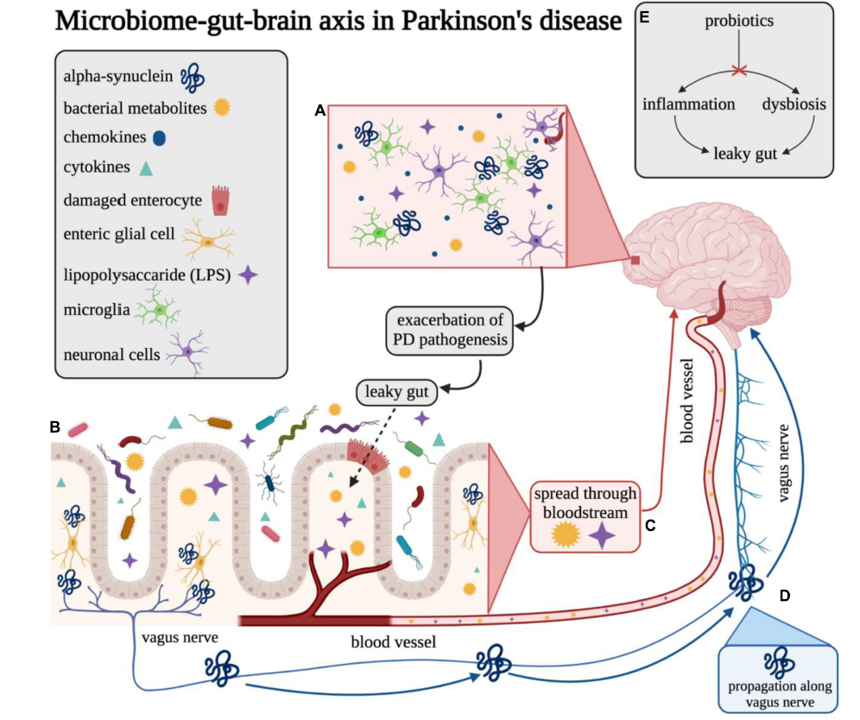
Researchers have identified distinctive patterns in the gut microbiome that could serve as early warning signs for Parkinson’s disease, potentially allowing for risk assessment years before motor symptoms appear. The breakthrough study, published in Nature Medicine, reveals that specific microbial changes occur progressively from healthy individuals to those with genetic risk factors to patients with symptomatic disease.
Microbiome risk progression in Parkinson’s disease
Coherent changes across healthy, at-risk, and symptomatic groups
analyzed
changes
potential
Source: Nature Medicine, 2026 | Georgian Medical Journal News
Progressive microbiome alterations reveal disease trajectory
The study demonstrates that gut microbiome changes follow a coherent pattern across three distinct groups: healthy individuals, those with genetic predisposition to Parkinson’s disease, and patients already showing symptoms. According to the Nature Medicine research, these alterations occur in a predictable sequence that could enable early intervention strategies.

The findings suggest that microbiome analysis could complement existing diagnostic approaches and potentially identify individuals who would benefit from preventive treatments. This represents a significant advance in understanding the gut-brain connection in neurodegenerative diseases, adding to the growing body of evidence linking intestinal health to neurological function documented in previous research studies.
Dietary factors show protective potential
A particularly encouraging aspect of the research involves the relationship between diet and microbiome health. The study found that a healthy diet was inversely associated with the microbiome alterations linked to Parkinson’s risk, suggesting that nutritional interventions might help mitigate disease development.
These findings align with emerging research on the role of nutrition in neurodegenerative disease prevention, as explored in detail by public health nutrition studies. The protective effect of healthy dietary patterns could provide a accessible intervention strategy for individuals identified as being at higher risk through microbiome screening.
Clinical implications for early intervention
The ability to identify Parkinson’s disease risk through microbiome analysis opens new possibilities for clinical management. Early detection could enable healthcare providers to implement lifestyle modifications, monitor disease progression more closely, and potentially begin neuroprotective treatments before irreversible neuronal damage occurs.
This approach represents a shift toward predictive medicine in neurology, where risk assessment tools could guide personalized prevention strategies. The research contributes to broader efforts in precision medicine documented in clinical advancement reports, where molecular markers are increasingly used to guide treatment decisions.
Future research directions and validation
While these results are promising, the researchers emphasize the need for larger validation studies to confirm the predictive accuracy of microbiome screening across diverse populations. Future research will likely focus on developing standardized protocols for microbiome analysis and establishing clinical guidelines for interpreting results.
The study also raises important questions about the mechanisms underlying gut-brain communication in Parkinson’s disease and how dietary interventions might be optimized to provide maximum protective benefit. These investigations could inform both prevention strategies and therapeutic approaches for managing neurodegenerative conditions, as detailed in ongoing NIH research initiatives.
Innovative microbiome analysis revealed coherent changes from healthy individuals across those with genetic risk of Parkinson’s disease to symptomatic patients, with healthy diet inversely associated with disease-linked alterations.
— Research team, Nature Medicine (2026)
Key takeaways
- Gut microbiome patterns can identify Parkinson’s disease risk before symptoms appear
- Progressive microbiome changes occur across healthy, at-risk, and symptomatic individuals
- Healthy dietary patterns may protect against disease-associated microbiome alterations
- Early detection could enable preventive interventions and lifestyle modifications
- Further validation studies needed to confirm clinical utility of microbiome screening
Frequently asked questions
How early can gut microbiome changes detect Parkinson’s risk?
The Nature Medicine study shows that microbiome alterations occur progressively from healthy individuals to those with genetic risk to symptomatic patients. This suggests detection could occur years before motor symptoms develop, though specific timeframes require further research.
Can dietary changes prevent Parkinson’s disease?
The research found that healthy diet patterns were inversely associated with disease-linked microbiome changes, suggesting potential protective effects. However, more studies are needed to establish whether dietary interventions can definitively prevent disease onset.
When will microbiome screening be available clinically?
While the research shows promise, clinical implementation requires validation in larger, diverse populations and development of standardized testing protocols. Timeline for clinical availability depends on successful completion of these validation studies.
The development of microbiome-based screening represents a significant step forward in the early detection of Parkinson’s disease, potentially transforming how clinicians approach neurodegenerative disease prevention. As validation studies progress and our understanding of gut-brain interactions deepens, these tools could become integral components of personalized healthcare strategies aimed at maintaining neurological health throughout aging.
Source: Gut microbiome screens could identify risk of Parkinson’s disease years before symptoms appear
Was this article helpful?
Disclaimer. This article is health journalism intended for general information and education. It is not medical advice and is not a substitute for professional diagnosis or treatment. Always consult a qualified healthcare provider about your individual circumstances. Full disclaimer →
Related Coverage


Editorial standards. This article was produced under the GMJ News editorial process, with oversight by the GMJ Editorial Board. Our editorial process. Spotted an error? Contact the editorial team.