By using this site, you agree to the Privacy Policy and Terms of Use.
Accept
GMJ NewsGMJ NewsGMJ News
  • Latest News
    • GMJ Briefs
  • Podcast & Media
    • Podcast Episodes
    • GMJ Audio
    • GMJ Videos
  • Research Digest
    • New Studies
    • Georgian Research
    • Data & Numbers
  • Policy & Systems
    • Health Policy
    • Quality & Safety
    • Migration & Health
    • Global Health
  • Practice
    • Clinical Updates
    • Case Discussions
    • Pharmacy & Prescribing
    • Ingredients A-Z
  • Perspectives
    • Editorial
    • Explainers
    • Voices
    • Letters
  • GMJ Articles
    • Vol. 1 Issue 2 (2026)
    • Vol. 1 Issue 1 (2026)
    • Pre-Launch Articles (2025)
  • Read the Journal →
  • About GMJ News
Notification Show More
Font ResizerAa
GMJ NewsGMJ News
Font ResizerAa
  • Latest News
    • GMJ Briefs
  • Podcast & Media
    • Podcast Episodes
    • GMJ Audio
    • GMJ Videos
  • Research Digest
    • New Studies
    • Georgian Research
    • Data & Numbers
  • Policy & Systems
    • Health Policy
    • Quality & Safety
    • Migration & Health
    • Global Health
  • Practice
    • Clinical Updates
    • Case Discussions
    • Pharmacy & Prescribing
    • Ingredients A-Z
  • Perspectives
    • Editorial
    • Explainers
    • Voices
    • Letters
  • GMJ Articles
    • Vol. 1 Issue 2 (2026)
    • Vol. 1 Issue 1 (2026)
    • Pre-Launch Articles (2025)
  • Read the Journal →
  • About GMJ News
Follow US
GMJ News > Policy & Systems > Global Health > Nigeria Joins Global Food Safety Day 2026 Campaign to Reduce Disease Burden
Global HealthPolicy & Systems

Nigeria Joins Global Food Safety Day 2026 Campaign to Reduce Disease Burden

GMJ
Last updated: 15/06/2026 12:25
By
GMJ Policy Desk
Share
5 Min Read
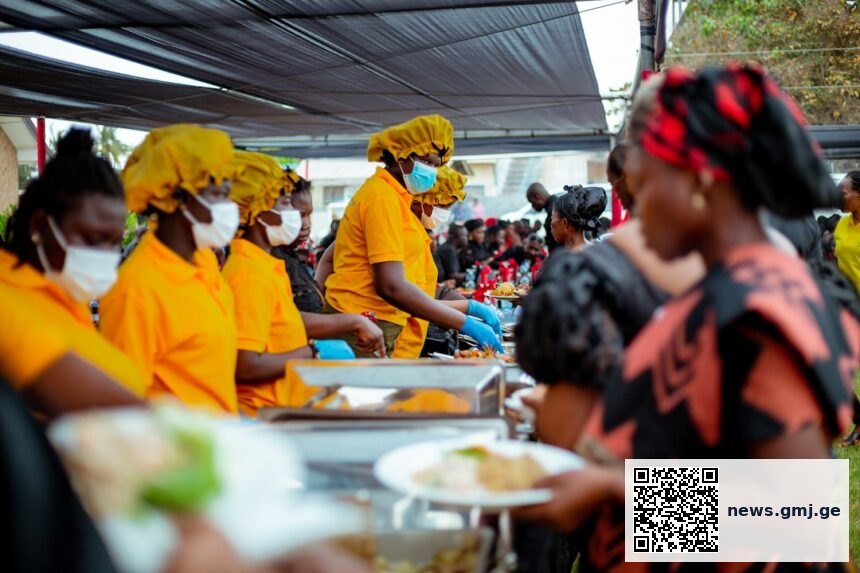
Nigerian food safety officials and WHO World Food Safety Day 2026 campaign materialsIllustrative image · Photo by Emmanuel Yeboah Okine on Unsplash (Unsplash License)
Nigeria's NAFDAC joins WHO's World Food Safety Day 2026 campaign with theme "From burden to solutions - safe food everywhere." The multi-agency collaboration aims to reduce foodborne disease impacts through coordinated prevention efforts. — Photo by Emmanuel Yeboah Okine on Unsplash (Unsplash License)
SHARE
3 min read|608 words
✓ Reviewed by Prof. Giorgi Pkhakadze, MD, MPH, PhD · ORCID 0000-0001-7609-4515

Nigeria’s National Agency for Food and Drug Administration and Control (NAFDAC) has joined the World Health Organization’s World Food Safety Day 2026 campaign, emphasising the critical role of food safety in reducing global disease burden. The theme “From burden to solutions – safe food everywhere” highlights the shift from recognising foodborne illness impacts to implementing preventive measures.

Contents
    • Key takeaways
      • Global Foodborne Disease Impact
  • Multi-Agency Coordination Strengthens Nigeria’s Food Safety Framework
  • From Awareness to Action: Shifting Food Safety Paradigms
  • Community Engagement Essential for Food Safety Success
    • What this means
  • Frequently asked questions
    • What is World Food Safety Day?
    • Why is Nigeria’s multi-agency approach significant?
    • How does food safety impact global health?

Key takeaways

  • NAFDAC partners with Federal Ministry of Health & Social Welfare for World Food Safety Day 2026
  • This year’s theme focuses on transitioning from disease burden awareness to solution implementation
  • Food safety requires coordinated efforts across government agencies and communities
600 million
people fall ill from contaminated food annually, according to WHO estimates

Global Foodborne Disease Impact

Annual burden of foodborne illnesses worldwide

600m
People affected annually
420,000
Deaths per year
125,000
Children under 5 deaths

Source: World Health Organization | Georgian Medical Journal News

Multi-Agency Coordination Strengthens Nigeria’s Food Safety Framework

The collaboration between NAFDAC, the Federal Ministry of Health & Social Welfare, and the National Food Safety Management Committee represents Nigeria’s integrated approach to food safety governance. This partnership aligns with WHO recommendations for coordinated national food safety systems.

Submit Your Paper
GMJ_Submit_Banner

Nigeria’s participation in the global campaign connects local food safety initiatives with international best practices. The global health community increasingly recognises food safety as a cornerstone of public health protection and economic development.

🎙️ Related Podcast Episodes
🎧 #16 | WHO Prequalifies New Oral Polio Vaccine to Strengthen Global Eradication Efforts · 20m
🎧 #11 | WHO Urges Schools Worldwide to Promote Healthy Eating for Children · 20m
🎧 #9 Leprosy in 2026: Bridging Medical Cure and Social Inclusion – WHO World Leprosy Day Message · 18m
🎧 #37 | GMJ Podcast | NAD⁺ Injections and “NAD Boosters” — Public Health Risks and Regulatory Implications · 20m
🎧 #33 | GMJ Podcast | Public Health Policy as Education in NCD Prevention — Commentary by Owen Thomas · 21m

From Awareness to Action: Shifting Food Safety Paradigms

The 2026 theme marks a strategic evolution in food safety communication, moving beyond documenting health impacts toward implementing practical solutions. This approach reflects growing recognition that foodborne diseases disproportionately affect vulnerable populations, particularly in developing countries.

According to Food and Agriculture Organization data, unsafe food costs the global economy approximately $110 billion annually in productivity losses. The shift toward solution-focused messaging aims to mobilise resources for prevention rather than treatment.

Community Engagement Essential for Food Safety Success

NAFDAC’s emphasis on “food safety is everyone’s business” underscores the multi-sectoral nature of effective food safety systems. Research published in public health journals demonstrates that community-level interventions significantly reduce foodborne illness incidence.

The agency’s participation connects Nigerian consumers, producers, and regulators with global food safety networks. This integration supports knowledge sharing and coordinated responses to emerging food safety challenges across borders.

Food safety requires coordinated action across all levels of the food system, from farm to fork, involving government agencies, industry stakeholders, and individual consumers.

— World Health Organization Food Safety Programme

What this means

For patients: Increased awareness of food safety practices can prevent foodborne illnesses and reduce healthcare costs
For clinicians: Understanding food safety initiatives helps identify and manage foodborne illness outbreaks more effectively
For policymakers: Multi-agency coordination models like Nigeria’s provide frameworks for national food safety governance

Frequently asked questions

What is World Food Safety Day?

World Food Safety Day, established by the UN General Assembly in 2018, is observed annually on June 7th to raise awareness about foodborne diseases and promote food safety practices globally.

Why is Nigeria’s multi-agency approach significant?

Nigeria’s coordination between NAFDAC, the health ministry, and the National Food Safety Management Committee creates comprehensive oversight that addresses food safety from regulation through public health response.

How does food safety impact global health?

According to WHO estimates, contaminated food causes 600 million illnesses and 420,000 deaths annually, with children under five accounting for 30% of foodborne disease deaths despite representing only 9% of the global population.

Nigeria’s participation in World Food Safety Day 2026 demonstrates the country’s commitment to reducing foodborne disease burden through coordinated action. The emphasis on solutions rather than problems signals a maturation in global food safety advocacy, moving toward practical interventions that protect public health and support economic development.

Source: NAFDAC Joins Federal Ministry of Health & Social Welfare, National Food Safety Management Committee and the rest of the world in celebrating World Food Safety Day

Was this article helpful?

Disclaimer. This article is health journalism intended for general information and education. It is not medical advice and is not a substitute for professional diagnosis or treatment. Always consult a qualified healthcare provider about your individual circumstances. Full disclaimer →

Related Coverage

US Dietary Guidelines 2025-2030: Mixed Progress on Nutrition as Implementation Challenges PersistJun 18, 2026
Medical Professionals Face Involuntary Practice Closure: NEJM Analysis Reveals Growing Healthcare Access CrisisJun 18, 2026
Climate Coalition Proposes Fossil Fuel Phase-Out After UN Process StallsJun 18, 2026
Climate Change Linked to Rising Antimicrobial Resistance in Salmonella GloballyJun 18, 2026
PG
Written by
Prof. Giorgi Pkhakadze, MD, MPH, PhD
Editor-in-Chief, GMJ News
Full profile →
Medical disclaimer. This article is health journalism intended for general information. It is not medical advice and is not a substitute for consultation with a qualified healthcare professional. Always seek your physician's advice regarding any medical condition.
Medically reviewed by Prof. Giorgi Pkhakadze, MD, MPH, PhD. Spotted an error? Contact the editorial team.

Get the GMJ News digest
Evidence-based health journalism in your inbox. No spam; unsubscribe anytime.
TAGGED:food safetyNAFDACNigeria health policyWHO campaignWorld Food Safety Day
Share This Article
Facebook LinkedIn Bluesky Copy Link Print
GMJ
ByGMJ Policy Desk
Follow:
GMJ Policy Desk is part of GMJ News, the newsroom of the Georgian Medical Journal (gmj.ge), published by the Public Health Institute of Georgia. Every article is editorially reviewed before publication.
Leave a Comment Leave a Comment

Leave a Reply Cancel reply

Your email address will not be published. Required fields are marked *

Submit Your Paper →

Georgia's peer-reviewed open-access medical journal. No APC until January 2027.
Submit Manuscript →
US Dietary Guidelines 2025-2030: Mixed Progress on Nutrition as Implementation Challenges Persist

New US Dietary Guidelines for 2025-2030 show incremental progress in nutrition science…

Medical Professionals Face Involuntary Practice Closure: NEJM Analysis Reveals Growing Healthcare Access Crisis

New NEJM analysis reveals growing crisis of involuntary medical practice closures affecting…

Weekly semaglutide outperforms dulaglutide for diabetes control in UK primary care study

Large UK study shows weekly semaglutide provides superior blood sugar control and…

Submit Your Paper to GMJ

No APC until January 2027.
Submit Manuscript →

You Might Also Like

Global Antimicrobial Resistance Investment Falls Short of UN Commitments

By
GMJ Policy Desk
28/05/2026
NHS hospital building with protest signs about patient advocacy
Health PolicyPolicy & Systems

NHS Patient Watchdog Abolition Sparks Concerns Over Health Service Accountability

By
GMJ Policy Desk
09/06/2026
Empty children's home room with single bed, representing unregulated care facilities in UK
Health Policy

Unregulated Children’s Homes: Why UK Councils Are Spending Millions on Illegal Placements

By
GMJ Policy Desk
21/05/2026
Infographic showing global mental health disability statistics with rising trend line
Data & NumbersGlobal HealthNew StudiesPolicy & SystemsResearch Digest

Mental Health Disorders Now Leading Global Disability Cause as Cases Approach 1.2 Billion

By
GMJ Research Desk
01/06/2026
Facebook Twitter Youtube Instagram
Company
  • Privacy Policy
  • Contact US
  • GMJ Journal
  • Submit Manuscript
  • Editorial Team
  • Register at GMJ
  • Terms of Use

Subscribe to GMJ News — Click here

Join Community
© 2026 Georgian Medical Journal (GMJ). Published by the Public Health Institute of Georgia (PHIG). All rights reserved.
Welcome Back!

Sign in to your account

Username or Email Address
Password

Lost your password?

Not a member? Sign Up