


By using this site, you agree to the Privacy Policy and Terms of Use.
Accept
GMJ NewsGMJ NewsGMJ News
  • Latest News
    • GMJ Briefs
  • Podcast & Media
    • Podcast Episodes
    • GMJ Audio
    • GMJ Videos
  • Research Digest
    • New Studies
    • Georgian Research
    • Data & Numbers
  • Policy & Systems
    • Health Policy
    • Quality & Safety
    • Migration & Health
    • Global Health
  • Practice
    • Clinical Updates
    • Case Discussions
    • Pharmacy & Prescribing
    • Ingredients A-Z
  • Perspectives
    • Editorial
    • Explainers
    • Voices
    • Letters
  • GMJ Articles
    • Vol. 1 Issue 2 (2026)
    • Vol. 1 Issue 1 (2026)
    • Pre-Launch Articles (2025)
  • Read the Journal →
  • About GMJ News
Notification Show More
Font ResizerAa
GMJ NewsGMJ News
Font ResizerAa
  • Latest News
    • GMJ Briefs
  • Podcast & Media
    • Podcast Episodes
    • GMJ Audio
    • GMJ Videos
  • Research Digest
    • New Studies
    • Georgian Research
    • Data & Numbers
  • Policy & Systems
    • Health Policy
    • Quality & Safety
    • Migration & Health
    • Global Health
  • Practice
    • Clinical Updates
    • Case Discussions
    • Pharmacy & Prescribing
    • Ingredients A-Z
  • Perspectives
    • Editorial
    • Explainers
    • Voices
    • Letters
  • GMJ Articles
    • Vol. 1 Issue 2 (2026)
    • Vol. 1 Issue 1 (2026)
    • Pre-Launch Articles (2025)
  • Read the Journal →
  • About GMJ News
Follow US
GMJ News > GMJ Briefs > Study Shatters Myths: Brain Improvement Possible at Any Age

Study Shatters Myths: Brain Improvement Possible at Any Age

GMJ
Last updated: 06/07/2026 08:43
By
Prof. Giorgi Pkhakadze
Share
1 Min Read
Elderly person engaged in cognitive training exercise showing brain health improvement
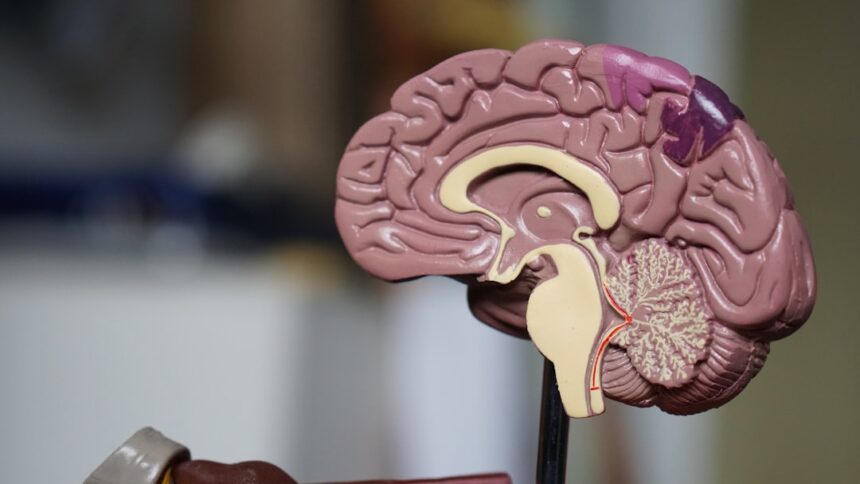
Three-year study of 4,000 adults aged 19-94 shows brain health can improve at any age through brief daily training. Research challenges assumptions about inevitable cognitive decline, documenting gains in thinking clarity and emotional well-being. — Photo by Robina Weermeijer on Unsplash (Unsplash License)
SHARE
1 min read|141 words

A landmark three-year longitudinal study involving 4,000 adults spanning ages 19 to 94 has fundamentally challenged conventional wisdom about cognitive decline in aging. Researchers found that brief daily brain-training sessions—requiring minimal time investment of just minutes per day—produced measurable improvements in cognitive function across all age groups, including participants in their 90s.

The findings demonstrate that neuroplasticity, the brain’s ability to form new neural connections, persists far longer than previously assumed. Beyond cognitive gains, participants reported improvements in emotional well-being and sense of purpose. These results align with recent guidance from the National Institute on Aging, which suggests that while some cognitive changes are normal with advancing years, the degree of decline has been significantly overestimated. The research provides compelling evidence that targeted interventions can sustain and enhance brain health throughout the entire human lifespan.

Read the full article on GMJ Newsroom.

Was this article helpful?

GMJ Brief · Announcement

📰 Read the full article: Brain Health Can Improve Into 90s, Challenging Decline Assumptions →

Share This Article
Facebook LinkedIn Bluesky Copy Link Print
GMJ
ByProf. Giorgi Pkhakadze
Follow:
Prof. Giorgi Pkhakadze, MD, MPH, PhD, is Editor-in-Chief of the Georgian Medical Journal and Chair of the Public Health Institute of Georgia (PHIG). He is Professor and Head of the Department of Social and Behavioural Sciences at David Tvildiani Medical University, and Secretary/Treasurer of the UEMS Section of Public Health. ORCID: 0000-0001-7609-4515.

Submit Your Paper →

Georgia's peer-reviewed open-access medical journal. No APC until January 2027.
Submit Manuscript →
District-Level Tobacco Control Cuts Youth Smoking in Indonesia Despite Weak National Enforcement

District-level tobacco control measures in Indonesia have reduced adolescent smoking rates despite…

Obinutuzumab Outperforms Tacrolimus for Primary Membranous Nephropathy

Landmark NEJM trial shows obinutuzumab achieves 60% higher remission rates than tacrolimus…

Peer Support Group Addresses Rising Loneliness Crisis Among Young Adults Following Suicide Death

A national support group launched to combat loneliness among young adults following…

Submit Your Paper to GMJ

No APC until January 2027.
Submit Manuscript →

You Might Also Like

Scientific illustration of cell division failure showing tetraploid cells with doubled DNA content

What Clinicians Need to Know About Surviving Tetraploid Cells

By
Prof. Giorgi Pkhakadze
27/06/2026
Healthcare worker conducting screening interview at Moldova probation centre

One in Seven Probation Entrants Screen Positive for Opioid Disorder in Moldova Study

By
Prof. Giorgi Pkhakadze
12/06/2026
Healthcare worker experiencing occupational stress in a hospital setting, illustrating the importance of occupational safety and health, burnout prevention, infection control, workplace violence prevention, and health worker wellbeing in Georgia.

Three Essential Steps to Protect Georgia’s Health Workforce

By
Prof. Giorgi Pkhakadze
04/07/2026
Illustration of ribosome collisions in brain cells causing protein misfolding and aging

What Brain Researchers Just Learned About Aging: Three Critical Insights for Disease Prevention

By
Prof. Giorgi Pkhakadze
01/07/2026
Facebook Twitter Youtube Instagram
Company
  • Privacy Policy
  • Contact US
  • GMJ Journal
  • Submit Manuscript
  • Editorial Team
  • Register at GMJ
  • Terms of Use

Subscribe to GMJ News — Click here

Join Community
© 2026 Georgian Medical Journal (GMJ). Published by the Public Health Institute of Georgia (PHIG). All rights reserved.
Welcome Back!

Sign in to your account

Username or Email Address
Password

Lost your password?

Not a member? Sign Up
