Updated 13/09/2026
All living organisms, from bacteria to humans, operate according to a shared set of cellular principles that govern structure, energy production, and genetic control. Rather than evolving entirely new biological rules, life’s diversity emerges through variations on the same conserved mechanisms—a framework that lies at the heart of modern biology and provides the foundation for understanding health and disease.
Key takeaways
- All cells share conserved principles of organization: membrane structure, compartmentalization, energy metabolism, and genetic regulation
- Biological diversity arises from modifications of the same underlying cellular machinery, not from fundamentally different rules
- Understanding this hierarchical, mechanistic organization is essential for interpreting physiology, development, and disease processes
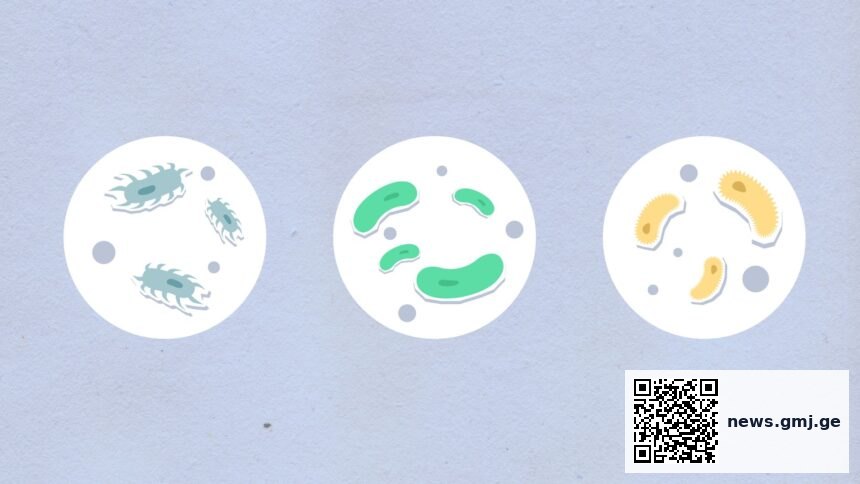
The Five Pillars of Cellular Organization
Conserved biological principles shared across all living organisms
Source: Foundational principles of cell biology | Georgian Medical Journal News

The Universality of Cellular Organization
Modern cell biology, rooted in what researchers call cell theory, establishes that all living organisms are composed of cells and that the cell represents the basic unit of life. This principle—established through more than a century of microscopy, molecular analysis, and comparative biology—reveals that cellular structure and function follow a consistent organizational pattern across prokaryotes and eukaryotes alike.
The cell membrane, a lipid bilayer embedded with proteins, serves as the defining boundary in all organisms. Inside this compartment, cells maintain internal environments distinct from their surroundings—a principle of compartmentalization that allows specialized functions to proceed simultaneously without interference. Whether in a single-celled amoeba or a neuron in the human brain, this architecture remains fundamentally consistent.
Differences between organisms arise not from new rules, but from modifications of the same underlying cellular machinery. All living systems are governed by five conserved principles: membrane structure, compartmentalization, energy metabolism, genetic regulation, and evolutionary continuity.
— Foundational framework of modern cell biology
Energy, Genes, and the Mechanism of Life
Every cell requires energy to sustain itself, and across all domains of life, ATP (adenosine triphosphate) serves as the universal currency of energy. Whether produced through photosynthesis in plants or through oxidative phosphorylation in mitochondria, the mechanism for capturing and distributing energy follows the same chemical logic. This conservation reflects deep evolutionary ancestry—a shared inheritance dating back billions of years.
Equally universal is genetic regulation. DNA encodes instructions; RNA carries those instructions; proteins execute cellular functions. This central dogma of molecular biology—transcription and translation—operates identically in bacteria, plants, and humans. Mutations, gene duplications, and regulatory rewiring produce the staggering diversity of life, yet the underlying mechanism remains unchanged. Visit our New Studies section for recent advances in understanding genetic mechanisms.
Hierarchy and Integration in Biological Systems
Biology is organized hierarchically: molecules form complexes; complexes assemble into organelles; organelles coordinate within cells; cells organize into tissues; tissues form organs; organs integrate into systems; and systems constitute the organism. This hierarchical nesting means that dysfunction at any level—whether a misfolded protein, a faulty mitochondrion, or disrupted cell-to-cell communication—can propagate upward to affect whole-organism health.
Understanding this mechanistic view has profound implications for medicine. When a patient presents with fatigue, clinicians now recognize this may stem from mitochondrial energy production failures, endocrine dysregulation, or cardiovascular insufficiency—each traceable to disrupted cellular mechanisms. For clinicians, this framework transforms diagnosis from descriptive naming to mechanistic explanation. Explore more on Clinical Updates for how this understanding shapes modern practice.
Evolution: The Proof of Shared Mechanisms
The final pillar—evolutionary continuity—demonstrates that all organisms share a common ancestor and that present-day diversity reflects branching descent with modification. Comparative genomics reveals that humans share approximately 99% of DNA with chimpanzees, 90% with cats, and measurable homology even with yeast. This genetic similarity reflects the reality that evolutionary change works through small modifications of inherited cellular systems, not through wholesale reinvention.
This mechanistic, hierarchical, and conserved view of biology provides the intellectual scaffolding for understanding pathology. Infectious disease exploits conserved cellular mechanisms; cancer arises from dysregulation of conserved growth controls; and aging reflects cumulative damage to conserved maintenance systems. For more on how these principles apply to disease understanding, see our Explainers section.
What this means
Frequently asked questions
Why do all cells use the same basic architecture if they perform such different functions?
Evolution favors solutions that work. The lipid bilayer membrane, ATP energy system, and DNA-based genetic code proved so effective that organisms inheriting them outcompeted alternatives. Rather than reinvent successful designs, evolution modifies them. A liver cell and a neuron look and function differently, yet both rely on the same membrane, mitochondrial, and genetic machinery—just organized and regulated differently.
How does understanding cellular hierarchy help in treating disease?
If a disease originates at the cellular level—say, a defective ion channel in a nerve cell—treatment can target that specific mechanism rather than just managing symptoms. This principle underlies modern precision medicine: identifying the cellular or molecular defect and designing therapies that correct it. Conversely, understanding that cells are hierarchically organized means disruption at one level can cascade upward, which informs how clinicians predict complications.
Does the fact that humans share DNA with other organisms mean human biology isn’t special?
Humans share conserved mechanisms with all life, but evolutionary variation in gene regulation, protein structure, and cellular organization creates specialization. The human brain’s complexity, our extended childhood development, and our capacity for language and abstract thought emerge from modifications of conserved cellular systems. Shared mechanisms do not erase uniqueness; they explain how diversity arises from a common foundation.
As medicine advances toward systems-based understanding and precision therapeutics, the framework that biology is organized, hierarchical, and mechanistic becomes ever more clinically powerful. This conceptual foundation—refined through cell theory, molecular biology, and evolutionary science—enables clinicians and researchers to move beyond treating symptoms toward addressing the cellular root causes of disease. In the coming decades, expect this mechanistic view to deepen further through advances in single-cell biology, spatial genomics, and computational modeling of cellular networks.
Source: Biology’s Fundamental Organization: Cells, Conservation, and Mechanism
🗺️ Find certified Georgian healthcare providers: sheniekimi.ge — Georgia Health Map · 998 clinics · 6,600+ doctors · 2,296 pharmacies
Was this article helpful?
Disclaimer. This article is health journalism intended for general information and education. It is not medical advice and is not a substitute for professional diagnosis or treatment. Always consult a qualified healthcare provider about your individual circumstances. Full disclaimer →
Related Coverage


Editorial standards. This article was produced under the GMJ News editorial process, with oversight by the GMJ Editorial Board. Our editorial process. Spotted an error? Contact the editorial team.