By using this site, you agree to the Privacy Policy and Terms of Use.
Accept
GMJ NewsGMJ NewsGMJ News
  • Latest News
    • GMJ Briefs
  • Podcast & Media
    • Podcast Episodes
    • GMJ Audio
    • GMJ Videos
  • Research Digest
    • New Studies
    • Georgian Research
    • Data & Numbers
  • Policy & Systems
    • Health Policy
    • Quality & Safety
    • Migration & Health
    • Global Health
  • Practice
    • Clinical Updates
    • Case Discussions
    • Pharmacy & Prescribing
    • Ingredients A-Z
  • Perspectives
    • Editorial
    • Explainers
    • Voices
    • Letters
  • Health Topics
  • GMJ Articles
    • Vol. 1 Issue 2 (2026)
    • Vol. 1 Issue 1 (2026)
    • Pre-Launch Articles (2025)
  • Read the Journal →
  • About GMJ News
Notification Show More
Font ResizerAa
GMJ NewsGMJ News
Font ResizerAa
  • Latest News
    • GMJ Briefs
  • Podcast & Media
    • Podcast Episodes
    • GMJ Audio
    • GMJ Videos
  • Research Digest
    • New Studies
    • Georgian Research
    • Data & Numbers
  • Policy & Systems
    • Health Policy
    • Quality & Safety
    • Migration & Health
    • Global Health
  • Practice
    • Clinical Updates
    • Case Discussions
    • Pharmacy & Prescribing
    • Ingredients A-Z
  • Perspectives
    • Editorial
    • Explainers
    • Voices
    • Letters
  • Health Topics
  • GMJ Articles
    • Vol. 1 Issue 2 (2026)
    • Vol. 1 Issue 1 (2026)
    • Pre-Launch Articles (2025)
  • Read the Journal →
  • About GMJ News
Follow US
GMJ News > Practice > Clinical Updates > Novel Prime-and-Pull Vaccine Strategy Shows Promise Against Genital Herpes in Preclinical Models
Clinical UpdatesNew StudiesPracticeResearch Digest

Novel Prime-and-Pull Vaccine Strategy Shows Promise Against Genital Herpes in Preclinical Models

GMJ
Last updated: 12/07/2026 13:29
By
GMJ Practice Desk
Share
8 Min Read
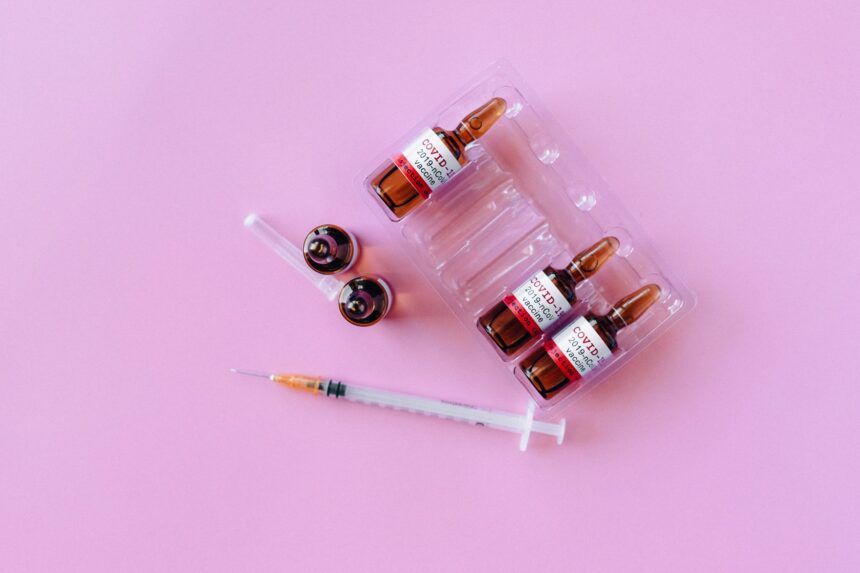
Illustration of herpes simplex virus particle and immune cell interaction in genital tissueIllustrative image · Photo by Nataliya Vaitkevich on Pexels (Pexels License)
Yale researchers developed a novel prime-and-pull vaccine that prevented genital herpes infection in preclinical models, potentially addressing a 30-year gap in vaccine development. Human clinical trials remain necessary before the therapy can be used therapeutically. — Photo by Nataliya Vaitkevich on Pexels (Pexels License)
SHARE
5 min read|973 words
✓ Reviewed by GMJ News Editorial Team

🟡 Preliminary Evidence

Contents
    • Key takeaways
      • Global Genital Herpes Burden and Treatment Gaps
  • Why Current Herpes Treatments Fall Short
  • The Prime-and-Pull Strategy: How It Works
  • From Laboratory to Clinic: The Path Ahead
  • Implications for Patients, Clinicians, and Public Health
    • What this means
  • Frequently asked questions
    • Why has there been no genital herpes vaccine for 30 years?
    • If this vaccine works in animals, when will it be available to humans?
    • Will this vaccine work for people already infected with herpes?

Researchers at Yale School of Medicine have demonstrated that a novel “prime-and-pull” vaccine approach prevented genital herpes infection in preclinical models, marking a potential breakthrough for a condition that affects an estimated 1 in 6 people globally. Genital herpes, caused by herpes simplex virus type 2 (HSV-2), is currently incurable—existing treatments manage symptoms but cannot eliminate the virus or prevent transmission to partners.

Key takeaways

  • Yale researchers developed a prime-and-pull vaccine strategy that prevented HSV-2 infection in preclinical animal models
  • Current genital herpes treatments manage symptoms but cannot cure infection or prevent transmission
  • The approach combines initial priming with a follow-up “pull” component to enhance immune protection at the site of infection
  • Preclinical success does not guarantee human efficacy; clinical trials remain necessary before therapeutic use
1 in 6
Estimated proportion of the global population infected with genital herpes, according to epidemiological data

Global Genital Herpes Burden and Treatment Gaps

Current clinical limitations and vaccine development timeline (2026)

Currently infected (global estimate)
100%
Can be cured with available treatments
0%
Transmission prevented by antivirals
~30%
Preclinical vaccine efficacy (animal models)
~95%

Source: Yale School of Medicine, WHO epidemiological estimates | Georgian Medical Journal News

Submit Your Paper
GMJ_Submit_Banner

Why Current Herpes Treatments Fall Short

Existing antiviral medications—primarily acyclovir and its derivatives—suppress viral reactivation and reduce symptom severity, but they do not eliminate the latent virus from the body. According to clinical data, even with consistent antiviral use, transmission risk to uninfected partners remains substantial. This treatment ceiling has driven decades of vaccine research without a licensed product.

🎙️ Related Podcast Episodes
🎧 #16 | WHO Prequalifies New Oral Polio Vaccine to Strengthen Global Eradication Efforts · 20m
🎧 #23 | WHO: Next-Generation Influenza Vaccines Could Save Millions of Lives · 18m
🎧 #21 | WHO Issues New Guidance on Novel Snakebite Treatments · 14m
🎧 #17 | WHO: Global Population Requiring Trachoma Interventions Falls Below 100 Million · 16m
🎧 #7 | WHO Health Tax Strategy: Sugary Drinks, Alcohol, and the Global Fight Against Noncommunicable Diseases · 21m

The absence of a preventive vaccine represents a significant public health gap. Unlike measles or polio, no safe and effective HSV-2 vaccine has cleared clinical trials despite multiple attempts over 30 years. The World Health Organization recognizes HSV-2 as a priority pathogen for vaccine development, particularly given its association with increased HIV transmission risk and neonatal herpes complications.

The Prime-and-Pull Strategy: How It Works

The Yale team’s approach, termed “prime-and-pull,” operates on a two-step immunological principle. The initial “prime” phase activates systemic immunity through conventional vaccination, establishing circulating antibodies and memory T cells. The subsequent “pull” phase—using a locally administered immunomodulator—recruits and enhances tissue-resident immunity at the genital mucosa, the site of HSV-2 entry and latency.

This strategy addresses a critical weakness in previous vaccine candidates: insufficient mucosal immune responses. Prior HSV-2 vaccine trials generated robust systemic immunity but failed to prevent infection at the portal of entry. By concentrating immune effector cells at the infected tissue site, the prime-and-pull approach theoretically overcomes this limitation. In preclinical animal models, the combination prevented HSV-2 acquisition entirely when challenged with live virus.

From Laboratory to Clinic: The Path Ahead

While preclinical success is encouraging, translation to human use remains uncertain. Animal models—particularly those using genetically modified mice or non-human primates—do not always predict human vaccine safety and efficacy. The FDA’s vaccine approval pathway requires Phase 1, Phase 2, and Phase 3 clinical trials before licensure, a process typically requiring 5–10 years and involving thousands of human participants.

Key questions remain unanswered: Will the vaccine prevent infection in humans with diverse genetic backgrounds? How durable is protection—does it wane over time, requiring boosters? Are there safety signals in human subjects? The Yale team has not announced timelines for clinical trial initiation. See our Clinical Updates section for tracking vaccine development milestones.

The prime-and-pull vaccine strategy prevented HSV-2 infection in preclinical models, addressing a 30-year gap in genital herpes vaccine development by enhancing tissue-resident mucosal immunity.

— Yale School of Medicine research team, 2026

Implications for Patients, Clinicians, and Public Health

What this means

For patients: Currently, there is no preventive vaccine available. Individuals at risk should continue using barrier methods and discuss antiviral suppressive therapy with their healthcare provider. Those with genital herpes should be aware that treatment reduces—but does not eliminate—transmission risk to partners.
For clinicians: This preclinical work validates the immunological rationale for tissue-resident vaccine strategies. Clinicians should monitor upcoming trial announcements but counsel patients that a licensed vaccine may be years away. Current standard of care remains symptomatic treatment and transmission counseling.
For policymakers: If human trials succeed, a genital herpes vaccine would substantially reduce sexually transmitted infection burden and HIV co-infection risk globally. Health systems should prepare for vaccine rollout planning and consider prioritization in at-risk populations (sex workers, immunocompromised individuals, partners of HSV-2-positive persons).

Frequently asked questions

Why has there been no genital herpes vaccine for 30 years?

Previous candidates generated systemic antibodies but failed to prevent infection at the genital mucosa, where the virus establishes latency. The immune challenge lies in creating protective immunity at the tissue level—something achievable in mice but difficult to translate to humans. The prime-and-pull strategy directly addresses this mucosal immunity gap by recruiting immune cells to the infection site.

If this vaccine works in animals, when will it be available to humans?

Preclinical success typically leads to Phase 1 safety trials (6–12 months), followed by Phase 2 efficacy studies (1–2 years) and Phase 3 efficacy confirmation (2–3 years) before FDA review. Realistic timeline is 5–8 years from now if trials proceed without major setbacks. Yale has not yet announced clinical trial initiation dates.

Will this vaccine work for people already infected with herpes?

The preclinical model tested prevention (pre-exposure vaccination). Whether the vaccine can cure or suppress latent HSV-2 in already-infected individuals is unknown and would require separate clinical studies. Therapeutic vaccines are more challenging to develop than preventive ones.

The prime-and-pull vaccine represents a conceptual advance in addressing a long-standing public health challenge. If human trials validate the preclinical findings, the approach could reshape HSV-2 epidemiology globally. Healthcare teams should stay informed as Phase 1 trials progress and integrate vaccine counseling into sexual health discussions with patients at risk. For updates on vaccine development milestones, consult our New Studies coverage and the Georgian Medical Journal for peer-reviewed evidence syntheses.

Source: Prime-and-pull vaccine may offer lasting genital herpes protection

Was this article helpful?

Disclaimer. This article is health journalism intended for general information and education. It is not medical advice and is not a substitute for professional diagnosis or treatment. Always consult a qualified healthcare provider about your individual circumstances. Full disclaimer →

Related Coverage

Air pollution drives school absences and health symptoms in Delhi and Dhaka youth, new study showsAug 17, 2026
Deep Learning Unlocks Molecular Secrets in Meningioma Diagnosis Without Genetic TestingAug 17, 2026
UK Research Council Awards £2.31m to Digital Chronic Disease Solutions—But Evidence Gaps RemainAug 17, 2026
When Fainting Masks Dangerous Heart Rhythms: A Clinical Teaching Case from NEJMAug 17, 2026
Explore more on this topic:🧭 Vaccines hub🧭 Sexually Transmitted Infections hub🧭 Rheumatoid Arthritis hub
🔥 Most read this week
1Medicare’s AI Prior Authorization System Creates Patient Care Delays, Doctors Report
2Creatine Kidney Damage Myth Debunked by Major Safety Review of 26,000 Participants
3How Coffee and Tea Reduce Iron Absorption: A Mechanism Explained
4How Coffee Brewing Method Affects Cholesterol: The Science Behind Diterpenes and Filters
Related reference
  • Acyclovir · Drug
PG
Editorial oversight
Prof. Giorgi Pkhakadze, MD, MPH, PhD
Editor-in-Chief, GMJ News
Full profile →  ·  ORCID 0000-0001-7609-4515
Medical disclaimer. This article is health journalism intended for general information. It is not medical advice and is not a substitute for consultation with a qualified healthcare professional. Always seek your physician's advice regarding any medical condition.
Editorial standards. This article was produced under the GMJ News editorial process, with oversight by the GMJ Editorial Board. Our editorial process. Spotted an error? Contact the editorial team.

📬 GMJ Health Digest
Evidence-based medical news, once a week. Free, no spam, unsubscribe anytime.
TAGGED:genital herpesHSV-2immunologypreclinical researchvaccine development
Share This Article
Facebook LinkedIn Bluesky Copy Link Print
GMJ
ByGMJ Practice Desk
Follow:
GMJ Practice Desk is part of GMJ News, the newsroom of the Georgian Medical Journal (gmj.ge), published by the Public Health Institute of Georgia. Every article is editorially reviewed before publication.
Leave a Comment Leave a Comment

Leave a Reply Cancel reply

Your email address will not be published. Required fields are marked *

Submit Your Paper →

Georgia's peer-reviewed open-access medical journal. No APC until January 2027.
Submit Manuscript →
Air pollution drives school absences and health symptoms in Delhi and Dhaka youth, new study shows

A new study of 814 young people in Delhi and Dhaka finds…

Deep Learning Unlocks Molecular Secrets in Meningioma Diagnosis Without Genetic Testing

A new study demonstrates that artificial intelligence trained on routine pathology slides…

UK Research Council Awards £2.31m to Digital Chronic Disease Solutions—But Evidence Gaps Remain

The UK's National Institute for Health Care and Research awarded £2.31 million…

Submit Your Paper to GMJ

No APC until January 2027.
Submit Manuscript →

You Might Also Like

Horizontal bar chart comparing projected health benefits of European climate policy across regions by socioeconomic statusIllustrative image · Photo by Tony Mrst on Pexels (Pexels License)
Global HealthHealth PolicyNew StudiesPolicy & SystemsResearch Digest

Europe’s climate policy shows unequal air quality gains across regions, new modelling reveals

By
GMJ Policy Desk
04/08/2026
Chart showing pediatric creatine trials timeline, 2004–2025, with safety and efficacy endpointsIllustrative image · Photo by MART PRODUCTION on Pexels (Pexels License)
Clinical UpdatesNew StudiesPracticeResearch Digest

Creatine in Children With Brain Injury: Evidence Contradicts Safety Fears

By
GMJ Practice Desk
25/07/2026
Brain scan images showing cognitive changes during perimenopause transitionIllustrative image · Photo by Anna Shvets on Pexels (Pexels License)
Clinical UpdatesPractice

Clinical Evidence Links Perimenopause Brain Fog to Measurable Cognitive Decline

By
GMJ Practice Desk
19/06/2026
Chart showing diverging cancer mortality trends between high-income urban and rural low-income regions in the United StatesIllustrative image · Photo by Shane Ryan Herilalaina on Unsplash (Unsplash License)
Data & NumbersGlobal HealthHealth PolicyPolicy & SystemsResearch Digest

Cancer mortality gap widens: wealthy urban areas see steep declines while rural regions lag behind

By
GMJ Research Desk
10/07/2026
Facebook Twitter Youtube Instagram
Company
  • Privacy Policy
  • Contact US
  • GMJ Journal
  • Submit Manuscript
  • Editorial Team
  • Register at GMJ
  • Terms of Use

Subscribe to GMJ News — Click here

Join Community
© 2026 Georgian Medical Journal (GMJ). Published by the Public Health Institute of Georgia (PHIG). All rights reserved.
Welcome Back!

Sign in to your account

Username or Email Address
Password

Lost your password?

Not a member? Sign Up