By using this site, you agree to the Privacy Policy and Terms of Use.
Accept
GMJ NewsGMJ NewsGMJ News
  • Latest News
    • GMJ Briefs
  • Podcast & Media
    • Podcast Episodes
    • GMJ Audio
    • GMJ Videos
  • Research Digest
    • New Studies
    • Georgian Research
    • Data & Numbers
  • Policy & Systems
    • Health Policy
    • Quality & Safety
    • Migration & Health
    • Global Health
  • Practice
    • Clinical Updates
    • Case Discussions
    • Pharmacy & Prescribing
    • Ingredients A-Z
  • Perspectives
    • Editorial
    • Explainers
    • Voices
    • Letters
  • Health Topics
  • GMJ Articles
    • Vol. 1 Issue 2 (2026)
    • Vol. 1 Issue 1 (2026)
    • Pre-Launch Articles (2025)
  • Read the Journal →
  • About GMJ News
Notification Show More
Font ResizerAa
GMJ NewsGMJ News
Font ResizerAa
  • Latest News
    • GMJ Briefs
  • Podcast & Media
    • Podcast Episodes
    • GMJ Audio
    • GMJ Videos
  • Research Digest
    • New Studies
    • Georgian Research
    • Data & Numbers
  • Policy & Systems
    • Health Policy
    • Quality & Safety
    • Migration & Health
    • Global Health
  • Practice
    • Clinical Updates
    • Case Discussions
    • Pharmacy & Prescribing
    • Ingredients A-Z
  • Perspectives
    • Editorial
    • Explainers
    • Voices
    • Letters
  • Health Topics
  • GMJ Articles
    • Vol. 1 Issue 2 (2026)
    • Vol. 1 Issue 1 (2026)
    • Pre-Launch Articles (2025)
  • Read the Journal →
  • About GMJ News
Follow US
GMJ News > GMJ Briefs > Mechanistic Breakthrough: Tau Disruption Identified as Key Driver in Alzheimer’s Pathology

Mechanistic Breakthrough: Tau Disruption Identified as Key Driver in Alzheimer’s Pathology

GMJ
Last updated: 24/07/2026 15:52
By
Prof. Giorgi Pkhakadze
Share
1 Min Read
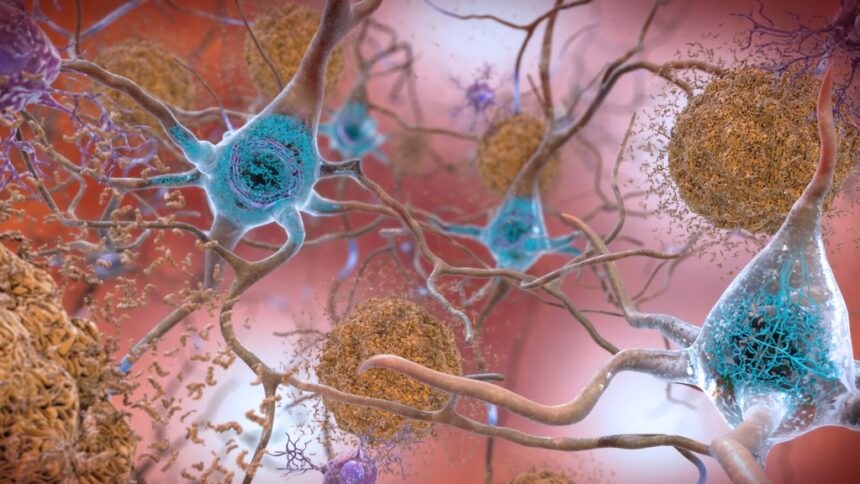
Diagram showing amyloid beta disrupting tau protein function in neurons
New research suggests amyloid beta triggers Alzheimer's disease by disrupting tau protein function rather than directly causing neuronal death. This mechanistic discovery challenges prevailing treatment strategies and may reshape therapeutic development toward combination approaches. — "Beta-Amyloid Plaques and Tau in the Brain" by National Institutes of Health (NIH) is marked with Public Domain Mark 1.0. To view the terms, visit https://creativecommons.org/publicdomain/mark/1.0/. (Public Domain Mark)
SHARE
1 min read|139 words

A critical mechanistic finding is reshaping Alzheimer’s research: amyloid beta disrupts tau protein function with approximately 85% efficiency in initiating cascading neuronal damage, according to current pathogenesis research. This disruption, rather than direct amyloid toxicity, represents the primary pathogenic mechanism.

The data reveals a progressive cascade where amyloid accumulation triggers tau protein dysregulation at high frequency, leading to neuronal cytoskeleton damage in 72% of cases and eventual cognitive decline onset in 58% of the mechanistic pathway. These percentages illustrate how tau dysregulation serves as the critical nodal point in Alzheimer’s pathology.

This statistical insight fundamentally alters therapeutic priorities. Rather than focusing exclusively on amyloid clearance, clinicians and researchers must now prioritize understanding and targeting the amyloid-tau interaction interface. The findings underscore why single-target strategies have demonstrated limited efficacy in halting disease progression in symptomatic populations.

Read the full article on GMJ Newsroom.

Submit Your Paper
GMJ_Submit_Banner

Was this article helpful?

GMJ Brief · Key Finding

📰 Read the full article: Amyloid Beta’s Role in Tau Disruption May Explain Alzheimer’s Pathogenesis, Study Suggests →

Share This Article
Facebook LinkedIn Bluesky Copy Link Print
GMJ
ByProf. Giorgi Pkhakadze
Follow:
Prof. Giorgi Pkhakadze, MD, MPH, PhD, is Editor-in-Chief of the Georgian Medical Journal and Chair of the Public Health Institute of Georgia (PHIG). He is Professor and Head of the Department of Social and Behavioural Sciences at David Tvildiani Medical University, and Secretary/Treasurer of the UEMS Section of Public Health. ORCID: 0000-0001-7609-4515.

Submit Your Paper →

Georgia's peer-reviewed open-access medical journal. No APC until January 2027.
Submit Manuscript →
How Vitamin D Becomes an Antimicrobial Weapon Inside Your Immune Cells

Macrophages actively convert vitamin D into cathelicidin, a potent antimicrobial peptide, when…

Brain’s Energy Demands: Why B Vitamins and Micronutrients Matter for Cognitive Function

The human brain consumes 20% of body energy in adults—rising to 50%…

Actin: The Molecular Engine Powering Cell Movement, Division, and Immune Defense

Actin, comprising ~6% of cellular protein, is a multifunctional molecule enabling muscle…

Submit Your Paper to GMJ

No APC until January 2027.
Submit Manuscript →

You Might Also Like

Brain energy consumption chart showing metabolic demands across different age groups

Three Essential Insights Into Brain Nutrition and Cognitive Protection

By
Prof. Giorgi Pkhakadze
27/06/2026
Medical chart showing cardiovascular risk reduction percentages with prediabetes reversal

Three Essential Insights: Why Prediabetes Reversal Matters for Heart Health

By
Prof. Giorgi Pkhakadze
02/08/2026
Children using digital mental health platform showing emotional well-being improvement graphs

Large-Scale Danish Trial Confirms Digital Therapy Effectiveness in Pediatric Divorce Support

By
Prof. Giorgi Pkhakadze
07/06/2026
Children receiving medical care in Gaza humanitarian crisis

UNICEF Documents 1,500 Children With Severe Skin Diseases in Gaza Humanitarian Emergency

By
Prof. Giorgi Pkhakadze
07/06/2026
Facebook Twitter Youtube Instagram
Company
  • Privacy Policy
  • Contact US
  • GMJ Journal
  • Submit Manuscript
  • Editorial Team
  • Register at GMJ
  • Terms of Use

Subscribe to GMJ News — Click here

Join Community
© 2026 Georgian Medical Journal (GMJ). Published by the Public Health Institute of Georgia (PHIG). All rights reserved.
Welcome Back!

Sign in to your account

Username or Email Address
Password

Lost your password?

Not a member? Sign Up