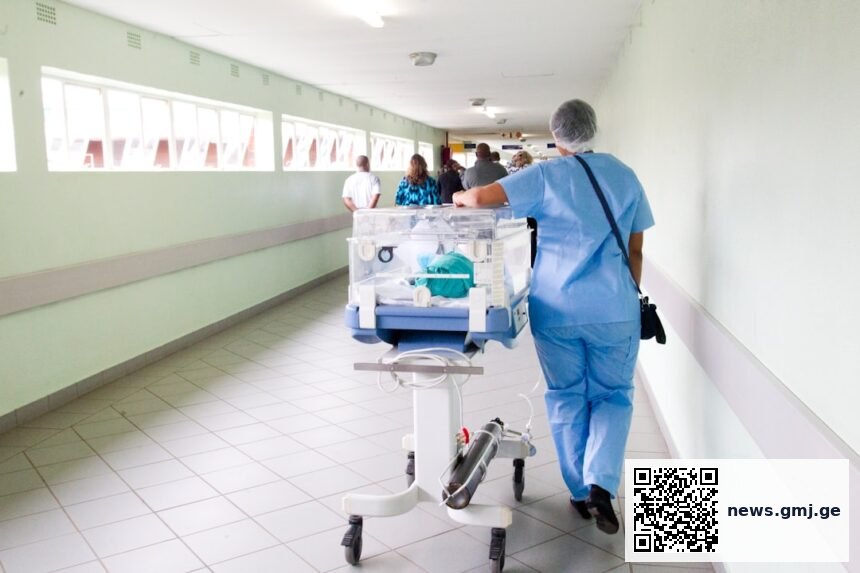
Millions of people remain in regions of mass emigration without access to basic healthcare as working-age populations leave in search of economic opportunity, argues a new analysis in the New England Journal of Medicine. The departure of younger, healthier citizens from economically disadvantaged areas creates a double burden: shrinking tax bases for health systems and ageing populations with greater care needs, a pattern increasingly visible across Eastern Europe, Central Asia, and parts of sub-Saharan Africa.
Key takeaways
- Mass emigration leaves behind ageing populations with fewer working-age citizens to fund and staff health systems
- Healthcare capacity in origin countries declines even as disease burden increases among remaining residents
- This creates a health equity crisis distinct from typical resource scarcity, rooted in demographic imbalance rather than absolute poverty
- Policy solutions require coordinated international action on healthcare financing and workforce retention
The Architecture of Health System Collapse in Migration-Hit Regions
The health systems under greatest strain are not necessarily the poorest in absolute terms, but those experiencing rapid, sustained outmigration. When working-age adults—particularly those with higher education—leave, the financial and human infrastructure of healthcare deteriorates simultaneously. The New England Journal of Medicine analysis documents how this differs fundamentally from health crises driven by low GDP per capita or infrastructure collapse from conflict.
In regions experiencing net emigration, the denominator of tax-contributing workers shrinks while the numerator of dependent populations (children, elderly) grows proportionally. This mathematics of ageing in place—where healthy young people leave and older people remain—creates health system pressure that money alone cannot solve. A healthcare system designed to serve 2 million people suddenly serves 1.5 million, but those remaining are sicker and require more intensive care.
Who Stays, Who Leaves, and What It Costs
Health System Sustainability Gap in High-Emigration Regions
Ratio of working-age adults per dependent (elderly/paediatric) across regions, 2024

Source: UN Department of Economic and Social Affairs, World Population Prospects 2024 | Georgian Medical Journal News
The selectivity of migration patterns worsens this dynamic. People who emigrate tend to be disproportionately young (median age 25-40) and, importantly, more likely to have higher educational attainment. In countries with heavy healthcare worker emigration, this directly depletes clinical capacity. Georgia, Moldova, and several Balkan states have documented physician emigration rates exceeding 30% of their trained cohorts over the past two decades, according to migration data cited in academic health systems literature.
For those who remain—often the elderly, the disabled, the least economically mobile—the result is deteriorating access to care. Rural areas experience the sharpest decline, as younger doctors follow migration flows to urban centres and abroad. A recent analysis in the Migration & Health category at GMJ News documented how primary care capacity in rural Eastern Europe has fallen by 40% in some regions over the past 15 years, not because of funding cuts alone, but because the denominator of eligible patients and providers has shifted fundamentally.
The Equity Paradox: When Development Creates Health System Risk
What makes this crisis distinct is that it strikes hardest at regions with moderate development—countries that have achieved enough education and infrastructure to produce migrants with marketable skills, yet lack the financial depth of wealthier nations to retain them. Sub-Saharan Africa, despite lower absolute healthcare spending, often maintains better population stability and younger demographic profiles than Eastern Europe, where emigration has been more sustained and selective.
The NEJM analysis argues this creates an equity paradox: countries that successfully educate their citizens face systematic loss of those citizens to wealthier labour markets. The health system loses not just the doctor or nurse, but the tax revenue and demographic vitality that sustain universal coverage. Meanwhile, wealthier destination countries gain clinical capacity without bearing the training costs—a subsidy of health systems in high-income countries by health systems in middle-income countries.
The departure of working-age populations from regions experiencing mass emigration creates a double burden on healthcare systems: shrinking fiscal capacity and rising disease burden among those remaining—a pattern that money alone cannot reverse without addressing root causes of outmigration.
— Analysis published in the New England Journal of Medicine (2025)
What Policy Responses Are Actually Feasible
Reversing emigration is neither realistic nor ethical—people have the right to seek better lives. But several policy levers could mitigate health system collapse in origin countries. Conditional diaspora investment programs, where emigrants contribute to health infrastructure in origin countries through structured financing, have shown early promise in pilot programs in Georgia and the Balkans. These go beyond remittances to create direct capital investment in healthcare facilities.
A second approach involves international workforce-sharing agreements that compensate origin countries financially for healthcare worker training and loss. Rather than treating physician emigration as a private career choice, some health economists argue it should be treated as a public goods problem requiring international coordination—similar to carbon pricing or pandemic preparedness. The health rights perspective on GMJ’s partner site SheniEkimi.ge frames this as a question of justice: who bears the cost when a doctor trained by a poor country’s public system works in a rich country?
Third, regional cooperation on healthcare delivery—where patient care needs are partially met through telemedicine, cross-border referral networks, and shared medical education infrastructure—can extend limited local clinical capacity. The Health Policy section of GMJ News has documented several Balkan initiatives attempting this, though political tensions often undermine cooperation.
Finally, targeted investment in health conditions prevalent among elderly remaining populations—geriatric care, cardiovascular disease management, dementia services—represents a pragmatic shift from curative to preventive and chronic disease models. This requires retraining the existing workforce and restructuring facilities, investments that donor organisations and the World Bank have begun to pilot in several Eastern European contexts.
What this means
Frequently asked questions
Why don’t countries just increase healthcare spending to compensate for emigration?
Because the problem is not absolute resources but the ratio of taxpayers to dependents. If a country loses 30% of its working-age population, increasing per-capita healthcare spending does not restore the tax base. A smaller working population cannot fund the same system even at higher tax rates without unsustainable burden on remaining workers. The issue is structural demography, not just budget size.
Is this problem unique to Eastern Europe?
No, but it is most acute in regions with both sustained outmigration and moderate development—places that have created educated workforces attractive to global labour markets. Sub-Saharan Africa experiences significant emigration but often retains younger age structures due to higher fertility rates. Western European countries compensate with immigration. Eastern Europe and the Balkans face the worst combination: sustained outmigration of young adults without compensatory immigration or high fertility to offset population loss.
Can telemedicine or shared regional systems solve this?
Telemedicine and regional cooperation help at the margins—extending reach of scarce specialists, enabling remote diagnosis—but cannot fully substitute for local clinical capacity. Acute care, surgery, complex chronic disease management, and emergency response require physical presence. These technologies are useful supplements, not replacements, for rebuilding clinical workforce and healthcare infrastructure.
The health crisis of migration-affected regions will define global health equity in the coming decade. As ageing progresses and emigration patterns stabilize, policymakers face a choice: treat this as inevitable market outcome in which health systems in poorer regions gradually hollow out, or pursue coordinated international approaches that recognize health system strength as a public good warranting collective investment. The New England Journal of Medicine analysis suggests the window for policy intervention—before demographic collapse becomes irreversible—is closing. The challenge now is political will at the international level to act on what the evidence increasingly makes clear.
Source: For Those Left Behind, New England Journal of Medicine, Ahead of Print (2025)
Was this article helpful?
Disclaimer. This article is health journalism intended for general information and education. It is not medical advice and is not a substitute for professional diagnosis or treatment. Always consult a qualified healthcare provider about your individual circumstances. Full disclaimer →
Related Coverage




Editorial standards. This article was produced under the GMJ News editorial process, with oversight by the GMJ Editorial Board. Our editorial process. Spotted an error? Contact the editorial team.