🟠 Moderate Evidence
A mathematical modelling study published in the Proceedings of the National Academy of Sciences suggests that cannibalism poses population-level epidemiological risks severe enough to drive societies toward prohibition, rather than emerging from innate human taboo. Researchers from the University of Wroclaw and Charles University in Prague constructed a computational model to assess why cannibalism periodically resurfaces in human populations and what mechanisms suppress it.
Key takeaways
- A mathematical model published in the Proceedings of the National Academy of Sciences analysed cannibalism as a food source, accounting for both nutritional value and disease transmission risk
- The model indicates that sustained cannibalism could lead to exponential increases in pathogen prevalence and societal collapse
- Researchers propose that human societies adopted cannibalism taboos not through biological instinct but as adaptive cultural responses to infection risk
- The findings apply epidemiological principles to understand how disease burden shapes cultural norms across populations
Study at a Glance
| Source | Proceedings of the National Academy of Sciences |
| Study type | Mathematical modelling study |
| Focus | Population-level disease transmission and cultural evolution |
| Researchers | Michal Misiak (University of Wroclaw), Petr Turecek (Charles University Prague) |
| Key variables | Nutritional benefits, infection transmission, pathogen prevalence, population sustainability |
How Disease Burden Constrains Food Acquisition Strategies
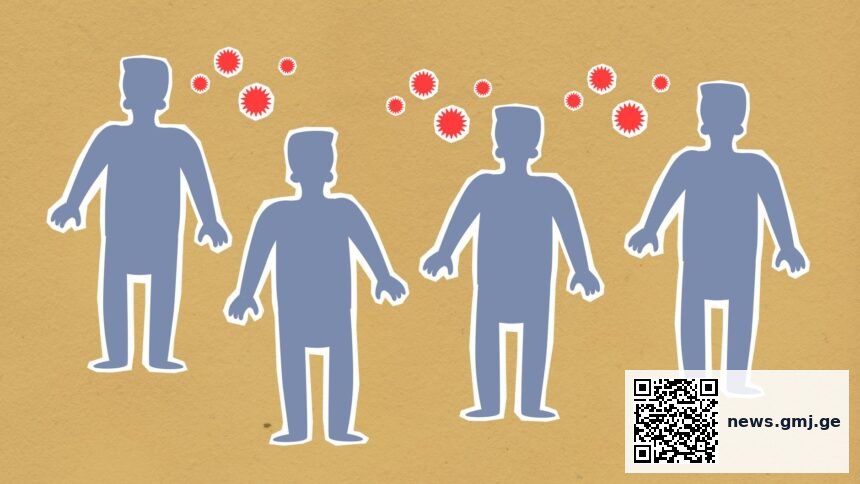
Theoretical epidemiological costs versus nutritional benefits of cannibalism in human populations
Source: Misiak & Turecek, Proceedings of the National Academy of Sciences | Georgian Medical Journal News

Disease Transmission as an Evolutionary Constraint on Food Acquisition
Michal Misiak of the University of Wroclaw and Petr Turecek of Charles University in Prague developed a mathematical framework to model cannibalism as a potential caloric resource in human societies. The model weighed theoretical nutritional benefits against multiple epidemiological costs, including direct pathogen transmission through consumption of infected tissue and secondary transmission through ritual handling of remains.
The researchers’ computational approach treated cannibalism not as an aberration or moral failure, but as an economic decision facing resource-constrained populations. By integrating infection dynamics into standard resource allocation models, the study quantifies the population-level consequences of sustained cannibalistic practices, published in the Proceedings of the National Academy of Sciences. This methodological approach echoes epidemiological models used to assess other food-borne pathogen transmission routes, but applied to a novel historical and anthropological question.
Mathematical Evidence: How Infection Prevalence Drives Population Collapse
The model’s key finding suggests that in populations practising sustained cannibalism, pathogen prevalence could rise exponentially, ultimately overwhelming the nutritional gains from the consumed tissue. In mathematical epidemiology, this phenomenon is known as a “disease-induced population crash”—when infection burden becomes so severe that mortality rates exceed fertility rates, leading to societal collapse. The Proceedings of the National Academy of Sciences publication indicates that even moderate infection rates could render cannibalism nutritionally and demographically unsustainable within 10–20 generations.
Misiak and Turecek’s model incorporated vector-independent transmission (direct consumption of infected flesh) and indirect routes (contaminated handling), reflecting the reality of prion diseases such as kuru—the fatal transmissible spongiform encephalopathy documented among the Fore people of Papua New Guinea in the mid-20th century. The researchers’ computational framework thus provides a mechanistic explanation for why historical societies would rationally adopt prohibitions on cannibalism, even absent explicit epidemiological knowledge of pathogen transmission.
Mathematical modelling indicates that sustained cannibalism leads to exponential increases in population-level pathogen prevalence, ultimately driving societal collapse and creating strong evolutionary pressure toward cultural prohibition.
— Michal Misiak, University of Wroclaw, and Petr Turecek, Charles University Prague (Proceedings of the National Academy of Sciences)
Cultural Evolution and Rational Adaptation to Infection Risk
A central contribution of this work is its reframing of cannibalism taboos as adaptive cultural responses rather than hardwired biological instincts. The research published in the Proceedings of the National Academy of Sciences suggests that human societies learned—through observation of disease clusters, unexplained deaths, and population decline—that eliminating cannibalism stabilized demographic outcomes. Over generations, this learned behaviour became embedded in cultural norms and religious doctrine, eventually appearing to future societies as an instinctive moral prohibition rather than a rational epidemiological response.
This interpretation aligns with historical anthropological evidence. The Fore people of Papua New Guinea, for example, experienced epidemic kuru in the 1950s–1960s, with mortality rates exceeding 10% in some villages. Researcher Carleton Gajdusek documented that the epidemic coincided with the practice of consuming deceased relatives as part of mortuary ritual, and that discontinuing the practice rapidly eliminated new cases—demonstrating real-time epidemiological learning. The mathematical model by Misiak and Turecek formalizes this mechanism across populations and time scales, showing how disease-driven mortality alone would create selection pressure for taboo adoption across diverse cultural contexts. For more on global health epidemiology and cultural factors, see our coverage of health systems research.
Implications for Understanding Cultural Norms and Population Health
The study raises important questions about how populations rationally adapt to endemic disease threats through cultural innovation. If cannibalism prohibitions emerged as epidemiological defences, this suggests other food-related cultural practices—dietary restrictions, food handling protocols, ritual purification—may similarly reflect accumulated disease experience. The Proceedings of the National Academy of Sciences publication thus connects anthropology, epidemiology, and evolutionary biology, demonstrating that cultural evolution and disease burden are tightly coupled.
The implications extend beyond historical interest. Contemporary public health challenges—from antimicrobial resistance to emerging zoonotic disease—require populations to adopt new behavioural norms (antimicrobial stewardship, wildlife trade restriction, food safety protocols) in response to infection risk. Misiak and Turecek’s model provides a theoretical framework for understanding why such norms eventually become culturally embedded and self-reinforcing, even as the original epidemiological justification fades from collective memory. This suggests that sustained public health messaging, combined with visible disease consequences, may be necessary to embed new adaptive cultural practices in the face of evolving pathogenic threats.
What this means
Frequently asked questions
How did researchers model disease transmission in a historical context?
Misiak and Turecek used standard compartmental epidemiological models (similar to those used for contemporary pathogen forecasting) and adapted them to incorporate the unique transmission routes of historical cannibalism, including both direct consumption of infected tissue and indirect contamination. The model was parameterised using historical epidemiological data from documented cases (such as the kuru epidemic) and theoretical infection rates, allowing researchers to estimate population-level consequences across time horizons.
Is this research applicable to understanding modern food safety?
Yes. The mathematical framework demonstrates how populations learn to avoid food sources associated with endemic disease. Contemporary applications include understanding public adoption of food safety protocols (handwashing, refrigeration, cooking temperatures) and rational responses to foodborne pathogen outbreaks. The model shows that sustained disease visibility and mortality accelerate cultural norm change, a principle relevant to contemporary antimicrobial resistance and zoonotic disease prevention.
Did researchers conduct experiments on human populations?
No. This was a mathematical modelling study using computational methods and historical epidemiological data. No human subjects, experimental groups, or novel interventions were involved. The findings are based on theoretical calculations applied to documented historical disease patterns and population dynamics.
As populations face emerging infectious disease threats—from novel pathogens to antimicrobial-resistant bacteria—understanding how disease burden rationally shapes cultural behaviour becomes increasingly important. The work of Misiak and Turecek suggests that visible epidemiological consequences and sustained public health communication can accelerate the adoption of protective cultural norms, even in the absence of explicit pathogenic knowledge. Future research integrating epidemiological modelling with anthropological and historical data may reveal other cultural practices shaped by disease pressure, and help identify which modern health behaviours will likely persist as population-protecting norms even after the epidemiological threat recedes from public consciousness.
Source: Cannibalism: Scientists say it’s bad for your health, BMJ News
Was this article helpful?
Disclaimer. This article is health journalism intended for general information and education. It is not medical advice and is not a substitute for professional diagnosis or treatment. Always consult a qualified healthcare provider about your individual circumstances. Full disclaimer →
Related Coverage




Editorial standards. This article was produced under the GMJ News editorial process, with oversight by the GMJ Editorial Board. Our editorial process. Spotted an error? Contact the editorial team.