By using this site, you agree to the Privacy Policy and Terms of Use.
Accept
GMJ NewsGMJ NewsGMJ News
  • Latest News
    • GMJ Briefs
  • Podcast & Media
    • Podcast Episodes
    • GMJ Audio
    • GMJ Videos
  • Research Digest
    • New Studies
    • Georgian Research
    • Data & Numbers
  • Policy & Systems
    • Health Policy
    • Quality & Safety
    • Migration & Health
    • Global Health
  • Practice
    • Clinical Updates
    • Case Discussions
    • Pharmacy & Prescribing
    • Ingredients A-Z
  • Perspectives
    • Editorial
    • Explainers
    • Voices
    • Letters
  • Health Topics
  • GMJ Articles
    • Vol. 1 Issue 2 (2026)
    • Vol. 1 Issue 1 (2026)
    • Pre-Launch Articles (2025)
  • Read the Journal →
  • About GMJ News
Notification Show More
Font ResizerAa
GMJ NewsGMJ News
Font ResizerAa
  • Latest News
    • GMJ Briefs
  • Podcast & Media
    • Podcast Episodes
    • GMJ Audio
    • GMJ Videos
  • Research Digest
    • New Studies
    • Georgian Research
    • Data & Numbers
  • Policy & Systems
    • Health Policy
    • Quality & Safety
    • Migration & Health
    • Global Health
  • Practice
    • Clinical Updates
    • Case Discussions
    • Pharmacy & Prescribing
    • Ingredients A-Z
  • Perspectives
    • Editorial
    • Explainers
    • Voices
    • Letters
  • Health Topics
  • GMJ Articles
    • Vol. 1 Issue 2 (2026)
    • Vol. 1 Issue 1 (2026)
    • Pre-Launch Articles (2025)
  • Read the Journal →
  • About GMJ News
Follow US
GMJ News > GMJ Briefs > New Hydration Protocol Reveals Personalised Fluid and Sodium Targets for Athletes

New Hydration Protocol Reveals Personalised Fluid and Sodium Targets for Athletes

GMJ
Last updated: 05/08/2026 11:30
By
Prof. Giorgi Pkhakadze
Share
1 Min Read
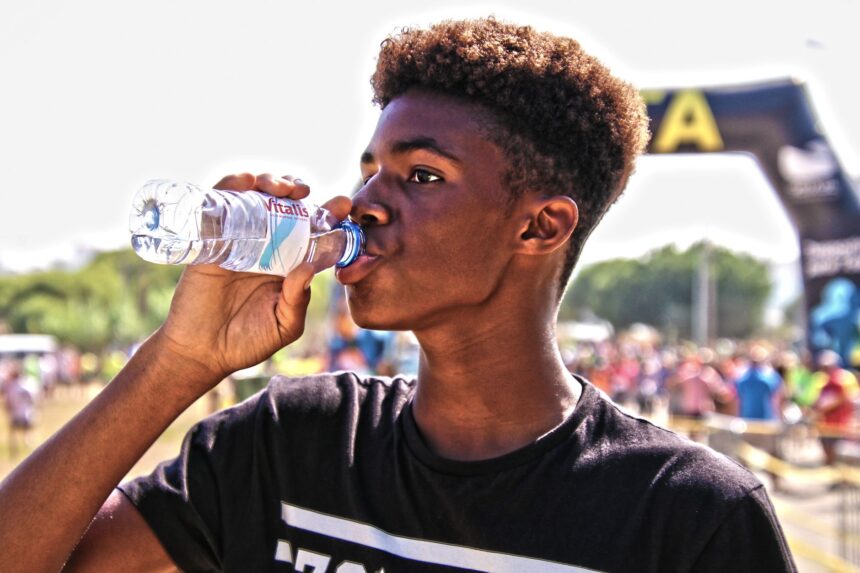
Illustration of hydration strategy by exercise duration showing fluid and sodium targets
An evidence-based hydration protocol establishes clear targets for fluid and electrolyte intake: 30–35 mL per kilogram daily, 300–1,000 mg sodium per hour during prolonged exercise, and 150% fluid replacement post-exercise. Personalisation based on sweat rate is essential. — Photo by RUN 4 FFWPU on Pexels (Pexels License)
SHARE
1 min read|139 words

Athletes often rely on outdated hydration strategies that fail to account for individual variation in sweat rate and electrolyte losses. A new evidence-based hydration protocol, reviewed by leading sports medicine experts, provides clear targets across three critical phases: daily baseline intake, pre-exercise preparation, and post-activity recovery.

The framework recommends 30–35 mL fluid per kilogram of bodyweight as a daily foundation, with pale yellow urine serving as a practical marker of adequate hydration status. During prolonged exercise lasting more than 60 minutes, athletes require 500–1,000 mL fluid paired with 300–1,000 mg sodium per hour, depending on exercise intensity and environmental conditions. Post-exercise recovery demands replacement of 150% of fluid lost over 2–4 hours, combined with sodium and food to optimise retention.

Crucially, the protocol emphasises individualisation. Athletes must test their personal sweat rate and sodium losses during training rather than relying on generic recommendations during competition.

Was this article helpful?

GMJ Brief · Announcement

📰 Read the full article: Evidence-Based Hydration Protocol: How Much Fluid and Sodium Athletes Actually Need →

Related reference
  • Sodium · Ingredient
  • Iron · Ingredient
Share This Article
Facebook LinkedIn Bluesky Copy Link Print
GMJ
ByProf. Giorgi Pkhakadze
Follow:
Prof. Giorgi Pkhakadze, MD, MPH, PhD, is Editor-in-Chief of the Georgian Medical Journal and Chair of the Public Health Institute of Georgia (PHIG). He is Professor and Head of the Department of Social and Behavioural Sciences at David Tvildiani Medical University, and Secretary/Treasurer of the UEMS Section of Public Health. ORCID: 0000-0001-7609-4515.

Submit Your Paper →

Georgia's peer-reviewed open-access medical journal. No APC until January 2027.
Submit Manuscript →
Nigeria’s Polio Campaign Reaches 33,000 Settlements, Vaccinating 1.2 Million Children in May 2026

Nigeria's polio elimination campaign reached 33,000 settlements and vaccinated 1.2 million children…

Burundi’s first quarter 2026: refugees access care as WHO strengthens health partnerships

WHO's first-quarter 2026 report documents that over 65,000 Congolese refugees in Burundi…

Danish Medicines Agency Launches Cell Therapy Clinical Trial Template

The Danish Medicines Agency has released a standardized Investigator's Brochure template for…

Submit Your Paper to GMJ

No APC until January 2027.
Submit Manuscript →

You Might Also Like

Digital fluorescence microscopy showing coordinated calcium waves propagating across astrocytes in response to glutamate, 1989

Hidden Neural Intelligence: How a 1989 Discovery Transformed Our Understanding of Brain Support Cells

By
Prof. Giorgi Pkhakadze
24/07/2026

WHO Declares International Health Emergency Over Ebola Outbreak Spreading From DRC to Uganda

By
Prof. Giorgi Pkhakadze
31/05/2026
Bar chart showing blood pressure reduction and treatment success rates by MTHFR C677T genotype in riboflavin trial

Beyond the Methylfolate Myth: Why Riboflavin Is MTHFR’s Real Clinical Story

By
Prof. Giorgi Pkhakadze
30/07/2026
Medical researcher examining prosthetic foot with grid overlay assessment method

Affordable Photography-Based Grid System Revolutionizes Prosthetic Monitoring in Developing Nations

By
Prof. Giorgi Pkhakadze
07/06/2026
Facebook Twitter Youtube Instagram
Company
  • Privacy Policy
  • Contact US
  • GMJ Journal
  • Submit Manuscript
  • Editorial Team
  • Register at GMJ
  • Terms of Use

Subscribe to GMJ News — Click here

Join Community
© 2026 Georgian Medical Journal (GMJ). Published by the Public Health Institute of Georgia (PHIG). All rights reserved.
Welcome Back!

Sign in to your account

Username or Email Address
Password

Lost your password?

Not a member? Sign Up