By using this site, you agree to the Privacy Policy and Terms of Use.
Accept
GMJ NewsGMJ NewsGMJ News
  • Latest News
    • GMJ Briefs
  • Podcast & Media
    • Podcast Episodes
    • GMJ Audio
    • GMJ Videos
  • Research Digest
    • New Studies
    • Georgian Research
    • Data & Numbers
  • Policy & Systems
    • Health Policy
    • Quality & Safety
    • Migration & Health
    • Global Health
  • Practice
    • Clinical Updates
    • Case Discussions
    • Pharmacy & Prescribing
    • Ingredients A-Z
  • Perspectives
    • Editorial
    • Explainers
    • Voices
    • Letters
  • Health Topics
  • GMJ Articles
    • Vol. 1 Issue 2 (2026)
    • Vol. 1 Issue 1 (2026)
    • Pre-Launch Articles (2025)
  • Read the Journal →
  • About GMJ News
Notification Show More
Font ResizerAa
GMJ NewsGMJ News
Font ResizerAa
  • Latest News
    • GMJ Briefs
  • Podcast & Media
    • Podcast Episodes
    • GMJ Audio
    • GMJ Videos
  • Research Digest
    • New Studies
    • Georgian Research
    • Data & Numbers
  • Policy & Systems
    • Health Policy
    • Quality & Safety
    • Migration & Health
    • Global Health
  • Practice
    • Clinical Updates
    • Case Discussions
    • Pharmacy & Prescribing
    • Ingredients A-Z
  • Perspectives
    • Editorial
    • Explainers
    • Voices
    • Letters
  • Health Topics
  • GMJ Articles
    • Vol. 1 Issue 2 (2026)
    • Vol. 1 Issue 1 (2026)
    • Pre-Launch Articles (2025)
  • Read the Journal →
  • About GMJ News
Follow US
GMJ News > GMJ Briefs > Combat Trauma’s Hidden Complexity: SOF Personnel Experience Multi-System Health Consequences

Combat Trauma’s Hidden Complexity: SOF Personnel Experience Multi-System Health Consequences

GMJ
Last updated: 06/08/2026 11:29
By
Prof. Giorgi Pkhakadze
Share
1 Min Read
Medical illustration of interconnected health systems affected by combat trauma in military personnel
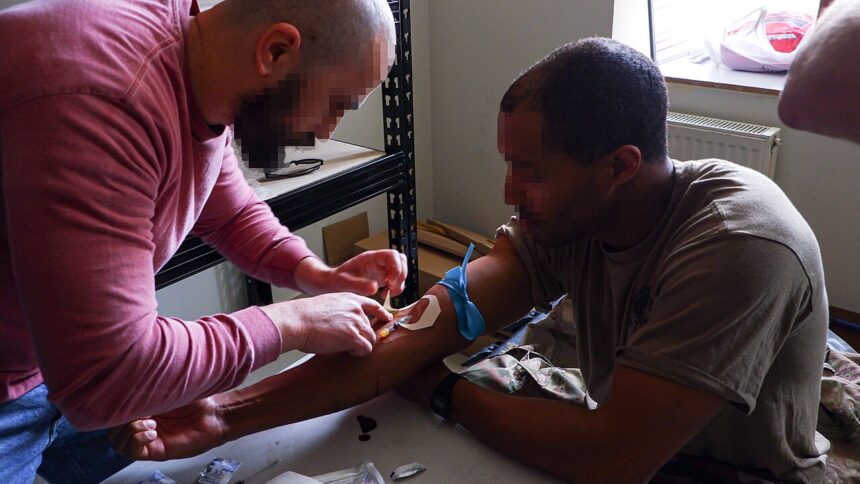
Active-duty U.S. special operations forces personnel show persistent health problems across behavioral, biological, and physiological systems linked to cumulative combat exposure, a new cross-sectional study in The Lancet Regional Americas reveals. — Georgian Special Operations Forces operators perform Tactical Combat Casualty Care alongside U S Army Special Forces Soldiers (7777117).jpg by Spc. Jordan Worthy / Public domain via Wikimedia Commons (Public domain)
SHARE
1 min read|127 words

A new cross-sectional study published in The Lancet Regional Americas reveals that active-duty U.S. special operations forces personnel experience far more than isolated post-traumatic stress symptoms. The research documents persistent health consequences spanning behavioral, biological, and physiological systems—a pattern indicating cumulative, interconnected trauma burden from combat exposure.

Rather than presenting discrete diagnostic categories, treatment-seeking SOF personnel demonstrate systemic dysfunction across multiple health domains. This multi-dimensional presentation suggests that current clinical frameworks may be insufficient for assessing the full scope of trauma-related health consequences in high-risk military populations.

The findings underscore the critical need for integrated, multi-specialty care approaches. Understanding trauma effects as an interconnected system—rather than isolated symptoms—has significant implications for how military medicine structures assessment and treatment protocols for special operations personnel.

Was this article helpful?

GMJ Brief · Announcement

📰 Read the full article: Special Operations Forces Show Persistent Health Burden From Combat Trauma, New Study Reveals →

Share This Article
Facebook LinkedIn Bluesky Copy Link Print
GMJ
ByProf. Giorgi Pkhakadze
Follow:
Prof. Giorgi Pkhakadze, MD, MPH, PhD, is Editor-in-Chief of the Georgian Medical Journal and Chair of the Public Health Institute of Georgia (PHIG). He is Professor and Head of the Department of Social and Behavioural Sciences at David Tvildiani Medical University, and Secretary/Treasurer of the UEMS Section of Public Health. ORCID: 0000-0001-7609-4515.

Submit Your Paper →

Georgia's peer-reviewed open-access medical journal. No APC until January 2027.
Submit Manuscript →
Exercise’s True Power: A Systematic Review Shows Mitochondrial Remodeling, Not Just Volume, Drives Fitness Gains

A systematic review analyzing 425 human studies shows that training intensity—not duration—is…

Egg consumption linked to 27% lower Alzheimer’s risk in large multi-cohort study

A 15-year prospective study of nearly 40,000 adults found that those consuming…

How vitamin B12 absorption works: two competing pathways explain why high-dose pills can rival injections

Vitamin B12 is absorbed via two pathways: intrinsic factor, which saturates at…

Submit Your Paper to GMJ

No APC until January 2027.
Submit Manuscript →

You Might Also Like

Emergency department physician consulting with patient about mental health crisis intervention

Three Ways Emergency Medicine Must Evolve Its Suicide Prevention Approach

By
Prof. Giorgi Pkhakadze
02/08/2026
Medical illustration showing liver fat reduction with survodutide treatment in clinical trial

What Healthcare Providers Should Know About Emerging Dual-Hormone Therapy for Fatty Liver Disease

By
Prof. Giorgi Pkhakadze
05/08/2026
Medical professional reviewing medication dosing guidelines and genetic testing results

Clinical Guidelines Still Rely on Race-Based Dosing Despite Scientific Concerns

By
Prof. Giorgi Pkhakadze
27/06/2026
Diagram showing nutrient absorption in different segments of the gastrointestinal tract: stomach, duodenum, jejunum, ileum, and colon

By the Numbers: The Jejunum Absorbs 95% of Macronutrients in Your Digestive System

By
Prof. Giorgi Pkhakadze
30/07/2026
Facebook Twitter Youtube Instagram
Company
  • Privacy Policy
  • Contact US
  • GMJ Journal
  • Submit Manuscript
  • Editorial Team
  • Register at GMJ
  • Terms of Use

Subscribe to GMJ News — Click here

Join Community
© 2026 Georgian Medical Journal (GMJ). Published by the Public Health Institute of Georgia (PHIG). All rights reserved.
Welcome Back!

Sign in to your account

Username or Email Address
Password

Lost your password?

Not a member? Sign Up