By using this site, you agree to the Privacy Policy and Terms of Use.
Accept
GMJ NewsGMJ NewsGMJ News
  • Latest News
    • GMJ Briefs
  • Podcast & Media
    • Podcast Episodes
    • GMJ Audio
    • GMJ Videos
  • Research Digest
    • New Studies
    • Georgian Research
    • Data & Numbers
  • Policy & Systems
    • Health Policy
    • Quality & Safety
    • Migration & Health
    • Global Health
  • Practice
    • Clinical Updates
    • Case Discussions
    • Pharmacy & Prescribing
    • Ingredients A-Z
  • Perspectives
    • Editorial
    • Explainers
    • Voices
    • Letters
  • Health Topics
  • GMJ Articles
    • Vol. 1 Issue 2 (2026)
    • Vol. 1 Issue 1 (2026)
    • Pre-Launch Articles (2025)
  • Read the Journal →
  • About GMJ News
Notification Show More
Font ResizerAa
GMJ NewsGMJ News
Font ResizerAa
  • Latest News
    • GMJ Briefs
  • Podcast & Media
    • Podcast Episodes
    • GMJ Audio
    • GMJ Videos
  • Research Digest
    • New Studies
    • Georgian Research
    • Data & Numbers
  • Policy & Systems
    • Health Policy
    • Quality & Safety
    • Migration & Health
    • Global Health
  • Practice
    • Clinical Updates
    • Case Discussions
    • Pharmacy & Prescribing
    • Ingredients A-Z
  • Perspectives
    • Editorial
    • Explainers
    • Voices
    • Letters
  • Health Topics
  • GMJ Articles
    • Vol. 1 Issue 2 (2026)
    • Vol. 1 Issue 1 (2026)
    • Pre-Launch Articles (2025)
  • Read the Journal →
  • About GMJ News
Follow US
GMJ News > Perspectives > Explainers > Vitamin D3 vs D2: The Full Evidence Behind the Form Choice
ExplainersNew Studies

Vitamin D3 vs D2: The Full Evidence Behind the Form Choice

GMJ
Last updated: 20/08/2026 12:42
By
GMJ Perspectives Desk
Share
6 Min Read
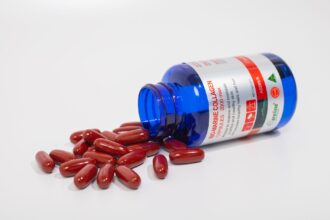
Vitamin D3 supplement capsules
SHARE
🎧 Listen to this article5:00 min · 742 words · GMJ Audio
4 min read|742 words

Two molecules legally answer to “vitamin D” on labels: D2 (ergocalciferol), produced by UV-irradiating fungi and yeast, and D3 (cholecalciferol), the form human skin synthesises and fish accumulate. For decades they were treated as interchangeable — textbooks said so, fortification policy assumed so. The question was settled the way nutrition questions should be: by pooling every randomised head-to-head comparison. Our earlier news report covered one study’s finding; this is the full evidence picture.

Contents
  • The Tripkovic meta-analysis: design and verdict
  • Why the molecules behave differently
  • Which populations show the largest D3 advantage
  • Why D2 persists anyway
  • Practical implications for supplement choice
  • The clinical bottom line
  • Primary sources

The Tripkovic meta-analysis: design and verdict

Tripkovic and colleagues (American Journal of Clinical Nutrition, 2012) systematically identified randomised controlled trials directly comparing D2 against D3 on the endpoint that defines status — serum 25-hydroxyvitamin D — and meta-analysed ten qualifying RCTs spanning ages, baseline levels, doses and regimens. The pooled result was unambiguous: D3 raised 25(OH)D significantly more than D2, with a weighted mean advantage robust across sensitivity analyses. The subgroup finding became the headline within the headline: with bolus dosing (large intermittent doses), D3’s superiority was dramatic; with daily dosing, the gap narrowed but the direction persisted. Later trials and meta-analyses have reinforced rather than overturned the conclusion, adding a further wrinkle — several studies found D2 administration actively lowers circulating D3, so total status gains understate the compositional shift. As settled questions go in nutrition science, this one is unusually tidy.

Why the molecules behave differently

Three mechanisms, all downstream of a small side-chain difference (D2 carries an extra methyl group and double bond). Binding affinity: 25(OH)D2 binds the circulating vitamin D binding protein (DBP) more weakly than 25(OH)D3 — weaker binding means faster clearance from plasma. Catabolism: the D2 side chain is more susceptible to inactivation, and its catabolites exit the system sooner. Half-life: the combined result is a measurably shorter circulating half-life for 25(OH)D2 — the direct explanation for the bolus-dosing gap, since a slowly-cleared molecule (D3) sustains levels between widely spaced doses while a fast-cleared one (D2) sags. The activation pathway (liver 25-hydroxylation, kidney 1α-hydroxylation) processes both forms; the difference is not whether D2 works — it does — but how much of it remains on duty per microgram swallowed, and for how long.

🎙️ Related Podcast Episodes
🎬 The Blueprint of a Medical Journal | How GMJ Was Built
🎧 #41 | GMJ Podcast | Hydrochemical Stability and Radiobiology of Tskaltubo Mineral Water — Clinical and Scientific Evaluation · 17m
🎧 #40 | GMJ Podcast | [Insert Article Title] — Evidence, Clinical Implications, and Public Health Perspective · 16m
🎧 #31 | GMJ Podcast | Daily Multivitamins and Biological Ageing — COSMOS Trial · 21m

Which populations show the largest D3 advantage

The trial patterns are consistent with the kinetics: the D3 advantage widens wherever dosing is intermittent (weekly/monthly regimens, common in deficiency correction), in older adults, and over longer maintenance periods where sustained levels matter more than peak response. With conscientious daily dosing at equal microgram amounts, D2 users can approach D3 users’ status — the form difference is partly a forgiveness difference: D3 tolerates the missed days and long intervals of real-world behaviour.

Submit Your Paper
GMJ_Submit_Banner

Why D2 persists anyway

Three practical reasons, none scientific superiority. Prescription history: in the United States, the only high-dose (50,000 IU) prescription vitamin D long available is D2 — so clinical correction protocols institutionalised it. Vegan compatibility: classic D3 is lanolin-derived (sheep’s wool), making fungal D2 the traditional plant-based choice — though lichen-derived vegan D3 now removes that constraint at modest cost premium. Fortification economics: D2 is cheap to produce at industrial scale and chemically adequate for staple-food fortification, where daily small doses are exactly the regimen that minimises its disadvantage. Understanding these reasons dissolves the apparent contradiction between the evidence and the marketplace.

Practical implications for supplement choice

Where the choice is free, the evidence points one way: choose D3 — greater and better-sustained 25(OH)D response per microgram, especially outside strict daily-dosing discipline; vegans included, via lichen-source D3. Dose in micrograms/IU with awareness that D2-to-D3 “equivalence” is regimen-dependent (official unit definitions treat them as equal; kinetics do not). Take either form with dietary fat or in an oil-based softgel — the fat-carrier rule applies fully. And anchor decisions to measured 25(OH)D per our testing explainer: the form question matters precisely because the number it moves is checkable.

The clinical bottom line

Ten pooled RCTs, one direction: D3 outperforms D2 at raising and holding 25-hydroxyvitamin D — decisively with bolus regimens, modestly with daily dosing — for coherent kinetic reasons (DBP affinity, catabolism, half-life). D2 survives on prescription tradition, vegan history and fortification economics, not on evidence. For a supplement chosen freely: D3, with fat, dosed to a tested target.

Primary sources

  • Tripkovic L, Lambert H, Hart K, et al. Comparison of vitamin D2 and vitamin D3 supplementation in raising serum 25-hydroxyvitamin D status: a systematic review and meta-analysis. Am J Clin Nutr. 2012;95(6):1357-64
  • NIH ODS: Vitamin D — Health Professional Fact Sheet (forms and equivalence)
  • GMJ: D2 supplements lower circulating D3 — study report
  • GMJ: Vitamin D deficiency — who is at risk and how to test

Was this article helpful?

Disclaimer. This article is health journalism intended for general information and education. It is not medical advice and is not a substitute for professional diagnosis or treatment. Always consult a qualified healthcare provider about your individual circumstances. Full disclaimer →

Related Coverage

Can laughter improve health? Researchers launch study to find outAug 21, 2026
Vegan, Gluten-Free, Cruelty-Free: What a Manufacturer's Declaration Is WorthAug 20, 2026
Astaxanthin Doses in the Clinic: What 6–12 mg Actually ShowedAug 20, 2026
Vitamin E: Why 9 in 10 Fall Short — and Why the Natural Form Is Retained BetterAug 20, 2026
Explore more on this topic:🧭 Supplements & Nutraceuticals hub
🔥 Most read this week
1High-Dose Zinc Supplements May Create Copper Deficiency, Warn Nutrition Experts
2Evidence-Based Hydration Protocol: How Much Fluid and Sodium Athletes Actually Need
3L-Theanine Improves Sleep Quality Without Drowsiness, Systematic Review Finds
4How Coffee Brewing Method Affects Cholesterol: The Science Behind Diterpenes and Filters
Related reference
  • Vitamin D · Ingredient
PG
Editorial oversight
Prof. Giorgi Pkhakadze, MD, MPH, PhD
Editor-in-Chief, GMJ News
Full profile →  ·  ORCID 0000-0001-7609-4515
Medical disclaimer. This article is health journalism intended for general information. It is not medical advice and is not a substitute for consultation with a qualified healthcare professional. Always seek your physician's advice regarding any medical condition.
Editorial standards. This article was produced under the GMJ News editorial process, with oversight by the GMJ Editorial Board. Our editorial process. Spotted an error? Contact the editorial team.

📬 GMJ Health Digest
Evidence-based medical news, once a week. Free, no spam, unsubscribe anytime.
Share This Article
Facebook LinkedIn Bluesky Copy Link Print
GMJ
ByGMJ Perspectives Desk
Follow:
GMJ Perspectives Desk is part of GMJ News, the newsroom of the Georgian Medical Journal (gmj.ge), published by the Public Health Institute of Georgia. Every article is editorially reviewed before publication.
Leave a Comment Leave a Comment

Leave a Reply Cancel reply

Your email address will not be published. Required fields are marked *

Submit Your Paper →

Georgia's peer-reviewed open-access medical journal. No APC until January 2027.
Submit Manuscript →
Medicare Advantage Insurer Elevance Health Pays $342 Million to Settle Billing Dispute with CMS

Elevance Health, a major Medicare Advantage insurer, has agreed to pay $342…

UK Updates Hepatitis B Screening and Neonatal Immunisation Pathway for Pregnant Women

The UK has released comprehensive guidance on antenatal hepatitis B screening and…

Europe reports 949 avian flu cases in birds across 30 countries in first half of 2026

Europe documented 949 highly pathogenic avian influenza A(H5) cases in birds across…

Submit Your Paper to GMJ

No APC until January 2027.
Submit Manuscript →

You Might Also Like

Infographic showing CYP1A2 genotype distribution (AA 45%, AC 44%, CC 11%) and caffeine half-life clearance timesIllustrative image · Photo by Decha Huayyai on Pexels (Pexels License)
Clinical UpdatesExplainersNew StudiesPerspectivesPracticeResearch Digest

Why Coffee’s Heart Risk Depends on Your Genes, Not Headlines

By
GMJ Practice Desk
18/07/2026
Diagram showing collagen triple helix formation and the role of vitamin C in hydroxylation modificationIllustrative image · Photo by Hoàng Ngọc Long on Pexels (Pexels License)
Clinical UpdatesExplainersPerspectivesPractice

Why Vitamin C Is Essential for Collagen Formation—and Why Supplements Often Miss the Mark

By
GMJ Practice Desk
17/07/2026
Illustration of bone cells (osteoblasts) releasing osteocalcin hormone into bloodstream, connecting to pancreas and skeletal muscle in a metabolic feedback loopIllustrative image · Photo by Pavel Danilyuk on Pexels (Pexels License)
ExplainersNew StudiesPerspectivesResearch Digest

Bones Are Metabolic Organs: How Mechanical Loading Regulates Blood Sugar

By
GMJ Perspectives Desk
23/07/2026
Medical researchers working on computer code analysis for transparent research publicationIllustrative image · Stamp of India - 2011 - Colnect 259283 - Indian Council Of Medical Research.jpeg by Post of India / GODL-India via Wikimedia Commons (GODL-India)
New StudiesResearch Digest

PLOS Medicine Strengthens Code Sharing Requirements to Boost Research Transparency

By
GMJ Research Desk
22/06/2026
Facebook Twitter Youtube Instagram
Company
  • Privacy Policy
  • Contact US
  • GMJ Journal
  • Submit Manuscript
  • Editorial Team
  • Register at GMJ
  • Terms of Use

Subscribe to GMJ News — Click here

Join Community
© 2026 Georgian Medical Journal (GMJ). Published by the Public Health Institute of Georgia (PHIG). All rights reserved.
Welcome Back!

Sign in to your account

Username or Email Address
Password

Lost your password?