By using this site, you agree to the Privacy Policy and Terms of Use.
Accept
GMJ NewsGMJ NewsGMJ News
  • Latest News
    • GMJ Briefs
  • Podcast & Media
    • Podcast Episodes
    • GMJ Audio
    • GMJ Videos
  • Research Digest
    • New Studies
    • Georgian Research
    • Data & Numbers
  • Policy & Systems
    • Health Policy
    • Quality & Safety
    • Migration & Health
    • Global Health
  • Practice
    • Clinical Updates
    • Case Discussions
    • Pharmacy & Prescribing
    • Ingredients A-Z
  • Perspectives
    • Editorial
    • Explainers
    • Voices
    • Letters
  • GMJ Articles
    • Vol. 1 Issue 2 (2026)
    • Vol. 1 Issue 1 (2026)
    • Pre-Launch Articles (2025)
  • Read the Journal →
  • About GMJ News
Notification Show More
Font ResizerAa
GMJ NewsGMJ News
Font ResizerAa
  • Latest News
    • GMJ Briefs
  • Podcast & Media
    • Podcast Episodes
    • GMJ Audio
    • GMJ Videos
  • Research Digest
    • New Studies
    • Georgian Research
    • Data & Numbers
  • Policy & Systems
    • Health Policy
    • Quality & Safety
    • Migration & Health
    • Global Health
  • Practice
    • Clinical Updates
    • Case Discussions
    • Pharmacy & Prescribing
    • Ingredients A-Z
  • Perspectives
    • Editorial
    • Explainers
    • Voices
    • Letters
  • GMJ Articles
    • Vol. 1 Issue 2 (2026)
    • Vol. 1 Issue 1 (2026)
    • Pre-Launch Articles (2025)
  • Read the Journal →
  • About GMJ News
Follow US
GMJ News > Policy & Systems > Global Health > Ebola outbreak in central Africa may be spreading faster than reported, warns WHO epidemiologist
Global Health

Ebola outbreak in central Africa may be spreading faster than reported, warns WHO epidemiologist

GMJ
Last updated: 25/05/2026 18:59
By
GMJ Policy Desk
Share
7 Min Read
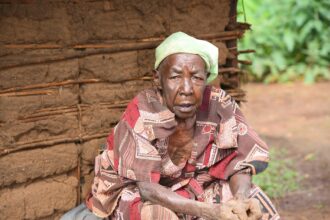
Map of central Africa showing Ebola outbreak response zone with epidemiological data visualization
A WHO epidemiologist warns that an Ebola outbreak in central Africa may be accelerating beyond official case counts, with hundreds of suspected infections potentially far exceeding documented figures. Surveillance gaps in laboratory capacity and contact tracing suggest the true scale of transmission remains unclear. — Photo: Michelangelo Buonarroti / Pexels
SHARE
🎧 Listen to this article3:40 min · 523 words · GMJ Audio

Updated 25/05/2026

Contents
      • Ebola case detection gap: confirmed versus suspected cases
  • Surveillance gaps mask true outbreak scale
  • Transmission speed and contact tracing challenges
  • Regional capacity constraints and international response
    • Key takeaways
  • Frequently asked questions
    • Why do suspected cases differ from confirmed cases?
    • How does this outbreak compare to previous Ebola responses?
2 min read|387 words

A World Health Organization epidemiologist has warned that an Ebola outbreak unfolding in central Africa may be accelerating beyond official case counts, with suspected infections potentially far exceeding the hundreds currently documented, according to the BBC report.

Hundreds
of suspected Ebola cases reported in central Africa, with actual numbers feared to be considerably higher according to WHO assessment

Ebola case detection gap: confirmed versus suspected cases

Illustration of surveillance challenges in central Africa outbreak response

Suspected cases (reported)
Hundreds
Confirmed cases (verified)
Lower
Cases potentially undetected

Unknown magnitude

Source: WHO epidemiological assessment | Georgian Medical Journal News

Submit Your Paper
GMJ_Submit_Banner

Surveillance gaps mask true outbreak scale

The global health response coordination depends critically on real-time data accuracy. Without precise case counts, epidemiologists cannot accurately model transmission dynamics, forecast resource needs, or allocate containment efforts to the highest-risk zones.

Transmission speed and contact tracing challenges

Ebola’s high fatality rate and rapid progression mean that delays in case identification translate directly into expanded transmission windows. WHO documentation of recent viral haemorrhagic fever outbreaks demonstrates that even modest delays in contact tracing can result in exponential case growth within 1-2 weeks.

🎙️ Related Podcast Episodes
🎧 #13 | Six Years After COVID-19: Is the World Better Prepared for the Next Pandemic? · 19m
🎧 #8 | WHO Food Safety Surveillance: Strengthening Global Systems to Detect and Prevent Foodborne Diseases · 19m

Regional capacity constraints and international response

Central African countries have strengthened Ebola response protocols substantially since the 2014–2016 West African epidemic, which killed more than 11,000 people according to CDC data.

International health policy frameworks increasingly emphasise the importance of strengthening diagnostic capacity and surveillance networks in outbreak-prone regions. The WHO has called for accelerated investment in laboratory networks and real-time data systems to close these detection gaps.

Hundreds of suspected Ebola cases have been reported in central Africa, but the actual number of infections may be considerably higher, indicating that outbreak spread could be outpacing detection and surveillance capacity.

— WHO epidemiologist assessment (World Health Organization, 2024)

Key takeaways

  • Suspected case numbers significantly exceed confirmed cases, according to the WHO epidemiologist quoted in the BBC report.
  • The 2014–2016 West African epidemic killed over 11,000 people, according to CDC data.
  • WHO has called for accelerated investment in laboratory networks and real-time data systems.

Frequently asked questions

Why do suspected cases differ from confirmed cases?

Suspected cases are identified clinically based on symptoms but lack laboratory verification, while confirmed cases have tested positive for Ebola virus.

How does this outbreak compare to previous Ebola responses?

The 2014–2016 West African epidemic killed over 11,000 people, according to CDC records.

Source: Ebola outbreak may be spreading faster than first thought, WHO doctor warns

Was this article helpful?

Disclaimer. This article is health journalism intended for general information and education. It is not medical advice and is not a substitute for professional diagnosis or treatment. Always consult a qualified healthcare provider about your individual circumstances. Full disclaimer →

Related Coverage

WHO Africa Calls for Greater Blood Donation as Critical Shortages Persist Across RegionJul 4, 2026
UK COVID-19 Activity Remains Low as Summer Season Begins, Official Surveillance ShowsJul 1, 2026
Arts Engagement Shows Promise as 'Social Prescribing' for Health and Medical EmpathyJun 30, 2026
Middle-aged Americans face unprecedented mental health and memory decline, international study findsJun 29, 2026
PG
Written by
Prof. Giorgi Pkhakadze, MD, MPH, PhD
Editor-in-Chief, GMJ News
Full profile →  ·  ORCID 0000-0001-7609-4515
Medical disclaimer. This article is health journalism intended for general information. It is not medical advice and is not a substitute for consultation with a qualified healthcare professional. Always seek your physician's advice regarding any medical condition.
Medically reviewed by Prof. Giorgi Pkhakadze, MD, MPH, PhD. Spotted an error? Contact the editorial team.

Get the GMJ News digest
Evidence-based health journalism in your inbox. No spam; unsubscribe anytime.
TAGGED:central AfricaEbolaoutbreak responsesurveillanceWHO
Share This Article
Facebook LinkedIn Bluesky Copy Link Print
GMJ
ByGMJ Policy Desk
Follow:
GMJ Policy Desk is part of GMJ News, the newsroom of the Georgian Medical Journal (gmj.ge), published by the Public Health Institute of Georgia. Every article is editorially reviewed before publication.
Leave a Comment Leave a Comment

Leave a Reply Cancel reply

Your email address will not be published. Required fields are marked *

Submit Your Paper →

Georgia's peer-reviewed open-access medical journal. No APC until January 2027.
Submit Manuscript →
Paraneoplastic Neurologic Syndrome Diagnosed in 65-Year-Old Woman with Small Cell Lung Cancer

A 65-year-old woman with progressive neurological symptoms was diagnosed with paraneoplastic neurologic…

First In Vivo CRISPR Gene Editing Treatment Shows Promise for Rare Blood Disorder

First clinical trial of in vivo CRISPR gene editing for hereditary angioedema…

Hidden Immune Gene Linked to Rare Neurological Movement Disorder

Scientists discovered that CD99L2, a gene previously linked only to immune function,…

Submit Your Paper to GMJ

No APC until January 2027.
Submit Manuscript →

You Might Also Like

WOAH headquarters with global partnership symbols representing animal health collaborationIllustrative image · Photo by Life In Lens on Pexels (Pexels License)
Global HealthPolicy & Systems

World Animal Health Organization Launches Global Forum to Strengthen Disease Prevention Through Vaccination

By
GMJ Policy Desk
20/06/2026
Children walking to damaged school building after climate disaster, symbolizing educational disruption
Global HealthPolicy & Systems

Climate Change Disrupts Education for 617 Million Children in Poverty Worldwide

By
GMJ Policy Desk
12/06/2026
Infographic showing wood burning emissions sources from logging to black carbon warming effects
Global HealthPolicy & Systems

Wood Burning Stoves: Hidden Climate and Health Threats Beyond Air Pollution

By
GMJ Policy Desk
22/05/2026
Children receiving medical care showing impact of supply chain disruptions on healthcare delivery
Global HealthPolicy & Systems

Rising Transport Costs Reduce UNICEF’s Capacity to Deliver Child Healthcare Supplies

By
GMJ Policy Desk
02/06/2026
Facebook Twitter Youtube Instagram
Company
  • Privacy Policy
  • Contact US
  • GMJ Journal
  • Submit Manuscript
  • Editorial Team
  • Register at GMJ
  • Terms of Use

Subscribe to GMJ News — Click here

Join Community
© 2026 Georgian Medical Journal (GMJ). Published by the Public Health Institute of Georgia (PHIG). All rights reserved.
Welcome Back!

Sign in to your account

Username or Email Address
Password

Lost your password?

Not a member? Sign Up