Kwashiorkor, a form of severe protein-energy malnutrition, remains a critical but under-recognized cause of childhood morbidity and mortality in low-resource settings. A clinical case published in the New England Journal of Medicine (Volume 394, Issue 24, June 2026) highlights the pathophysiological mechanisms and clinical presentation of this devastating condition, which disrupts immune function, organ integrity, and developmental trajectories in vulnerable populations.
Key takeaways
- Kwashiorkor causes characteristic oedema, skin depigmentation, and immunosuppression due to severe protein deficiency
- Early recognition of clinical signs—including hepatomegaly, hair changes, and altered mental status—is critical for survival
- Management requires careful nutritional rehabilitation with monitoring for refeeding syndrome in severely malnourished children
- The condition reflects broader food insecurity and represents a preventable public health failure in resource-limited regions
Study at a Glance
| Source | New England Journal of Medicine |
| Article type | Clinical case presentation and review |
| Volume/Issue | Volume 394, Issue 24, June 25, 2026 |
| Focus | Pathophysiology, clinical diagnosis, and management of kwashiorkor |
| Clinical context | Severe malnutrition in resource-limited settings |
Clinical Features Distinguishing Kwashiorkor from Marasmus
Key pathophysiological differences in protein-energy malnutrition phenotypes
Source: New England Journal of Medicine (2026), WHO Child Growth Standards | Georgian Medical Journal News
The Pathophysiology of Protein Depletion
Kwashiorkor develops when dietary protein intake is severely insufficient relative to energy needs, typically in children aged 1–5 years in sub-Saharan Africa, South Asia, and areas affected by conflict or food insecurity. Unlike marasmus—which results from total caloric deficiency and presents as wasting—kwashiorkor is characterized by the selective depletion of visceral proteins, leading to a cascade of metabolic and immunological dysfunction.

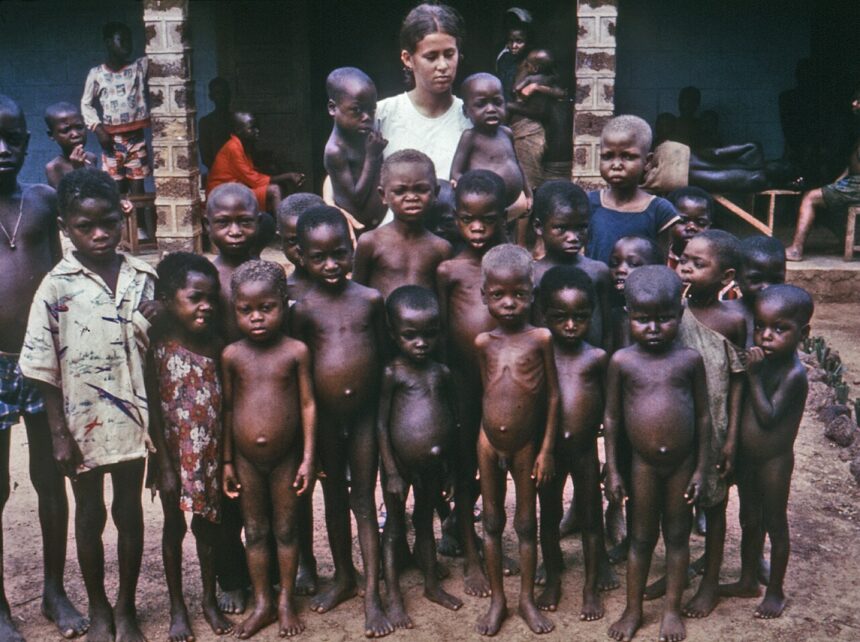
The condition disrupts hepatic protein synthesis, including the production of albumin, transport proteins, clotting factors, and immune mediators. According to the case presented in the New England Journal of Medicine (June 2026), this protein deficiency impairs the osmotic gradient that maintains fluid distribution between intravascular and interstitial compartments, resulting in the characteristic bilateral pitting oedema—a paradoxical finding in a malnourished child whose overall body composition is severely reduced.
The immunosuppression in kwashiorkor is profound. Protein deficiency reduces T-cell lymphocyte counts, impairs antibody production, and weakens epithelial barrier function in the gut, predisposing children to recurrent infections—pneumonia, gastroenteritis, malaria, and tuberculosis—that further compromise nutritional status. This creates a vicious cycle of malnutrition and infection, explaining the high mortality rates observed in untreated cases across low-income regions.
Clinical Recognition and Diagnostic Challenges
The clinical diagnosis of kwashiorkor depends on identifying a constellation of signs that distinguish it from other forms of malnutrition. Key diagnostic features include bilateral dependent oedema (typically starting at the feet and ankles), dermatitis with hyperpigmentation and desquamation, hair depigmentation (the “flag sign” where new growth is lighter than original pigment), hepatomegaly, and altered mental status ranging from apathy to irritability.
The New England Journal of Medicine case (2026) emphasizes that kwashiorkor can present with deceptively near-normal weight-for-age when oedema masks the underlying wasting—a critical diagnostic pitfall in field settings and resource-limited clinics where anthropometric tools may be unavailable. Weight-for-height indices and mid-upper-arm circumference (MUAC) measurements are more reliable indicators, with MUAC WHO’s Integrated Management of Neonatal and Childhood Illness (IMNCI) guidelines.
Laboratory findings in kwashiorkor include hypoalbuminaemia, anaemia, hypoglycaemia, electrolyte derangements (particularly hypokalaemia and hypophosphataemia), and elevated transaminases reflecting hepatic dysfunction. However, these tests are often unavailable in the settings where kwashiorkor is most prevalent, underscoring the reliance on clinical acumen and anthropometric assessment. For more on malnutrition assessment in resource-limited settings, see our Global Health section.
Nutritional Rehabilitation and Refeeding Syndrome
Treatment of kwashiorkor requires careful, staged nutritional rehabilitation to prevent iatrogenic harm. The initial phase prioritizes stabilization: correction of hypoglycaemia, rehydration (cautiously, given the risk of precipitating pulmonary oedema due to compromised cardiac function), treatment of infection, and micronutrient replacement—particularly zinc, which is essential for immune function and protein synthesis, and vitamin A, which prevents corneal scarring and supports intestinal epithelial healing.
The most dangerous complication is refeeding syndrome, a potentially fatal metabolic derangement that occurs when severely malnourished patients receive rapid nutrient repletion. As documented in the NEJM case (June 2026), refeeding syndrome manifests as hypophosphataemia, hypokalaemia, hypomagnesaemia, and fluid retention, leading to cardiac arrhythmias, seizures, and acute decompensation. The WHO and international consensus guidelines recommend beginning with modest caloric intake (approximately 1.3 times the basal metabolic rate) and advancing slowly over 1–2 weeks while monitoring electrolytes and cardiac status.
Therapeutic milk products—formulated specifically for severe acute malnutrition (such as ready-to-use therapeutic foods containing 20–25% protein, fortified with micronutrients)—have dramatically improved outcomes in community-based nutrition programs across sub-Saharan Africa and South Asia. These ready-to-use therapeutic foods (RUTFs) bypass the need for sterile water and cooking facilities, enabling treatment in home and community settings. Yet access remains severely limited in the world’s poorest regions. Read more in our Clinical Updates on therapeutic nutrition advances.
Public Health Scale and Prevention Imperative
Kwashiorkor is not merely a clinical curiosity—it reflects systemic failures in food security, maternal and child nutrition, and health system capacity. The WHO estimates that malnutrition in all its forms affects nearly 1 billion people globally, with severe acute malnutrition affecting approximately 45 million children under five, predominantly in low-income countries. Kwashiorkor cases cluster in regions of extreme poverty, conflict displacement, and climate-driven food insecurity—contexts where protein-rich foods (legumes, animal products, fortified staples) are inaccessible or unaffordable for vulnerable families.
Prevention of kwashiorkor demands integrated public health action: food-based interventions (promotion of protein-rich local foods and dietary diversity), infant and young child feeding (IYCF) education for mothers and caregivers, micronutrient fortification of staple foods, cash transfer and social protection programs that increase household food purchasing power, and strengthened primary healthcare systems capable of early detection and community-based management. The case presented in the New England Journal of Medicine (2026) serves as a reminder that in the 21st century, the persistence of kwashiorkor reflects not medical failure alone, but profound health equity gaps rooted in poverty and inequality.
Kwashiorkor’s characteristic oedema paradoxically masks severe protein depletion, making clinical recognition critical for timely intervention. Untreated severe acute malnutrition carries a 50% mortality risk, yet the condition remains highly preventable through food security, dietary diversity, and community-based nutrition programmes.
— New England Journal of Medicine, Volume 394, Issue 24 (June 2026)
What this means
Frequently asked questions
How does kwashiorkor differ from marasmus?
Kwashiorkor results from severe protein deficiency and presents with oedema, hepatomegaly, and skin/hair changes despite preserved or near-normal weight. Marasmus results from total caloric deficiency and manifests as severe wasting with minimal subcutaneous fat, without oedema. Both are forms of severe acute malnutrition (SAM) requiring urgent treatment, but kwashiorkor’s hidden wasting beneath oedema makes it particularly dangerous if misdiagnosed.
Why is refeeding syndrome so dangerous in kwashiorkor recovery?
Severely malnourished children have depleted intracellular phosphate, potassium, and magnesium stores. Rapid nutrient refeeding triggers metabolic shifts—intracellular uptake of electrolytes and shift from catabolism to anabolism—that can cause life-threatening cardiac arrhythmias, seizures, and respiratory failure. Gradual feeding (increasing calories by ~30% every 3–5 days) with electrolyte monitoring prevents this complication, as documented in the NEJM case (2026).
Is kwashiorkor preventable?
Yes. Kwashiorkor is entirely preventable through food security, dietary diversity (ensuring access to protein-rich foods such as legumes, eggs, and fortified staples), maternal and child nutrition education, and poverty reduction. Its persistence in the 21st century reflects not lack of knowledge but failures in implementing evidence-based public health and economic policies that ensure all families can afford nutritionally adequate diets.
The publication of this case in the New England Journal of Medicine (June 2026) underscores the enduring clinical and public health importance of kwashiorkor. As global food insecurity, conflict displacement, and climate-driven crop failures intensify, the risk of resurgent malnutrition epidemics in vulnerable populations remains acute. Health systems and policymakers must invest simultaneously in clinical capacity for early recognition and management, and in upstream prevention through food systems strengthening, social protection, and health equity initiatives. Only such comprehensive action can consign kwashiorkor to its rightful place: a preventable relic of global poverty and inequality.
Source: Kwashiorkor — New England Journal of Medicine, Volume 394, Issue 24 (June 25, 2026)
Was this article helpful?
Disclaimer. This article is health journalism intended for general information and education. It is not medical advice and is not a substitute for professional diagnosis or treatment. Always consult a qualified healthcare provider about your individual circumstances. Full disclaimer →
Related Coverage

Editorial standards. This article was produced under the GMJ News editorial process, with oversight by the GMJ Editorial Board. Our editorial process. Spotted an error? Contact the editorial team.