By using this site, you agree to the Privacy Policy and Terms of Use.
Accept
GMJ NewsGMJ NewsGMJ News
  • Latest News
    • GMJ Briefs
  • Podcast & Media
    • Podcast Episodes
    • GMJ Audio
    • GMJ Videos
  • Research Digest
    • New Studies
    • Georgian Research
    • Data & Numbers
  • Policy & Systems
    • Health Policy
    • Quality & Safety
    • Migration & Health
    • Global Health
  • Practice
    • Clinical Updates
    • Case Discussions
    • Pharmacy & Prescribing
    • Ingredients A-Z
  • Perspectives
    • Editorial
    • Explainers
    • Voices
    • Letters
  • GMJ Articles
    • Vol. 1 Issue 2 (2026)
    • Vol. 1 Issue 1 (2026)
    • Pre-Launch Articles (2025)
  • Read the Journal →
  • About GMJ News
Notification Show More
Font ResizerAa
GMJ NewsGMJ News
Font ResizerAa
  • Latest News
    • GMJ Briefs
  • Podcast & Media
    • Podcast Episodes
    • GMJ Audio
    • GMJ Videos
  • Research Digest
    • New Studies
    • Georgian Research
    • Data & Numbers
  • Policy & Systems
    • Health Policy
    • Quality & Safety
    • Migration & Health
    • Global Health
  • Practice
    • Clinical Updates
    • Case Discussions
    • Pharmacy & Prescribing
    • Ingredients A-Z
  • Perspectives
    • Editorial
    • Explainers
    • Voices
    • Letters
  • GMJ Articles
    • Vol. 1 Issue 2 (2026)
    • Vol. 1 Issue 1 (2026)
    • Pre-Launch Articles (2025)
  • Read the Journal →
  • About GMJ News
Follow US
GMJ News > GMJ Briefs > Three Essential Facts About Creatine and Kidney Health Every Patient Should Understand

Three Essential Facts About Creatine and Kidney Health Every Patient Should Understand

GMJ
Last updated: 27/06/2026 12:25
By
Prof. Giorgi Pkhakadze
Share
1 Min Read
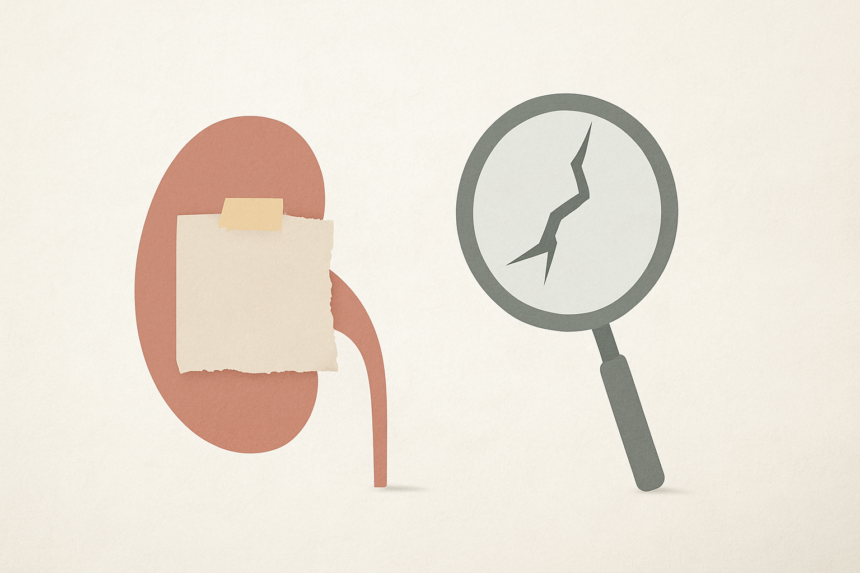
Scientific chart showing creatine safety data from clinical trials
Comprehensive analysis of 26,000 participants definitively debunks persistent myth that creatine damages kidneys. Elevated creatinine reflects normal metabolism, not kidney dysfunction.
SHARE
1 min read|115 words

Patients and healthcare providers should understand three critical facts about creatine supplementation and kidney safety. First, elevated creatinine levels observed during creatine use represent normal metabolic processes, not kidney damage. When creatine supplementation increases total body stores, spontaneous degradation of muscle phosphocreatine (approximately 2 percent daily) produces proportionally more creatinine, which is filtered by healthy kidneys. Second, a landmark 26,000-participant safety review found zero evidence of kidney problems from creatine use. Third, all actual kidney health indicators—glomerular filtration rate, cystatin C levels, proteinuria, and albuminuria—remain completely normal during supplementation. These findings empower patients to make informed decisions about creatine use while reassuring healthcare providers that supplementation is safe for individuals with healthy kidney function.

Was this article helpful?

GMJ Brief · Takeaway

📰 Read the full article: Creatine Kidney Damage Myth Debunked by Major Safety Review of 26,000 Participants →

Related reference
  • Creatine · Ingredient
Share This Article
Facebook LinkedIn Bluesky Copy Link Print
GMJ
ByProf. Giorgi Pkhakadze
Follow:
Prof. Giorgi Pkhakadze, MD, MPH, PhD, is Editor-in-Chief of the Georgian Medical Journal and Chair of the Public Health Institute of Georgia (PHIG). He is Professor and Head of the Department of Social and Behavioural Sciences at David Tvildiani Medical University, and Secretary/Treasurer of the UEMS Section of Public Health. ORCID: 0000-0001-7609-4515.

Submit Your Paper →

Georgia's peer-reviewed open-access medical journal. No APC until January 2027.
Submit Manuscript →
Pan-American Health Chief Warns of Financing Crisis as Region Confronts Multiple Health Crises

The Pan American Health Organization convened its 178th Executive Committee session on…

Diphtheria Cases Rise Across Americas: PAHO Calls for Urgent Vaccination Push

The Pan American Health Organization (PAHO) has issued an urgent call for…

PAHO Releases New Toolkit to Help Health Systems Respond to Violence Against Children

The Pan American Health Organization released a comprehensive toolkit in June 2026…

Submit Your Paper to GMJ

No APC until January 2027.
Submit Manuscript →

You Might Also Like

Medical illustration showing muscle metabolism activation for diabetes treatment

Alternative to Appetite Suppressants: New Diabetes Pill Targets Muscle Metabolism

By
Prof. Giorgi Pkhakadze
15/06/2026
Healthcare providers attending to pregnant women in clinical setting

Three Critical Lessons From Maternal Healthcare Study: Moving Beyond Coverage Metrics

By
Prof. Giorgi Pkhakadze
08/07/2026
New StudiesResearch Digest

Uganda Cuts Cholera-Endemic Districts From 36 to Six Through Mass Vaccination Campaign

By
Prof. Giorgi Pkhakadze
26/05/2026
Medical imaging workstation showing before and after processing times with FireANTs algorithm

Penn Engineers Launch Open-Source Algorithm to Revolutionize Medical Imaging Workflow

By
Prof. Giorgi Pkhakadze
30/06/2026
Facebook Twitter Youtube Instagram
Company
  • Privacy Policy
  • Contact US
  • GMJ Journal
  • Submit Manuscript
  • Editorial Team
  • Register at GMJ
  • Terms of Use

Subscribe to GMJ News — Click here

Join Community
© 2026 Georgian Medical Journal (GMJ). Published by the Public Health Institute of Georgia (PHIG). All rights reserved.
Welcome Back!

Sign in to your account

Username or Email Address
Password

Lost your password?

Not a member? Sign Up