By using this site, you agree to the Privacy Policy and Terms of Use.
Accept
GMJ NewsGMJ NewsGMJ News
  • Latest News
    • GMJ Briefs
  • Podcast & Media
    • Podcast Episodes
    • GMJ Audio
    • GMJ Videos
  • Research Digest
    • New Studies
    • Georgian Research
    • Data & Numbers
  • Policy & Systems
    • Health Policy
    • Quality & Safety
    • Migration & Health
    • Global Health
  • Practice
    • Clinical Updates
    • Case Discussions
    • Pharmacy & Prescribing
    • Ingredients A-Z
  • Perspectives
    • Editorial
    • Explainers
    • Voices
    • Letters
  • GMJ Articles
    • Vol. 1 Issue 2 (2026)
    • Vol. 1 Issue 1 (2026)
    • Pre-Launch Articles (2025)
  • Read the Journal →
  • About GMJ News
Notification Show More
Font ResizerAa
GMJ NewsGMJ News
Font ResizerAa
  • Latest News
    • GMJ Briefs
  • Podcast & Media
    • Podcast Episodes
    • GMJ Audio
    • GMJ Videos
  • Research Digest
    • New Studies
    • Georgian Research
    • Data & Numbers
  • Policy & Systems
    • Health Policy
    • Quality & Safety
    • Migration & Health
    • Global Health
  • Practice
    • Clinical Updates
    • Case Discussions
    • Pharmacy & Prescribing
    • Ingredients A-Z
  • Perspectives
    • Editorial
    • Explainers
    • Voices
    • Letters
  • GMJ Articles
    • Vol. 1 Issue 2 (2026)
    • Vol. 1 Issue 1 (2026)
    • Pre-Launch Articles (2025)
  • Read the Journal →
  • About GMJ News
Follow US
GMJ News > Research Digest > Data & Numbers > England and Wales Birth Rates Drop to 50-Year Low as Women Delay Motherhood
Data & NumbersResearch Digest

England and Wales Birth Rates Drop to 50-Year Low as Women Delay Motherhood

GMJ
Last updated: 28/05/2026 15:49
By
GMJ Research Desk
Share
5 Min Read
Infographic showing declining birth rates in England and Wales from 1977 to 2023
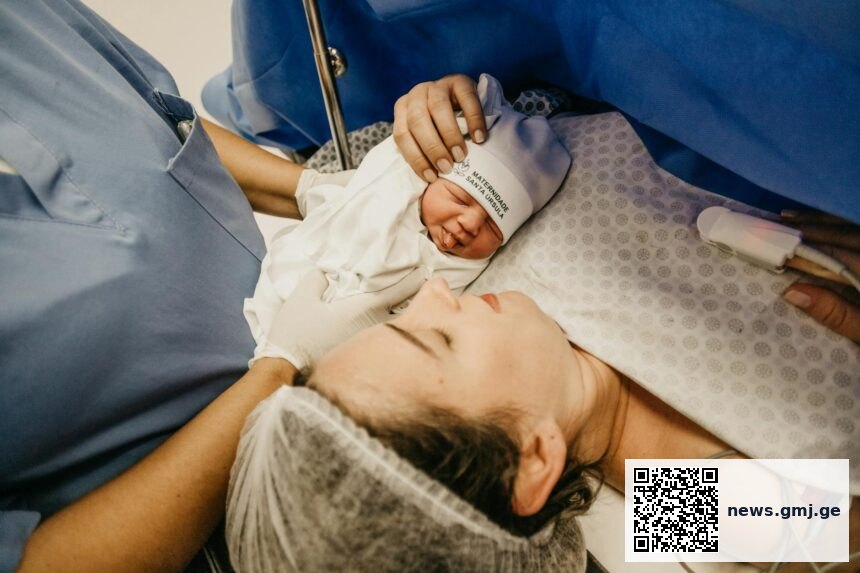
Live births in England and Wales dropped to their lowest level since 1977, with fertility rates falling to 1.49 children per woman. Economic pressures, housing costs, and climate concerns drive delayed childbearing as women's average age at first birth reaches 30.9 years. — Photo: Jonathan Borba / Pexels
SHARE
🎧 Listen to this article4:37 min · 383 words · GMJ Audio
2 min read|383 words

Live births in England and Wales have fallen to their lowest level since 1977, according to new data from the Office for National Statistics. The data shows women continue to delay starting families.

Contents
      • Live births in England and Wales reach 50-year low
  • Fertility rates hit record lows across age groups
  • Implications for healthcare and social policy
    • Key takeaways
  • Frequently asked questions
    • What is replacement level fertility and why does it matter?
591,072
live births recorded in England and Wales in 2023, the lowest since 1977

Live births in England and Wales reach 50-year low

Annual births (thousands), 1977-2023

591,072
births in
2023
30.9
average age of
first mothers
1.49
fertility rate
per woman

500k
600k
700k
800k

1977
1990
2005
2023

Source: ONS, 2024 | Georgian Medical Journal News

Fertility rates hit record lows across age groups

The total fertility rate declined to 1.49 children per woman in 2023, well below the 2.1 replacement level needed to maintain population stability, according to the ONS fertility statistics. Women are increasingly delaying childbearing, with the average age of first-time mothers rising to 30.9 years in 2023, according to ONS data.

Submit Your Paper
GMJ_Submit_Banner

Implications for healthcare and social policy

The declining birth rate poses long-term challenges for healthcare system sustainability and social care provision. An aging population with fewer working-age adults will strain pension systems and increase healthcare demands, requiring policy adaptations across multiple sectors.

🎙️ Related Podcast Episodes
🎧 #26 | Denmark Becomes First EU Country to Eliminate Mother-to-Child Transmission of HIV and · 14m
🎧 #20 | WHO: Conflict and Instability Make Pregnancy More Dangerous · 18m

Healthcare planners must consider the implications for maternity services, pediatric care, and long-term demographic health trends. The Department of Health and Social Care continues monitoring these demographic shifts to inform future healthcare capacity planning and resource allocation strategies.

The total fertility rate of 1.49 children per woman represents the lowest level recorded in England and Wales, falling significantly below the 2.1 replacement rate needed for population stability.

— Office for National Statistics (ONS Birth Statistics, 2024)

Key takeaways

  • Live births fell to 591,072 in 2023, the lowest level since 1977 according to ONS data
  • Average age of first-time mothers rose to 30.9 years according to ONS data
  • Total fertility rate dropped to 1.49 children per woman according to ONS data

Frequently asked questions

What is replacement level fertility and why does it matter?

Replacement level fertility is approximately 2.1 children per woman, the rate needed to maintain population size without immigration. Current rates of 1.49 indicate population decline without sustained immigration, affecting long-term economic and social planning.

The demographic shift toward lower birth rates and delayed childbearing reflects complex interactions between economic, social, and environmental factors that require comprehensive policy responses. Healthcare systems must adapt to serve both an aging population and changing reproductive patterns.

Source: ‘It’s not a nice world to bring children into’: Births fall to the lowest level in 50 years

Was this article helpful?

Disclaimer. This article is health journalism intended for general information and education. It is not medical advice and is not a substitute for professional diagnosis or treatment. Always consult a qualified healthcare provider about your individual circumstances. Full disclaimer →

Related Coverage

The Optimal Height for Elite Soccer Players: What Sports Science RevealsJul 14, 2026
Eye-tracking study reveals depression shifts children's attention to sad facesJul 14, 2026
Correction issued for MAGE-A4/A8 immunotherapy trial in advanced solid tumoursJul 14, 2026
Jackfruit-derived biomaterial shows promise in reversing severe gum disease damageJul 14, 2026
Related reference
  • Iron · Ingredient
PG
Written by
Prof. Giorgi Pkhakadze, MD, MPH, PhD
Editor-in-Chief, GMJ News
Full profile →  ·  ORCID 0000-0001-7609-4515
Medical disclaimer. This article is health journalism intended for general information. It is not medical advice and is not a substitute for consultation with a qualified healthcare professional. Always seek your physician's advice regarding any medical condition.
Medically reviewed by Prof. Giorgi Pkhakadze, MD, MPH, PhD. Spotted an error? Contact the editorial team.

Get the GMJ News digest
Evidence-based health journalism in your inbox. No spam; unsubscribe anytime.
TAGGED:birth ratesdemographicsEngland Walesfertilitymaternal age
Share This Article
Facebook LinkedIn Bluesky Copy Link Print
GMJ
ByGMJ Research Desk
Follow:
GMJ Research Desk is part of GMJ News, the newsroom of the Georgian Medical Journal (gmj.ge), published by the Public Health Institute of Georgia. Every article is editorially reviewed before publication.
Leave a Comment Leave a Comment

Leave a Reply Cancel reply

Your email address will not be published. Required fields are marked *

Submit Your Paper →

Georgia's peer-reviewed open-access medical journal. No APC until January 2027.
Submit Manuscript →
The Optimal Height for Elite Soccer Players: What Sports Science Reveals

Elite soccer demonstrates position-specific height selection rather than universal stature advantage. Analysis…

International Survey Reveals Critical Gaps in Cardio-Oncology Training Despite Rising Clinical Demand

An international survey presented at ESC Cardio-Oncology 2026 has identified substantial deficiencies…

UK Guidance on Inadvertent Vaccination in Pregnancy: What Healthcare Providers Need to Know

UK health authorities have published guidance for healthcare professionals managing inadvertent live…

Submit Your Paper to GMJ

No APC until January 2027.
Submit Manuscript →

You Might Also Like

Clinical trial concept showing shingles vaccination pathway to dementia prevention researchIllustrative image · Photo by Towfiqu barbhuiya on Pexels (Pexels License)
Clinical UpdatesNew StudiesPracticeResearch Digest

Shingles Vaccination and Dementia Prevention: Why Randomized Trials Are Critically Needed

By
GMJ Practice Desk
12/07/2026
Researcher using precision equipment to slice tumor tissue samples for cancer analysis
New StudiesResearch Digest

Researchers Develop New Method to Analyze Tumor Tissue Structure for Cancer Treatment

By
GMJ Research Desk
27/05/2026
Medical illustration showing visceral fat around abdominal organs with research data overlayIllustrative image · Photo by Towfiqu barbhuiya on Unsplash (Unsplash License)
New StudiesResearch Digest

Visceral fat loss reduces diabetes risk by 28% even after weight regain, decade-long study shows

By
GMJ Research Desk
02/07/2026
Scientific laboratory equipment for antimalarial drug testing and genotyping analysis
New StudiesResearch Digest

New Framework Aims to Improve Antimalarial Drug Testing Accuracy in Sub-Saharan Africa

By
GMJ Research Desk
31/05/2026
Facebook Twitter Youtube Instagram
Company
  • Privacy Policy
  • Contact US
  • GMJ Journal
  • Submit Manuscript
  • Editorial Team
  • Register at GMJ
  • Terms of Use

Subscribe to GMJ News — Click here

Join Community
© 2026 Georgian Medical Journal (GMJ). Published by the Public Health Institute of Georgia (PHIG). All rights reserved.
Welcome Back!

Sign in to your account

Username or Email Address
Password

Lost your password?

Not a member? Sign Up