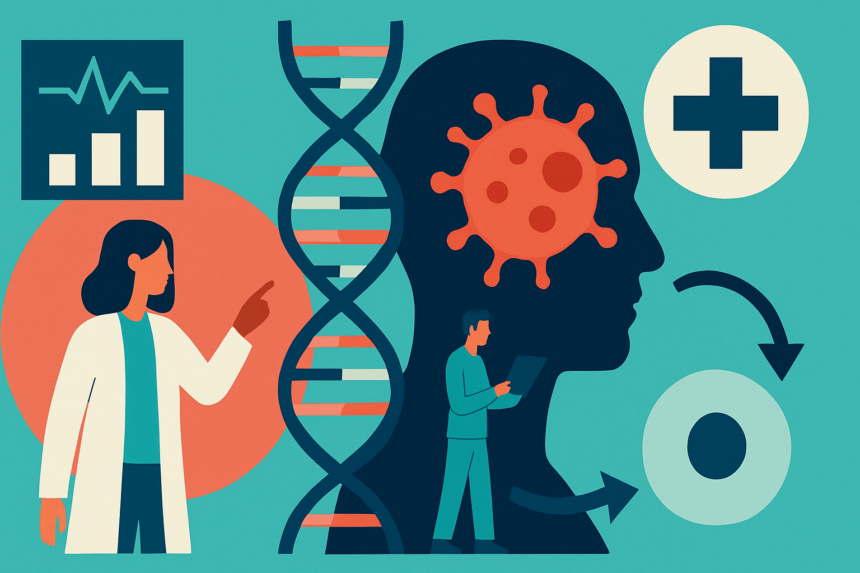
A groundbreaking study published in Science Translational Medicine reveals how genomic instability in ovarian cancer creates a cascade of cellular changes that promote both immune evasion and resistance to PARP inhibitor therapy. The research identifies a previously unknown mechanism by which cancer cells exploit their own DNA damage to create a protective environment that shields them from treatment.
Genomic instability activates resistance pathways in ovarian cancer
STING-WNT axis drives myofibroblast transformation and therapy resistance
activation
triggering
mechanism
LowMediumHighBaselineDNA damageSTING activationResistance
Source: Science Translational Medicine, 2026 | Georgian Medical Journal News
STING pathway emerges as cancer resistance driver
The Science Translational Medicine study demonstrates how genomic instability in ovarian cancer cells activates the STING (Stimulator of Interferon Genes) pathway, which normally serves as an immune surveillance mechanism. However, in this cancer context, STING activation paradoxically promotes the transformation of normal fibroblasts into POSTN+ myofibroblasts that suppress immune function.

These findings challenge the conventional understanding of STING as purely a tumor suppressor mechanism. The research published in Science Translational Medicine reveals how cancer cells co-opt this pathway to create an immunosuppressive microenvironment that facilitates both tumor growth and treatment resistance.
WNT signaling links DNA damage to therapy resistance
According to the Science Translational Medicine research, the WNT signaling pathway serves as a critical downstream effector of STING activation in the tumor microenvironment. This connection explains how genomic instability—typically considered a cancer vulnerability—becomes transformed into a resistance advantage through cellular reprogramming.
The study shows the STING-WNT axis drives the production of POSTN+ myofibroblasts, which create physical and biochemical barriers that protect cancer cells from both immune attack and therapeutic intervention. This mechanism represents a previously unrecognized form of adaptive resistance that emerges from the cancer’s own genomic chaos.
Implications for PARP inhibitor therapy
PARP inhibitors have revolutionized treatment for ovarian cancers with homologous recombination deficiency, but resistance remains a major clinical challenge. The Science Translational Medicine study provides the first mechanistic explanation for how genomic instability—the very feature that makes tumors sensitive to PARP inhibition—can simultaneously drive resistance mechanisms.
The identification of the STING-WNT-POSTN pathway opens new therapeutic targets for overcoming PARP inhibitor resistance. By blocking specific components of this cascade, clinicians may be able to restore sensitivity to existing therapies while preventing the development of treatment-resistant tumor microenvironments.
Targeting the tumor microenvironment
The research highlights the critical role of the tumor microenvironment in cancer progression and treatment resistance. According to the study, POSTN+ myofibroblasts not only suppress immune function but also create physical barriers that limit drug penetration and efficacy.
This microenvironmental reprogramming represents a potentially druggable target for combination therapies. By simultaneously targeting cancer cells and their supportive stroma, therapeutic strategies may achieve more durable responses and prevent the emergence of resistance.
Genomic instability drives POSTN+ myofibroblast formation through STING-WNT axis activation, creating an immunosuppressive microenvironment that promotes PARP inhibitor resistance
— Science Translational Medicine study (2026)
Key takeaways
- Genomic instability activates STING pathway leading to myofibroblast transformation
- STING-WNT axis creates immunosuppressive tumor microenvironment
- POSTN+ myofibroblasts drive both immune evasion and PARP inhibitor resistance
- Targeting microenvironmental pathways may overcome treatment resistance
Frequently asked questions
How does genomic instability lead to treatment resistance?
According to the Science Translational Medicine study, genomic instability activates the STING pathway, which triggers WNT signaling and transforms normal fibroblasts into POSTN+ myofibroblasts. These cells create an immunosuppressive environment that protects cancer cells from both immune attack and therapeutic intervention.
What are PARP inhibitors and why do they become ineffective?
PARP inhibitors are targeted cancer drugs that exploit DNA repair defects in tumors. According to the research, they become ineffective when the STING-WNT pathway creates protective myofibroblasts that shield cancer cells and suppress immune surveillance mechanisms.
Could this research lead to new cancer treatments?
According to the Science Translational Medicine study, by identifying specific components of the STING-WNT-POSTN pathway, researchers have revealed new therapeutic targets. Blocking these pathways could restore sensitivity to existing treatments and prevent resistance development.
This research represents a paradigm shift in understanding how cancer cells exploit their own genomic chaos to survive treatment. By revealing the mechanistic connections between DNA damage, immune suppression, and drug resistance, the study opens new avenues for combination therapies that target both cancer cells and their protective microenvironment.
Was this article helpful?
Disclaimer. This article is health journalism intended for general information and education. It is not medical advice and is not a substitute for professional diagnosis or treatment. Always consult a qualified healthcare provider about your individual circumstances. Full disclaimer →
Related Coverage


Medically reviewed by Prof. Giorgi Pkhakadze, MD, MPH, PhD. Spotted an error? Contact the editorial team.