By using this site, you agree to the Privacy Policy and Terms of Use.
Accept
GMJ NewsGMJ NewsGMJ News
  • Latest News
    • GMJ Briefs
  • Podcast & Media
    • Podcast Episodes
    • GMJ Audio
    • GMJ Videos
  • Research Digest
    • New Studies
    • Georgian Research
    • Data & Numbers
  • Policy & Systems
    • Health Policy
    • Quality & Safety
    • Migration & Health
    • Global Health
  • Practice
    • Clinical Updates
    • Case Discussions
    • Pharmacy & Prescribing
    • Ingredients A-Z
  • Perspectives
    • Editorial
    • Explainers
    • Voices
    • Letters
  • GMJ Articles
    • Vol. 1 Issue 2 (2026)
    • Vol. 1 Issue 1 (2026)
    • Pre-Launch Articles (2025)
  • Read the Journal →
  • About GMJ News
Notification Show More
Font ResizerAa
GMJ NewsGMJ News
Font ResizerAa
  • Latest News
    • GMJ Briefs
  • Podcast & Media
    • Podcast Episodes
    • GMJ Audio
    • GMJ Videos
  • Research Digest
    • New Studies
    • Georgian Research
    • Data & Numbers
  • Policy & Systems
    • Health Policy
    • Quality & Safety
    • Migration & Health
    • Global Health
  • Practice
    • Clinical Updates
    • Case Discussions
    • Pharmacy & Prescribing
    • Ingredients A-Z
  • Perspectives
    • Editorial
    • Explainers
    • Voices
    • Letters
  • GMJ Articles
    • Vol. 1 Issue 2 (2026)
    • Vol. 1 Issue 1 (2026)
    • Pre-Launch Articles (2025)
  • Read the Journal →
  • About GMJ News
Follow US
GMJ News > Practice > Clinical Updates > Weight Loss Expert Raises Safety Concerns Over Unregulated GLP-1 ‘Microdoses’
Clinical UpdatesPractice

Weight Loss Expert Raises Safety Concerns Over Unregulated GLP-1 ‘Microdoses’

GMJ
Last updated: 29/05/2026 16:32
By
GMJ Practice Desk
Share
4 Min Read
Medical professional discussing GLP-1 medication safety and dosing concerns
Weight-loss specialist warns about unregulated GLP-1 microdosing trend lacking clinical trial evidence. Long-term safety effects remain unknown for reduced-dose formulations. — Photo: Haberdoedas Photography / Pexels
SHARE
🎧 Listen to this article3:38 min · 480 words · GMJ Audio
2 min read|480 words

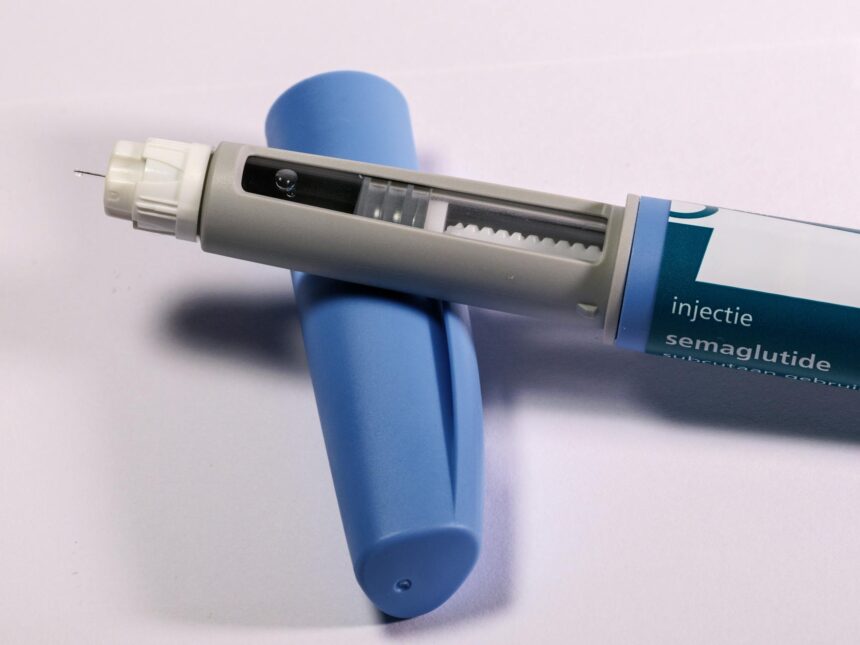
A growing trend toward “microdosing” GLP-1 medications for cosmetic weight loss is raising significant safety concerns among medical professionals, according to a weight-loss specialist writing in STAT News. The practice involves taking substantially reduced doses of medications like semaglutide and tirzepatide without medical supervision, often through compounded formulations of uncertain quality.

Contents
      • GLP-1 Medication Usage Patterns
  • Medical Supervision Critical for Safe Use
  • Compounding Quality Raises Additional Risks
  • Evidence-Based Alternatives Available
    • Key takeaways
  • Frequently asked questions
    • What are GLP-1 microdoses?
    • Why are medical experts concerned about microdosing?
    • Are compounded GLP-1 medications safe?
Unknown safety profile
for long-term microdose use according to weight-loss specialists

GLP-1 Medication Usage Patterns

Comparison of prescribed vs. microdose approaches, 2024

0%
clinical trials on
microdose safety

Source: STAT News analysis | Georgian Medical Journal News

Medical Supervision Critical for Safe Use

The weight-loss physician writing in STAT News emphasizes that GLP-1 medications were developed and tested at specific therapeutic doses through rigorous clinical trials. These studies established both efficacy and safety profiles at recommended dosing levels, providing the evidence base for FDA approval.

Submit Your Paper
GMJ_Submit_Banner

Microdosing represents an off-label use that lacks scientific validation, according to the STAT News opinion piece. Without proper clinical trials examining lower doses, healthcare providers cannot predict potential long-term effects or interactions.

🎙️ Related Podcast Episodes
🎧 #37 | GMJ Podcast | NAD⁺ Injections and “NAD Boosters” — Public Health Risks and Regulatory Implications · 20m

Compounding Quality Raises Additional Risks

Beyond dosing concerns, many microdose regimens rely on compounded versions of GLP-1 medications. The FDA’s oversight of compounding pharmacies differs significantly from manufacturer regulation of brand-name drugs, potentially affecting medication quality and consistency.

For patients seeking weight management solutions, this variability adds another layer of uncertainty to an already unproven approach.

Evidence-Based Alternatives Available

The World Health Organization emphasizes comprehensive lifestyle interventions as first-line treatments for weight management.

For patients requiring pharmaceutical intervention, properly prescribed and monitored GLP-1 therapy offers proven benefits with known risk profiles. Medical supervision ensures appropriate candidate selection, dose optimization, and monitoring for adverse effects throughout treatment.

Long-term effects of GLP-1 microdosing remain completely unknown, with no clinical trials examining safety or efficacy at these reduced doses

— Weight-loss specialist (STAT News, 2026)

Key takeaways

  • GLP-1 microdosing lacks clinical trial evidence for safety or efficacy
  • Compounded formulations may vary significantly in quality and potency
  • Medical supervision essential for safe GLP-1 therapy at any dose level

Frequently asked questions

What are GLP-1 microdoses?

Microdoses refer to taking GLP-1 medications like semaglutide at substantially lower doses than FDA-approved levels, often without medical supervision. These reduced doses lack clinical trial evidence for safety or effectiveness.

Why are medical experts concerned about microdosing?

The long-term effects of reduced-dose GLP-1 therapy are unknown because clinical trials only tested specific therapeutic doses, according to the weight-loss specialist writing in STAT News. Without this safety data, potential risks cannot be adequately assessed or predicted.

Are compounded GLP-1 medications safe?

Compounded versions may vary in quality, potency, and stability compared to FDA-approved medications. This variability introduces additional uncertainty when combined with unproven microdosing approaches.

The medical community continues advocating for evidence-based weight management approaches while researchers work to better understand optimal GLP-1 dosing strategies. As interest in these medications grows, maintaining rigorous safety standards remains paramount for protecting patient health and advancing therapeutic innovation in weight management.

Source: Opinion: I’m a weight-loss doctor. Here’s why I worry about GLP-1 ‘microdoses’

Was this article helpful?

Disclaimer. This article is health journalism intended for general information and education. It is not medical advice and is not a substitute for professional diagnosis or treatment. Always consult a qualified healthcare provider about your individual circumstances. Full disclaimer →

Related Coverage

The Optimal Height for Elite Soccer Players: What Sports Science RevealsJul 14, 2026
International Survey Reveals Critical Gaps in Cardio-Oncology Training Despite Rising Clinical DemandJul 14, 2026
UK Guidance on Inadvertent Vaccination in Pregnancy: What Healthcare Providers Need to KnowJul 14, 2026
UK Charity Maggie's to Open Two New Cancer Care Centres in Coventry and BirminghamJul 14, 2026
Related reference
  • Semaglutide · Drug
PG
Written by
Prof. Giorgi Pkhakadze, MD, MPH, PhD
Editor-in-Chief, GMJ News
Full profile →  ·  ORCID 0000-0001-7609-4515
Medical disclaimer. This article is health journalism intended for general information. It is not medical advice and is not a substitute for consultation with a qualified healthcare professional. Always seek your physician's advice regarding any medical condition.
Medically reviewed by Prof. Giorgi Pkhakadze, MD, MPH, PhD. Spotted an error? Contact the editorial team.

Get the GMJ News digest
Evidence-based health journalism in your inbox. No spam; unsubscribe anytime.
TAGGED:GLP-1medication safetymicrodosingsemaglutideweight loss
Share This Article
Facebook LinkedIn Bluesky Copy Link Print
GMJ
ByGMJ Practice Desk
Follow:
GMJ Practice Desk is part of GMJ News, the newsroom of the Georgian Medical Journal (gmj.ge), published by the Public Health Institute of Georgia. Every article is editorially reviewed before publication.
Leave a Comment Leave a Comment

Leave a Reply Cancel reply

Your email address will not be published. Required fields are marked *

Submit Your Paper →

Georgia's peer-reviewed open-access medical journal. No APC until January 2027.
Submit Manuscript →
The Optimal Height for Elite Soccer Players: What Sports Science Reveals

Elite soccer demonstrates position-specific height selection rather than universal stature advantage. Analysis…

International Survey Reveals Critical Gaps in Cardio-Oncology Training Despite Rising Clinical Demand

An international survey presented at ESC Cardio-Oncology 2026 has identified substantial deficiencies…

UK Guidance on Inadvertent Vaccination in Pregnancy: What Healthcare Providers Need to Know

UK health authorities have published guidance for healthcare professionals managing inadvertent live…

Submit Your Paper to GMJ

No APC until January 2027.
Submit Manuscript →

You Might Also Like

Multi-system organ involvement in chronic graft-versus-host disease showing skin, oral, gastrointestinal, liver, and pulmonary manifestationsIllustrative image · Photo by Nataliya Vaitkevich on Pexels (Pexels License)
Clinical UpdatesNew StudiesPracticeResearch Digest

Chronic Graft-versus-Host Disease: Early Detection and Management After Bone Marrow Transplant

By
GMJ Practice Desk
11/07/2026
Thoughtful oncologist in conversation with patient, illustrating relational dimensions of cancer careIllustrative image · Photo by Thirdman on Pexels (Pexels License)
Clinical UpdatesPerspectivesPracticeVoices

The profound human connection at the heart of oncology practice

By
GMJ Practice Desk
14/07/2026
Data visualization comparing cardiovascular risk by food additive consumption levelsIllustrative image · Photo by Marta Branco on Pexels (Pexels License)
Clinical UpdatesNew StudiesPracticeResearch Digest

Eight Common Food Additives Linked to Hypertension and Cardiovascular Disease in Large Cohort Study

By
GMJ Practice Desk
13/07/2026
Medical researchers analyzing viral genomic sequences in laboratory settingIllustrative image · Photo by Enock Ojambo on Pexels (Pexels License)
Clinical UpdatesGlobal HealthNew StudiesPolicy & SystemsPracticeResearch Digest

Uganda Reports First Bundibugyo Virus Case in 2026 with Complete Genomic Sequencing

By
GMJ Practice Desk
27/06/2026
Facebook Twitter Youtube Instagram
Company
  • Privacy Policy
  • Contact US
  • GMJ Journal
  • Submit Manuscript
  • Editorial Team
  • Register at GMJ
  • Terms of Use

Subscribe to GMJ News — Click here

Join Community
© 2026 Georgian Medical Journal (GMJ). Published by the Public Health Institute of Georgia (PHIG). All rights reserved.
Welcome Back!

Sign in to your account

Username or Email Address
Password

Lost your password?

Not a member? Sign Up