By using this site, you agree to the Privacy Policy and Terms of Use.
Accept
GMJ NewsGMJ NewsGMJ News
  • Latest News
    • GMJ Briefs
  • Podcast & Media
    • Podcast Episodes
    • GMJ Audio
    • GMJ Videos
  • Research Digest
    • New Studies
    • Georgian Research
    • Data & Numbers
  • Policy & Systems
    • Health Policy
    • Quality & Safety
    • Migration & Health
    • Global Health
  • Practice
    • Clinical Updates
    • Case Discussions
    • Pharmacy & Prescribing
    • Ingredients A-Z
  • Perspectives
    • Editorial
    • Explainers
    • Voices
    • Letters
  • GMJ Articles
    • Vol. 1 Issue 2 (2026)
    • Vol. 1 Issue 1 (2026)
    • Pre-Launch Articles (2025)
  • Read the Journal →
  • About GMJ News
Notification Show More
Font ResizerAa
GMJ NewsGMJ News
Font ResizerAa
  • Latest News
    • GMJ Briefs
  • Podcast & Media
    • Podcast Episodes
    • GMJ Audio
    • GMJ Videos
  • Research Digest
    • New Studies
    • Georgian Research
    • Data & Numbers
  • Policy & Systems
    • Health Policy
    • Quality & Safety
    • Migration & Health
    • Global Health
  • Practice
    • Clinical Updates
    • Case Discussions
    • Pharmacy & Prescribing
    • Ingredients A-Z
  • Perspectives
    • Editorial
    • Explainers
    • Voices
    • Letters
  • GMJ Articles
    • Vol. 1 Issue 2 (2026)
    • Vol. 1 Issue 1 (2026)
    • Pre-Launch Articles (2025)
  • Read the Journal →
  • About GMJ News
Follow US
GMJ News > GMJ Briefs > What UK Radiotherapy Safety Data Means for Clinical Practice: Three Key Takeaways

What UK Radiotherapy Safety Data Means for Clinical Practice: Three Key Takeaways

GMJ
Last updated: 01/07/2026 01:43
By
Prof. Giorgi Pkhakadze
Share
1 Min Read
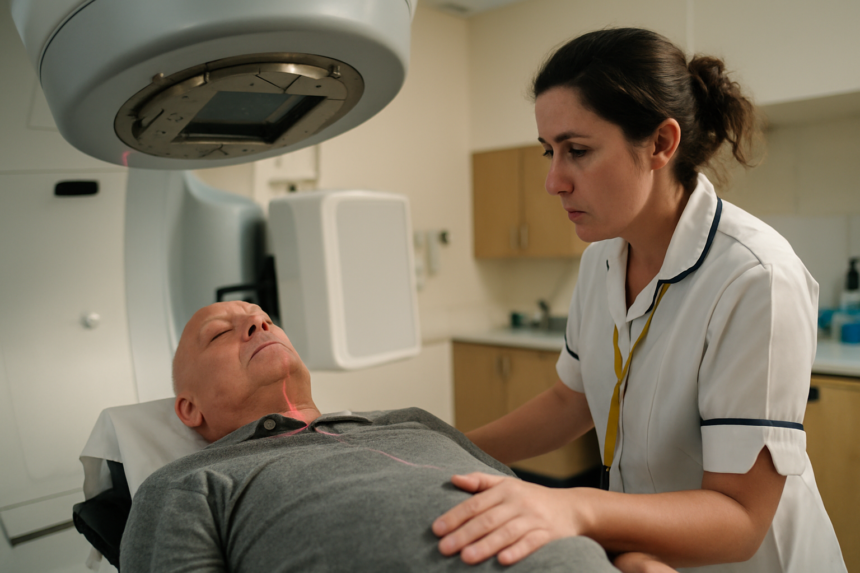
Medical professionals operating radiotherapy equipment in hospital treatment room
UK government analysis reveals 13% increase in voluntarily reported radiotherapy incidents, with treatment delivery errors comprising 42% of safety events. Structured safety briefings correlate with 23% reduction in incident rates.
SHARE
1 min read|117 words

The UK’s latest radiotherapy safety analysis offers three critical insights for clinical teams. First, the 13% increase in voluntary incident reporting signals positive cultural change toward transparency—not necessarily deteriorating safety. Reporting systems that capture near-misses alongside actual incidents enable proactive prevention. Second, treatment delivery errors dominating incident reports at 42% highlight the vulnerability of complex multidisciplinary coordination. Third, and most actionably, structured safety briefings reduce incidents by 23%, demonstrating that formal protocols directly improve outcomes. These findings suggest that healthcare systems should prioritize implementation of verification procedures, standardized communication frameworks, and regular safety briefings as foundational preventive measures. For radiotherapy departments seeking to enhance safety performance, the data supports investing in systematic safety protocols rather than reactive incident management.

Was this article helpful?

GMJ Brief · Takeaway

📰 Read the full article: UK Radiotherapy Safety Analysis Reveals 13% Rise in Reported Incidents →

Share This Article
Facebook LinkedIn Bluesky Copy Link Print
GMJ
ByProf. Giorgi Pkhakadze
Follow:
Prof. Giorgi Pkhakadze, MD, MPH, PhD, is Editor-in-Chief of the Georgian Medical Journal and Chair of the Public Health Institute of Georgia (PHIG). He is Professor and Head of the Department of Social and Behavioural Sciences at David Tvildiani Medical University, and Secretary/Treasurer of the UEMS Section of Public Health. ORCID: 0000-0001-7609-4515.

Submit Your Paper →

Georgia's peer-reviewed open-access medical journal. No APC until January 2027.
Submit Manuscript →
New AI Model Strips Personal Data From ECGs While Preserving Heart Risk Information

Artificial intelligence can extract age, sex, race, and individual identity from standard…

AI-Guided Ultrasound Predicts Bubble Collapse to Improve Brain Barrier Opening

Researchers at Georgia Institute of Technology have developed an AI system that…

Orforglipron Shows Clinically Significant HbA1c Reductions in Type 2 Diabetes

Two phase III randomised controlled trials presented at the American Diabetes Association…

Submit Your Paper to GMJ

No APC until January 2027.
Submit Manuscript →

You Might Also Like

Scientific illustration showing gut microbiome changes with age and immune system decline

Microbial Diversity Drops 47% From Young Adulthood to Older Age, Fueling Inflammation

By
Prof. Giorgi Pkhakadze
07/07/2026
Health PolicyPolicy & Systems

Vaccine-Skeptical California County Halts Measles Outbreak Through Community Leaders

By
Prof. Giorgi Pkhakadze
30/05/2026
Restaurant menu with warning label highlighting high-sugar items

Menu Warning Labels Demonstrate Significant Promise in Reducing Restaurant Sugar Consumption

By
Prof. Giorgi Pkhakadze
25/06/2026
Medical illustration showing visceral fat around abdominal organs with research data overlay

Metabolic Legacy: How Visceral Fat Loss Protects Against Diabetes for a Decade

By
Prof. Giorgi Pkhakadze
09/07/2026
Facebook Twitter Youtube Instagram
Company
  • Privacy Policy
  • Contact US
  • GMJ Journal
  • Submit Manuscript
  • Editorial Team
  • Register at GMJ
  • Terms of Use

Subscribe to GMJ News — Click here

Join Community
© 2026 Georgian Medical Journal (GMJ). Published by the Public Health Institute of Georgia (PHIG). All rights reserved.
Welcome Back!

Sign in to your account

Username or Email Address
Password

Lost your password?

Not a member? Sign Up