By using this site, you agree to the Privacy Policy and Terms of Use.
Accept
GMJ NewsGMJ NewsGMJ News
  • Latest News
    • GMJ Briefs
  • Podcast & Media
    • Podcast Episodes
    • GMJ Audio
    • GMJ Videos
  • Research Digest
    • New Studies
    • Georgian Research
    • Data & Numbers
  • Policy & Systems
    • Health Policy
    • Quality & Safety
    • Migration & Health
    • Global Health
  • Practice
    • Clinical Updates
    • Case Discussions
    • Pharmacy & Prescribing
    • Ingredients A-Z
  • Perspectives
    • Editorial
    • Explainers
    • Voices
    • Letters
  • GMJ Articles
    • Vol. 1 Issue 2 (2026)
    • Vol. 1 Issue 1 (2026)
    • Pre-Launch Articles (2025)
  • Read the Journal →
  • About GMJ News
Notification Show More
Font ResizerAa
GMJ NewsGMJ News
Font ResizerAa
  • Latest News
    • GMJ Briefs
  • Podcast & Media
    • Podcast Episodes
    • GMJ Audio
    • GMJ Videos
  • Research Digest
    • New Studies
    • Georgian Research
    • Data & Numbers
  • Policy & Systems
    • Health Policy
    • Quality & Safety
    • Migration & Health
    • Global Health
  • Practice
    • Clinical Updates
    • Case Discussions
    • Pharmacy & Prescribing
    • Ingredients A-Z
  • Perspectives
    • Editorial
    • Explainers
    • Voices
    • Letters
  • GMJ Articles
    • Vol. 1 Issue 2 (2026)
    • Vol. 1 Issue 1 (2026)
    • Pre-Launch Articles (2025)
  • Read the Journal →
  • About GMJ News
Follow US
GMJ News > GMJ Briefs > 26,000-Person Study Provides Definitive Evidence: Creatine Supplementation Does Not Damage Kidneys

26,000-Person Study Provides Definitive Evidence: Creatine Supplementation Does Not Damage Kidneys

GMJ
Last updated: 03/06/2026 12:25
By
Prof. Giorgi Pkhakadze
Share
1 Min Read
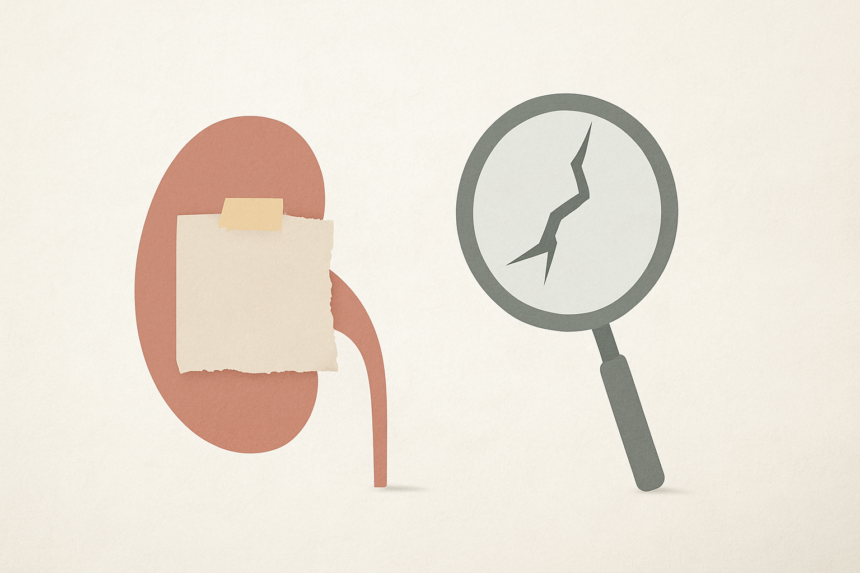
Scientific chart showing creatine safety data from clinical trials
Comprehensive analysis of 26,000 participants definitively debunks persistent myth that creatine damages kidneys. Elevated creatinine reflects normal metabolism, not kidney dysfunction.
SHARE
1 min read|118 words

A comprehensive safety analysis of over 26,000 participants has conclusively resolved a long-standing concern in sports nutrition: creatine supplementation does not cause kidney damage. The myth stems from a fundamental misinterpretation of routine blood tests showing elevated creatinine levels during supplementation. According to research published in the Journal of the International Society of Sports Nutrition, this elevation reflects normal metabolic processes rather than kidney dysfunction. When creatine supplementation increases total body stores, more creatinine is naturally produced as a byproduct of skeletal muscle phosphocreatine degradation. Healthcare providers now have robust, evidence-based findings to confidently address patient concerns about creatine safety. This landmark review synthesizes data from multiple clinical trials, establishing clear guidance for medical professionals counseling patients on supplementation.

Was this article helpful?
GMJ Brief · Announcement

📰 Read the full article: Creatine Kidney Damage Myth Debunked by Major Safety Review of 26,000 Participants →

Related reference
  • Creatine · Ingredient
Share This Article
Facebook LinkedIn Bluesky Copy Link Print
GMJ
ByProf. Giorgi Pkhakadze
Follow:
Prof. Giorgi Pkhakadze, MD, MPH, PhD, is Editor-in-Chief of the Georgian Medical Journal and Chair of the Public Health Institute of Georgia (PHIG). He is Professor and Head of the Department of Social and Behavioural Sciences at David Tvildiani Medical University, and Secretary/Treasurer of the UEMS Section of Public Health. ORCID: 0000-0001-7609-4515.

Submit Your Paper →

Georgia's peer-reviewed open-access medical journal. No APC until January 2027.
Submit Manuscript →
Brain’s Support Cells Hold Key to Mental Health: How Astrocytes, Microglia, and Oligodendrocytes Shape Resilience

The human brain is far more than neurons alone. Astrocytes, microglia, and…

Apigenin Shows Promise in Lab Studies, But Human Evidence Remains Elusive

Apigenin, a plant compound featured in sleep and longevity supplements, has demonstrated…

Light roast coffee retains highest chlorogenic acid levels, study shows

Light roast coffee preserves 8.0 mg/g of chlorogenic acids compared to 4.35…

Submit Your Paper to GMJ

No APC until January 2027.
Submit Manuscript →

You Might Also Like

Medical professional reviewing chest X-ray with AI analysis highlighting bone density patterns

What You Need to Know About AI-Powered Bone Loss Detection

By
Prof. Giorgi Pkhakadze
01/07/2026
Medical illustration showing pituitary gland location and surgical approach for adenoma removal

Minimally Invasive Brain Surgery Restores Fertility in Secondary Infertility Case

By
Prof. Giorgi Pkhakadze
07/07/2026
Medical illustration showing hepatitis B virus suppression with new antisense oligonucleotide therapy

What Hepatitis B Patients Should Know About Emerging Treatment Options

By
Prof. Giorgi Pkhakadze
29/06/2026
Comparative performance chart showing general-purpose AI models outperforming clinical-specific AI tools on physician-generated questions

Surprise Finding: General AI Chatbots Outshine Purpose-Built Clinical Tools

By
Prof. Giorgi Pkhakadze
19/07/2026
Facebook Twitter Youtube Instagram
Company
  • Privacy Policy
  • Contact US
  • GMJ Journal
  • Submit Manuscript
  • Editorial Team
  • Register at GMJ
  • Terms of Use

Subscribe to GMJ News — Click here

Join Community
© 2026 Georgian Medical Journal (GMJ). Published by the Public Health Institute of Georgia (PHIG). All rights reserved.
Welcome Back!

Sign in to your account

Username or Email Address
Password

Lost your password?

Not a member? Sign Up