By using this site, you agree to the Privacy Policy and Terms of Use.
Accept
GMJ NewsGMJ NewsGMJ News
  • Latest News
    • GMJ Briefs
  • Podcast & Media
    • Podcast Episodes
    • GMJ Audio
    • GMJ Videos
  • Research Digest
    • New Studies
    • Georgian Research
    • Data & Numbers
  • Policy & Systems
    • Health Policy
    • Quality & Safety
    • Migration & Health
    • Global Health
  • Practice
    • Clinical Updates
    • Case Discussions
    • Pharmacy & Prescribing
    • Ingredients A-Z
  • Perspectives
    • Editorial
    • Explainers
    • Voices
    • Letters
  • Health Topics
    • Diabetes
    • Cancer
    • Cardiovascular
    • Mental Health
    • Vaccines
    • Migration & Health
    • Patient Safety & Accreditation
    • Occupational Safety and Health
  • GMJ Articles
    • Vol. 1 Issue 2 (2026)
    • Vol. 1 Issue 1 (2026)
    • Pre-Launch Articles (2025)
  • Read the Journal →
  • About GMJ News
Notification Show More
Font ResizerAa
GMJ NewsGMJ News
Font ResizerAa
  • Latest News
    • GMJ Briefs
  • Podcast & Media
    • Podcast Episodes
    • GMJ Audio
    • GMJ Videos
  • Research Digest
    • New Studies
    • Georgian Research
    • Data & Numbers
  • Policy & Systems
    • Health Policy
    • Quality & Safety
    • Migration & Health
    • Global Health
  • Practice
    • Clinical Updates
    • Case Discussions
    • Pharmacy & Prescribing
    • Ingredients A-Z
  • Perspectives
    • Editorial
    • Explainers
    • Voices
    • Letters
  • Health Topics
    • Diabetes
    • Cancer
    • Cardiovascular
    • Mental Health
    • Vaccines
    • Migration & Health
    • Patient Safety & Accreditation
    • Occupational Safety and Health
  • GMJ Articles
    • Vol. 1 Issue 2 (2026)
    • Vol. 1 Issue 1 (2026)
    • Pre-Launch Articles (2025)
  • Read the Journal →
  • About GMJ News
Follow US
GMJ News > GMJ Briefs > Announcement: The 20 amino acids: life’s molecular alphabet explained

Announcement: The 20 amino acids: life’s molecular alphabet explained

GMJ
Last updated: 07/08/2026 23:29
By
Prof. Giorgi Pkhakadze
Share
0 Min Read
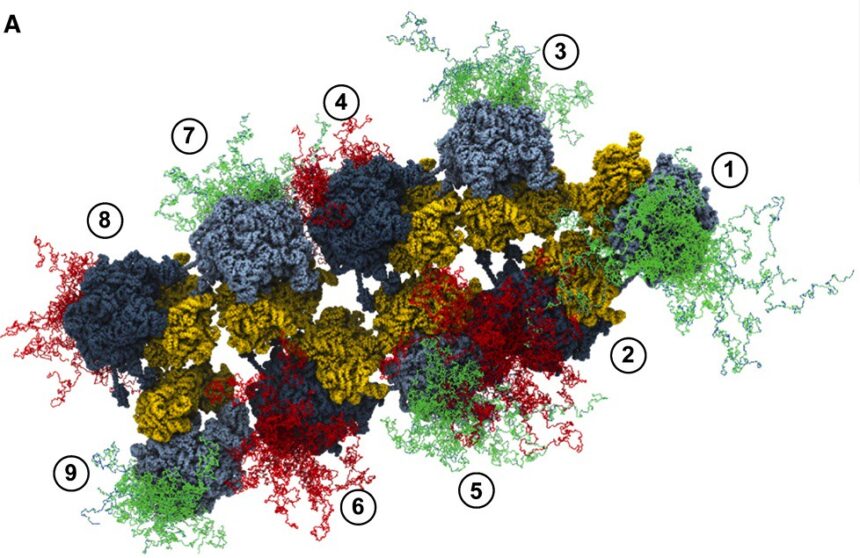
Diagram showing the 20 amino acids classified by chemical structure: aliphatic, aromatic, acidic, basic, hydroxyl-containing, sulphur-containing, and amidic groups.
The human body uses 20 standard amino acids as the building blocks for all proteins. Nine are essential—they cannot be made by the body and must come from food—while eleven can be synthesised internally. Understanding how these amino acids differ in structure and function is central to clinical nutrition and disease prevention. — "Replicating Nanomachines" by jurvetson is licensed under CC BY 2.0. To view a copy of this license, visit https://creativecommons.org/licenses/by/2.0/. (CC BY 2.0)
SHARE
1 min read|40 words

The body uses 20 amino acids as the alphabet of life. 9 are essential—you must get them from food. Understand their structure, function, and why this matters for muscle health, immunity, and disease prevention.

Read the full article on GMJ Newsroom →

Was this article helpful?

GMJ Brief · Announcement

📰 Read the full article: The 20 amino acids: life’s molecular alphabet explained →

Share This Article
Facebook LinkedIn Bluesky Copy Link Print
GMJ
ByProf. Giorgi Pkhakadze
Follow:
Prof. Giorgi Pkhakadze, MD, MPH, PhD, is Editor-in-Chief of the Georgian Medical Journal and Chair of the Public Health Institute of Georgia (PHIG). He is Professor and Head of the Department of Social and Behavioural Sciences at David Tvildiani Medical University, and Secretary/Treasurer of the UEMS Section of Public Health. ORCID: 0000-0001-7609-4515.

Submit Your Paper →

Georgia's peer-reviewed open-access medical journal. No APC until January 2027.
Submit Manuscript →
Melatonin’s safety paradox: effective sleep aid undermined by unregulated product quality

Melatonin is clinically effective for sleep disorders, but unregulated supplement manufacturing in…

Major sporting events tied to heart attack spikes, study shows

Major international football tournaments are associated with measurable increases in acute coronary…

Medicaid Work Requirements Create Impossible Dilemma for Disabled Workers, Experts Warn

New Medicaid work requirement rules force disabled workers into an impossible choice:…

Submit Your Paper to GMJ

No APC until January 2027.
Submit Manuscript →

You Might Also Like

NHS hospital entrance during summer heatwave with emergency services signage

Navigating Healthcare During the NHS Triple Challenge: Practical Guidance for Patients

By
Prof. Giorgi Pkhakadze
30/07/2026
Clinical UpdatesPolicy & SystemsPracticeQuality & Safety

CDC Issues Alert on E. coli Outbreak Linked to Frozen Blueberries

By
Prof. Giorgi Pkhakadze
08/07/2026
Medical illustration showing mitochondrial transplantation into nerve cells for pain relief

Duke Scientists Develop Mitochondrial Transplant Strategy to Combat Chronic Nerve Pain

By
Prof. Giorgi Pkhakadze
30/06/2026
Chart comparing acute muscle protein synthesis spike (47% animal advantage) versus daily synthesis rates (no difference) and 10-week muscle growth outcomes (8.3% both groups)

The Numbers Behind Protein: Why Acute Spikes Don’t Equal Long-Term Gains

By
Prof. Giorgi Pkhakadze
07/08/2026
Facebook Twitter Youtube Instagram
Company
  • Privacy Policy
  • Contact US
  • GMJ Journal
  • Submit Manuscript
  • Editorial Team
  • Register at GMJ
  • Terms of Use

Subscribe to GMJ News — Click here

Join Community
© 2026 Georgian Medical Journal (GMJ). Published by the Public Health Institute of Georgia (PHIG). All rights reserved.
Welcome Back!

Sign in to your account

Username or Email Address
Password

Lost your password?

Not a member? Sign Up