By using this site, you agree to the Privacy Policy and Terms of Use.
Accept
GMJ NewsGMJ NewsGMJ News
  • Latest News
    • GMJ Briefs
  • Podcast & Media
    • Podcast Episodes
    • GMJ Audio
    • GMJ Videos
  • Research Digest
    • New Studies
    • Georgian Research
    • Data & Numbers
  • Policy & Systems
    • Health Policy
    • Quality & Safety
    • Migration & Health
    • Global Health
  • Practice
    • Clinical Updates
    • Case Discussions
    • Pharmacy & Prescribing
    • Ingredients A-Z
  • Perspectives
    • Editorial
    • Explainers
    • Voices
    • Letters
  • GMJ Articles
    • Vol. 1 Issue 2 (2026)
    • Vol. 1 Issue 1 (2026)
    • Pre-Launch Articles (2025)
  • Read the Journal →
  • About GMJ News
Notification Show More
Font ResizerAa
GMJ NewsGMJ News
Font ResizerAa
  • Latest News
    • GMJ Briefs
  • Podcast & Media
    • Podcast Episodes
    • GMJ Audio
    • GMJ Videos
  • Research Digest
    • New Studies
    • Georgian Research
    • Data & Numbers
  • Policy & Systems
    • Health Policy
    • Quality & Safety
    • Migration & Health
    • Global Health
  • Practice
    • Clinical Updates
    • Case Discussions
    • Pharmacy & Prescribing
    • Ingredients A-Z
  • Perspectives
    • Editorial
    • Explainers
    • Voices
    • Letters
  • GMJ Articles
    • Vol. 1 Issue 2 (2026)
    • Vol. 1 Issue 1 (2026)
    • Pre-Launch Articles (2025)
  • Read the Journal →
  • About GMJ News
Follow US
GMJ News > GMJ Briefs > Digital Home Blood Pressure Monitoring Emerges as Game-Changer in Cardiovascular Prevention

Digital Home Blood Pressure Monitoring Emerges as Game-Changer in Cardiovascular Prevention

GMJ
Last updated: 03/07/2026 22:43
By
Prof. Giorgi Pkhakadze
Share
1 Min Read
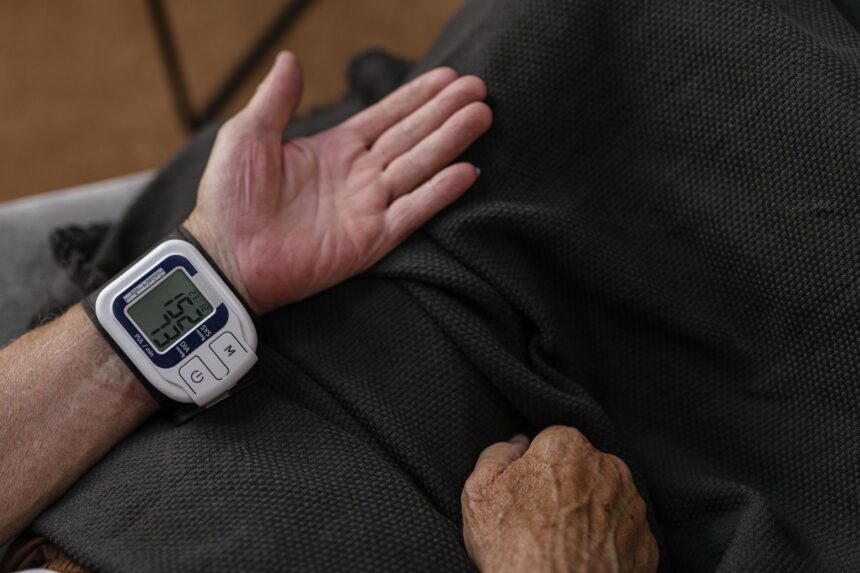
Digital blood pressure monitor with smartphone showing health data transmission
New research shows home blood pressure monitoring with digital data sharing reduces cardiovascular events by 36%. The study demonstrates significant benefits for heart attack and stroke prevention. — Photo by SHVETS production on Pexels (Pexels License)
SHARE
1 min read|129 words

A landmark study published in the European Heart Journal–Digital Health demonstrates that home blood pressure monitoring combined with direct digital data sharing to healthcare providers significantly reduces cardiovascular risk. Patients utilizing this integrated approach experienced a 36% reduction in heart attack and stroke events compared to those receiving standard care.

The research highlights how digital health integration transforms hypertension management by enabling real-time clinical oversight and rapid intervention when concerning blood pressure fluctuations occur. Traditional clinic-based monitoring often misses critical variations between appointments, leaving patients vulnerable to undetected cardiovascular risk.

With approximately 1.28 billion adults worldwide living with hypertension, this evidence-based approach offers a scalable solution for improving patient outcomes through technology-enabled self-monitoring and enhanced provider communication. The findings suggest that accessible digital tools can substantially impact population-level cardiovascular health.

Was this article helpful?

GMJ Brief · Announcement

📰 Read the full article: Home Blood Pressure Monitoring Reduces Heart Attack and Stroke Risk by 36% →

Related reference
  • Hypertension · Condition
  • Stroke · Condition
Share This Article
Facebook LinkedIn Bluesky Copy Link Print
GMJ
ByProf. Giorgi Pkhakadze
Follow:
Prof. Giorgi Pkhakadze, MD, MPH, PhD, is Editor-in-Chief of the Georgian Medical Journal and Chair of the Public Health Institute of Georgia (PHIG). He is Professor and Head of the Department of Social and Behavioural Sciences at David Tvildiani Medical University, and Secretary/Treasurer of the UEMS Section of Public Health. ORCID: 0000-0001-7609-4515.

Submit Your Paper →

Georgia's peer-reviewed open-access medical journal. No APC until January 2027.
Submit Manuscript →
Life-threatening skin infection: what clinicians need to know about necrotising fasciitis

Necrotising fasciitis, a rapidly progressive soft tissue infection, kills approximately 25% of…

Can Humans Grow a Third Set of Adult Teeth? What the Evidence Actually Shows

Humans naturally develop only two sets of teeth—primary and permanent—due to genetic…

Ebola Recoveries Offer Clinical and Public Health Insights Amid DRC Outbreak

Documented recoveries from Ebola virus disease in the Democratic Republic of Congo…

Submit Your Paper to GMJ

No APC until January 2027.
Submit Manuscript →

You Might Also Like

Medical illustration showing lung surgery outcomes comparison between smoking and non-smoking patients

Study Reveals Similar Mortality in Smoking and Non-Smoking Lung Cancer Surgery Patients

By
Prof. Giorgi Pkhakadze
28/06/2026
Medical research illustration showing hepatitis B virus and antisense oligonucleotide mechanism

What Clinicians Need to Know About Bepirovirsen’s Novel Hepatitis B Mechanism

By
Prof. Giorgi Pkhakadze
29/06/2026

EBOLA OUTBREAK – DRC/UGANDA CROSS-BORDER TRANSMISSION WITH WHO PHEIC DECLARATION

By
Prof. Giorgi Pkhakadze
31/05/2026
Global HealthPolicy & Systems

WHO Declares International Emergency as Ebola Outbreak Exceeds 900 Cases and Crosses DRC-Uganda Border

By
Prof. Giorgi Pkhakadze
31/05/2026
Facebook Twitter Youtube Instagram
Company
  • Privacy Policy
  • Contact US
  • GMJ Journal
  • Submit Manuscript
  • Editorial Team
  • Register at GMJ
  • Terms of Use

Subscribe to GMJ News — Click here

Join Community
© 2026 Georgian Medical Journal (GMJ). Published by the Public Health Institute of Georgia (PHIG). All rights reserved.
Welcome Back!

Sign in to your account

Username or Email Address
Password

Lost your password?

Not a member? Sign Up