By using this site, you agree to the Privacy Policy and Terms of Use.
Accept
GMJ NewsGMJ NewsGMJ News
  • Latest News
    • GMJ Briefs
  • Podcast & Media
    • Podcast Episodes
    • GMJ Audio
    • GMJ Videos
  • Research Digest
    • New Studies
    • Georgian Research
    • Data & Numbers
  • Policy & Systems
    • Health Policy
    • Quality & Safety
    • Migration & Health
    • Global Health
  • Practice
    • Clinical Updates
    • Case Discussions
    • Pharmacy & Prescribing
    • Ingredients A-Z
  • Perspectives
    • Editorial
    • Explainers
    • Voices
    • Letters
  • GMJ Articles
    • Vol. 1 Issue 2 (2026)
    • Vol. 1 Issue 1 (2026)
    • Pre-Launch Articles (2025)
  • Read the Journal →
  • About GMJ News
Notification Show More
Font ResizerAa
GMJ NewsGMJ News
Font ResizerAa
  • Latest News
    • GMJ Briefs
  • Podcast & Media
    • Podcast Episodes
    • GMJ Audio
    • GMJ Videos
  • Research Digest
    • New Studies
    • Georgian Research
    • Data & Numbers
  • Policy & Systems
    • Health Policy
    • Quality & Safety
    • Migration & Health
    • Global Health
  • Practice
    • Clinical Updates
    • Case Discussions
    • Pharmacy & Prescribing
    • Ingredients A-Z
  • Perspectives
    • Editorial
    • Explainers
    • Voices
    • Letters
  • GMJ Articles
    • Vol. 1 Issue 2 (2026)
    • Vol. 1 Issue 1 (2026)
    • Pre-Launch Articles (2025)
  • Read the Journal →
  • About GMJ News
Follow US
GMJ News > GMJ Briefs > Phase 1a Data: IMA401 Shows Efficacy Signals in High-MAGE-A-Expressing Cancers

Phase 1a Data: IMA401 Shows Efficacy Signals in High-MAGE-A-Expressing Cancers

GMJ
Last updated: 22/06/2026 16:18
By
Prof. Giorgi Pkhakadze
Share
1 Min Read
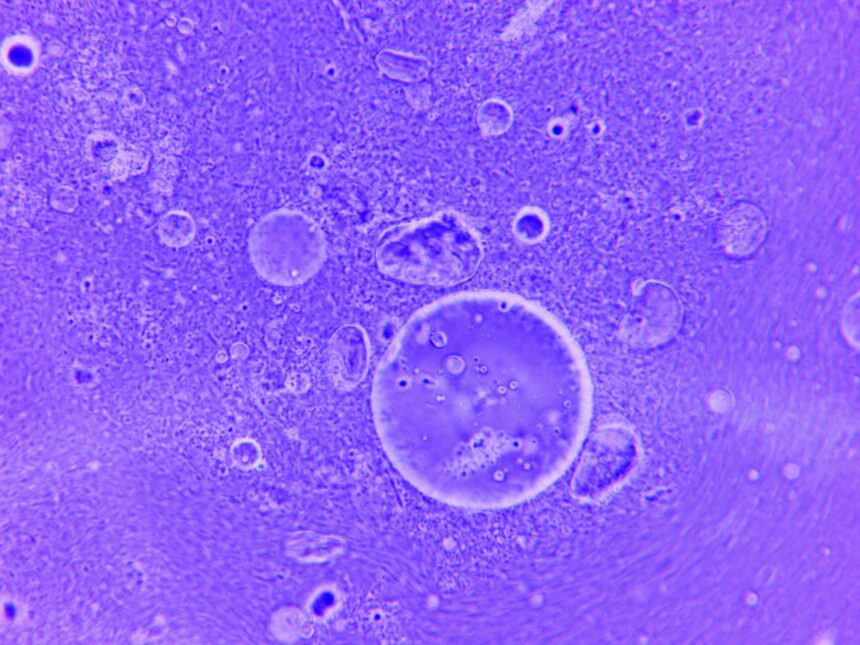
Microscopic illustration of T cell engaging with cancer cell through bispecific antibody mechanism
Novel bispecific T cell engager IMA401 targeting MAGE-A4/MAGE-A8 shows encouraging safety and preliminary efficacy in phase 1a trial. Early results demonstrate promise in head and neck cancers and melanoma patients. — Photo: turek / Pexels
SHARE
1 min read|137 words

Interim analysis from a phase 1a clinical trial reveals that IMA401, a bispecific T cell engager, generated preliminary efficacy signals in patients with recurrent and refractory head and neck cancers and melanoma. These cancers express MAGE-A4 and MAGE-A8 at notably high frequencies—up to 75 percent in melanoma and 65 percent in head and neck cancers—making them optimal candidates for antigen-targeted immunotherapy.

The trial data, presented at the 2026 ASCO Annual Meeting, documented a favorable safety profile alongside these early response indicators. IMA401 works by redirecting T cells to recognize cancer-specific antigens displayed on tumor cell surfaces, a mechanism distinct from traditional immunotherapies. The combination strategy with anti-PD-1 checkpoint inhibitors demonstrated enhanced immune activation potential, suggesting a complementary approach for overcoming resistance mechanisms.

These results warrant further investigation in expanded patient cohorts. Read the full article on GMJ Newsroom.

Was this article helpful?

GMJ Brief · Key Finding

📰 Read the full article: MAGE-A4/MAGE-A8-Targeted Bispecific T Cell Engager Shows Promise in Refractory Solid Tumors →

Share This Article
Facebook LinkedIn Bluesky Copy Link Print
GMJ
ByProf. Giorgi Pkhakadze
Follow:
Prof. Giorgi Pkhakadze, MD, MPH, PhD, is Editor-in-Chief of the Georgian Medical Journal and Chair of the Public Health Institute of Georgia (PHIG). He is Professor and Head of the Department of Social and Behavioural Sciences at David Tvildiani Medical University, and Secretary/Treasurer of the UEMS Section of Public Health. ORCID: 0000-0001-7609-4515.

Submit Your Paper →

Georgia's peer-reviewed open-access medical journal. No APC until January 2027.
Submit Manuscript →
Stress impairs memory and attention by up to 20%, study finds—but botanical interventions show promise

Acute psychological stress reduces memory and attention test performance by approximately 20%,…

How the body metabolises alcohol: the biochemistry behind why drinks linger

Alcohol metabolism is a three-step enzymatic pathway that generates toxic acetaldehyde and…

How glycine lowers core body temperature to trigger sleep—a thermostat mechanism

Glycine triggers sleep by lowering core body temperature through activation of the…

Submit Your Paper to GMJ

No APC until January 2027.
Submit Manuscript →

You Might Also Like

Global HealthPolicy & Systems

Sierra Leone Launches Triple Zeros Initiative to Eliminate Preventable Maternal and Child Deaths

By
Prof. Giorgi Pkhakadze
02/06/2026
Medical professionals handling blood donation equipment in modern healthcare facility

Americas Face Blood Supply Crisis as PAHO Urges Urgent Reform

By
Prof. Giorgi Pkhakadze
05/07/2026
Laboratory-grown neural circuits showing brain-spinal cord connections

Cambridge Scientists Overturn Decades of Spinal Cord Injury Assumptions

By
Prof. Giorgi Pkhakadze
15/07/2026
Automated compounding system with syringe labels in hospital pharmacy setting

FDA Issues Class II Recall for Omnicell Syringe Labels Following System Detection Failures

By
Prof. Giorgi Pkhakadze
01/06/2026
Facebook Twitter Youtube Instagram
Company
  • Privacy Policy
  • Contact US
  • GMJ Journal
  • Submit Manuscript
  • Editorial Team
  • Register at GMJ
  • Terms of Use

Subscribe to GMJ News — Click here

Join Community
© 2026 Georgian Medical Journal (GMJ). Published by the Public Health Institute of Georgia (PHIG). All rights reserved.
Welcome Back!

Sign in to your account

Username or Email Address
Password

Lost your password?

Not a member? Sign Up