By using this site, you agree to the Privacy Policy and Terms of Use.
Accept
GMJ NewsGMJ NewsGMJ News
  • Latest News
    • GMJ Briefs
  • Podcast & Media
    • Podcast Episodes
    • GMJ Audio
    • GMJ Videos
  • Research Digest
    • New Studies
    • Georgian Research
    • Data & Numbers
  • Policy & Systems
    • Health Policy
    • Quality & Safety
    • Migration & Health
    • Global Health
  • Practice
    • Clinical Updates
    • Case Discussions
    • Pharmacy & Prescribing
    • Ingredients A-Z
  • Perspectives
    • Editorial
    • Explainers
    • Voices
    • Letters
  • GMJ Articles
    • Vol. 1 Issue 2 (2026)
    • Vol. 1 Issue 1 (2026)
    • Pre-Launch Articles (2025)
  • Read the Journal →
  • About GMJ News
Notification Show More
Font ResizerAa
GMJ NewsGMJ News
Font ResizerAa
  • Latest News
    • GMJ Briefs
  • Podcast & Media
    • Podcast Episodes
    • GMJ Audio
    • GMJ Videos
  • Research Digest
    • New Studies
    • Georgian Research
    • Data & Numbers
  • Policy & Systems
    • Health Policy
    • Quality & Safety
    • Migration & Health
    • Global Health
  • Practice
    • Clinical Updates
    • Case Discussions
    • Pharmacy & Prescribing
    • Ingredients A-Z
  • Perspectives
    • Editorial
    • Explainers
    • Voices
    • Letters
  • GMJ Articles
    • Vol. 1 Issue 2 (2026)
    • Vol. 1 Issue 1 (2026)
    • Pre-Launch Articles (2025)
  • Read the Journal →
  • About GMJ News
Follow US
GMJ News > GMJ Briefs > The Third Tooth Myth: What Genetic Science Actually Tells Us

The Third Tooth Myth: What Genetic Science Actually Tells Us

GMJ
Last updated: 18/07/2026 19:52
By
Prof. Giorgi Pkhakadze
Share
1 Min Read
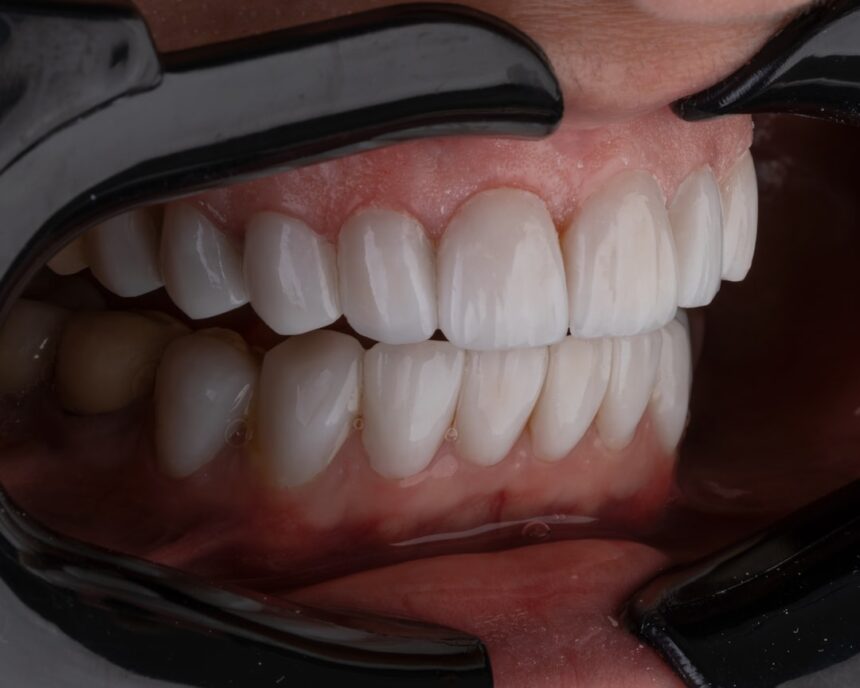
Dental anatomy diagram showing primary and permanent teeth development across the human lifespan
Humans naturally develop only two sets of teeth—primary and permanent—due to genetic programming. While supernumerary teeth occasionally occur, they represent rare anomalies, not evidence of latent third-set capacity. — Photo by Kamal Hoseinianzade on Unsplash (Unsplash License)
SHARE
1 min read|130 words

Despite persistent rumors and hopeful speculation, humans cannot grow a third set of adult teeth. Our genetic blueprint encodes only two dental generations: primary teeth in childhood and permanent teeth in adulthood. This two-set limitation reflects evolutionary constraints shaped over millions of years, unlike sharks and certain reptiles that continuously replace teeth throughout their lives.

While supernumerary teeth—extra teeth developing beyond the normal set—do occur in rare cases (1–4% of the population), these isolated anomalies represent developmental variations rather than evidence of hidden regenerative capacity. Modern dental science is advancing toward regenerative approaches that may one day enable tooth replacement, but clinically proven methods for producing functional replacement teeth at scale remain years away. Understanding these biological realities helps patients and practitioners focus on realistic treatment options available today.

Was this article helpful?

GMJ Brief · Announcement

📰 Read the full article: Can Humans Grow a Third Set of Adult Teeth? What the Evidence Actually Shows →

Share This Article
Facebook LinkedIn Bluesky Copy Link Print
GMJ
ByProf. Giorgi Pkhakadze
Follow:
Prof. Giorgi Pkhakadze, MD, MPH, PhD, is Editor-in-Chief of the Georgian Medical Journal and Chair of the Public Health Institute of Georgia (PHIG). He is Professor and Head of the Department of Social and Behavioural Sciences at David Tvildiani Medical University, and Secretary/Treasurer of the UEMS Section of Public Health. ORCID: 0000-0001-7609-4515.

Submit Your Paper →

Georgia's peer-reviewed open-access medical journal. No APC until January 2027.
Submit Manuscript →
Carbohydrate Ingestion During Endurance Exercise: Meta-Analysis Shows Modest Glycogen Sparing Effect

A meta-analysis of 31 crossover trials reveals that carbohydrate ingestion during prolonged…

Caffeine Boosts Strength Through Neural Drive, Not Muscle Growth—New Evidence

A randomized controlled trial shows caffeine enhances strength and power in resistance-trained…

How the gut absorbs nutrients: a seven-meter journey from mouth to colon

The human gastrointestinal tract divides into five specialized absorption zones, each extracting…

Submit Your Paper to GMJ

No APC until January 2027.
Submit Manuscript →

You Might Also Like

Global HealthPolicy & Systems

WHO urged to declare climate crisis a global public health emergency

By
Prof. Giorgi Pkhakadze
26/05/2026

EBOLA OUTBREAK – DRC/UGANDA CROSS-BORDER SPREAD – PHEIC DECLARED

By
Prof. Giorgi Pkhakadze
31/05/2026
Healthcare professional consulting with patient about mental health in primary care setting

New BMJ Framework Empowers UK Primary Care in Suicide Prevention

By
Prof. Giorgi Pkhakadze
13/07/2026
Medical illustration showing autoimmune disease impact on myelodysplastic syndrome outcomes

Study Quantifies Autoimmune Disease Impact on Myelodysplastic Syndrome Survival Outcomes

By
Prof. Giorgi Pkhakadze
24/06/2026
Facebook Twitter Youtube Instagram
Company
  • Privacy Policy
  • Contact US
  • GMJ Journal
  • Submit Manuscript
  • Editorial Team
  • Register at GMJ
  • Terms of Use

Subscribe to GMJ News — Click here

Join Community
© 2026 Georgian Medical Journal (GMJ). Published by the Public Health Institute of Georgia (PHIG). All rights reserved.
Welcome Back!

Sign in to your account

Username or Email Address
Password

Lost your password?

Not a member? Sign Up