By using this site, you agree to the Privacy Policy and Terms of Use.
Accept
GMJ NewsGMJ NewsGMJ News
  • Latest News
    • GMJ Briefs
  • Podcast & Media
    • Podcast Episodes
    • GMJ Audio
    • GMJ Videos
  • Research Digest
    • New Studies
    • Georgian Research
    • Data & Numbers
  • Policy & Systems
    • Health Policy
    • Quality & Safety
    • Migration & Health
    • Global Health
  • Practice
    • Clinical Updates
    • Case Discussions
    • Pharmacy & Prescribing
    • Ingredients A-Z
  • Dictionary
    • Browse A–Z
    • About the Project
    • Contribute a Term
  • Perspectives
    • Editorial
    • Explainers
    • Voices
    • Letters
  • Health Topics
  • GMJ Articles
    • Vol. 1 Issue 2 (2026)
    • Vol. 1 Issue 1 (2026)
    • Pre-Launch Articles (2025)
  • Read the Journal →
  • About GMJ News
Notification Show More
Font ResizerAa
GMJ NewsGMJ News
Font ResizerAa
  • Latest News
    • GMJ Briefs
  • Podcast & Media
    • Podcast Episodes
    • GMJ Audio
    • GMJ Videos
  • Research Digest
    • New Studies
    • Georgian Research
    • Data & Numbers
  • Policy & Systems
    • Health Policy
    • Quality & Safety
    • Migration & Health
    • Global Health
  • Practice
    • Clinical Updates
    • Case Discussions
    • Pharmacy & Prescribing
    • Ingredients A-Z
  • Dictionary
    • Browse A–Z
    • About the Project
    • Contribute a Term
  • Perspectives
    • Editorial
    • Explainers
    • Voices
    • Letters
  • Health Topics
  • GMJ Articles
    • Vol. 1 Issue 2 (2026)
    • Vol. 1 Issue 1 (2026)
    • Pre-Launch Articles (2025)
  • Read the Journal →
  • About GMJ News
Follow US
GMJ News > Research Digest > New Studies > Childhood junk food may rewire brain appetite circuits, study finds
New StudiesResearch Digest

Childhood junk food may rewire brain appetite circuits, study finds

GMJ
Last updated: 27/05/2026 01:08
By
GMJ Research Desk
Share
6 Min Read
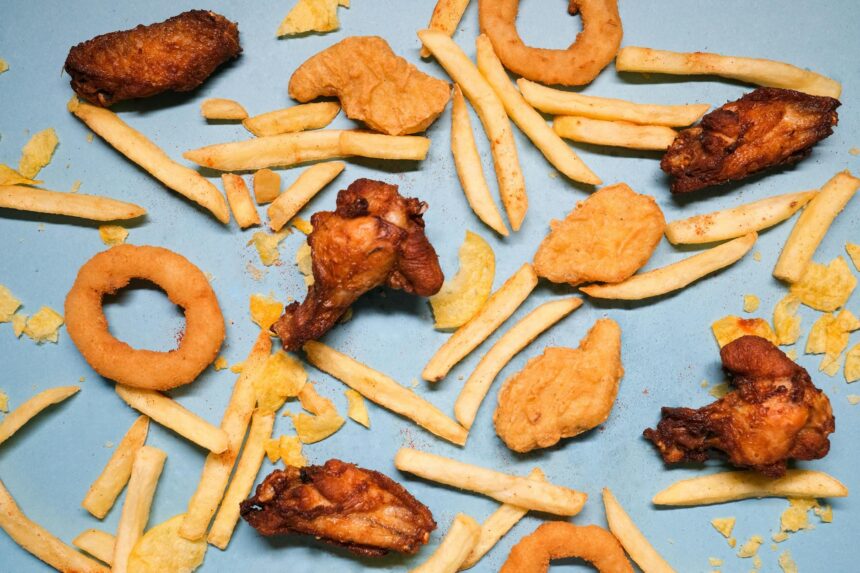
Brain scan showing appetite control regions affected by childhood junk food consumption
New research reveals that consuming junk food during childhood may permanently alter brain circuits controlling appetite, with effects persisting into adulthood even after dietary improvements. Certain gut bacteria show promise for partial intervention. — Photo: Alena Shekhovtcova / Pexels
SHARE
🎧 Listen to this article5:21 min · 621 words · GMJ Audio
3 min read|621 words

Consuming high amounts of junk food during childhood may alter brain circuits that control appetite and feeding behavior, according to new research reported in Science Daily. The study suggests these neurological changes persist into adulthood, even after transitioning to healthier eating patterns.

Contents
      • Brain regions affected by childhood junk food consumption
  • Critical developmental window identified
  • Persistent effects despite dietary improvements
  • Gut bacteria show promise for intervention
  • Implications for childhood nutrition policy
    • Key takeaways
  • Frequently asked questions
    • Can adults reverse brain changes from childhood junk food consumption?
    • What specific brain regions are affected by childhood junk food consumption?
    • How early in childhood do these brain changes occur?
Long-lasting changes
in brain appetite circuits from childhood junk food consumption

Brain regions affected by childhood junk food consumption

Areas showing disrupted appetite control after high-fat, high-sugar diets

Source: Science Daily, 2026 | Georgian Medical Journal News

Critical developmental window identified

The research, as reported by Science Daily, highlights vulnerability during childhood brain development when dietary patterns can establish lasting neurological pathways. Scientists observed that high-fat, high-sugar diets altered feeding behavior patterns and disrupted key appetite-control regions in developing brains.

Submit Your Paper
GMJ_Submit_Banner

These findings align with broader research on clinical understanding of how early nutritional exposures shape lifelong health outcomes. The study provides mechanistic evidence for why childhood dietary interventions may be particularly crucial for preventing adult metabolic disorders.

Persistent effects despite dietary improvements

The neurological changes appeared to persist even after participants switched to healthier eating patterns in adulthood, according to the Science Daily report. This suggests that the brain rewiring from childhood junk food consumption creates a biological predisposition that healthy adult choices cannot fully reverse.

Gut bacteria show promise for intervention

Despite the concerning persistence of brain changes, researchers discovered that certain gut-friendly bacteria and prebiotic fibers showed potential to partially reverse some damage, according to the Science Daily report. This microbiome-based approach represents a promising avenue for therapeutic intervention.

The gut-brain axis research has increasingly shown how intestinal bacteria can influence neurological function and behavior. These findings suggest that targeted probiotic interventions during childhood might help protect against junk food-induced brain changes.

Implications for childhood nutrition policy

The study’s findings have significant implications for childhood nutrition policies and parental feeding practices. If brain rewiring from early junk food consumption persists as the research suggests, prevention becomes far more critical than treatment approaches.

The research supports comprehensive approaches that address both individual behavior change and environmental factors that influence children’s food choices, as discussed in recent health policy discussions.

High-fat, high-sugar diets during childhood change feeding behavior and disrupt appetite-control regions in the brain, with effects that persist into adulthood.

— Science Daily report (2026)

Key takeaways

  • Childhood junk food consumption may alter brain circuits controlling appetite and feeding behavior
  • These neurological changes persist into adulthood despite later dietary improvements
  • Certain gut bacteria and prebiotic fibers show promise for partially reversing some brain damage
  • The findings emphasize the importance of early childhood nutrition interventions
  • Prevention strategies may be more effective than treatment approaches for addressing diet-related brain changes

Frequently asked questions

Can adults reverse brain changes from childhood junk food consumption?

According to the Science Daily report, brain changes from childhood junk food consumption largely persist into adulthood, even after switching to healthier diets. However, certain gut bacteria and prebiotic fibers show promise for partially addressing some of the neurological changes.

What specific brain regions are affected by childhood junk food consumption?

The Science Daily report indicates that junk food disrupts appetite-control regions in the brain, though specific regional details would require access to the original research paper.

How early in childhood do these brain changes occur?

The Science Daily report suggests that the developing brain is particularly vulnerable during childhood, though the exact timing would require further detail from the original research.

These findings represent important new understanding of the long-term consequences of childhood nutrition choices. As research continues to reveal the persistence of early dietary impacts on brain development, the evidence suggests that protecting children from excessive junk food exposure remains an important strategy for preserving healthy brain development throughout life.

Source: Childhood junk food may rewire the brain for life

Was this article helpful?

Disclaimer. This article is health journalism intended for general information and education. It is not medical advice and is not a substitute for professional diagnosis or treatment. Always consult a qualified healthcare provider about your individual circumstances. Full disclaimer →

Related Coverage

Ethiopia Study Reveals Stakeholder Concerns Over Novel Malaria TreatmentsAug 23, 2026
Sitafloxacin monotherapy matches doxycycline-rifampicin for brucellosis treatment in landmark trialAug 23, 2026
Ultra-processed foods linked to higher kidney cancer risk in large US studyAug 23, 2026
Fish Oil Supplements Reach the Brain but Show No Cognitive Benefit, Two-Year Study FindsAug 22, 2026
Explore more on this topic:🧭 Nutrition hub🧭 Rheumatoid Arthritis hub🧭 Essential Tremor hub
🔥 Most read this week
1High-Dose Zinc Supplements May Create Copper Deficiency, Warn Nutrition Experts
2Creatine and Kidney Damage: What the Evidence Actually Shows
3L-Theanine Improves Sleep Quality Without Drowsiness, Systematic Review Finds
4Evidence-Based Hydration Protocol: How Much Fluid and Sodium Athletes Actually Need
Related reference
  • Iron · Ingredient
PG
Editorial oversight
Prof. Giorgi Pkhakadze, MD, MPH, PhD
Editor-in-Chief, GMJ News
Full profile →  ·  ORCID 0000-0001-7609-4515
Medical disclaimer. This article is health journalism intended for general information. It is not medical advice and is not a substitute for consultation with a qualified healthcare professional. Always seek your physician's advice regarding any medical condition.
Editorial standards. This article was produced under the GMJ News editorial process, with oversight by the GMJ Editorial Board. Our editorial process. Spotted an error? Contact the editorial team.

📬 GMJ Health Digest
Evidence-based medical news, once a week. Free, no spam, unsubscribe anytime.
TAGGED:appetite controlbrain developmentchildhood nutritionjunk foodneuroscience
Share This Article
Facebook LinkedIn Bluesky Copy Link Print
GMJ
ByGMJ Research Desk
Follow:
GMJ Research Desk is part of GMJ News, the newsroom of the Georgian Medical Journal (gmj.ge), published by the Public Health Institute of Georgia. Every article is editorially reviewed before publication.
Leave a Comment Leave a Comment

Leave a Reply Cancel reply

Your email address will not be published. Required fields are marked *

Submit Your Paper →

Georgia's peer-reviewed open-access medical journal. No APC until January 2027.
Submit Manuscript →
Ethiopia Study Reveals Stakeholder Concerns Over Novel Malaria Treatments

A qualitative study in Ethiopia reveals that health workers and patients view…

Sitafloxacin monotherapy matches doxycycline-rifampicin for brucellosis treatment in landmark trial

A multicenter randomized trial in The Lancet Regional Health – Western Pacific…

Ultra-processed foods linked to higher kidney cancer risk in large US study

A prospective analysis of over 300,000 US adults found that higher consumption…

Submit Your Paper to GMJ

No APC until January 2027.
Submit Manuscript →

You Might Also Like

Medical illustration comparing manufactured biotherapeutic capsules to traditional fecal microbiota transplant procedure
New StudiesResearch Digest

Live biotherapeutic matches donor FMT in treating recurrent C. diff infection

By
GMJ Research Desk
06/06/2026
Scientific illustration showing zinc and copper interaction in intestinal cells with metallothionein protein
New StudiesResearch Digest

Zinc Supplements Above 50mg Deplete Copper Through Hidden Cellular Mechanism

By
GMJ Research Desk
27/05/2026
Comparison chart showing vitamin content in fresh versus frozen vegetables and fruits
New StudiesResearch Digest

Fresh vs Frozen Produce: New Research Challenges Long-Held Nutritional Beliefs

By
GMJ Research Desk
27/05/2026
Brain health and economic charts showing global impact dataIllustrative image · Photo by Amel Uzunovic on Pexels (Pexels License)
Global HealthHealth PolicyPolicy & Systems

Global Commission Launches Framework Linking Brain Health to Economic Resilience

By
GMJ Policy Desk
26/06/2026
Facebook Twitter Youtube Instagram
Company
  • Privacy Policy
  • Contact US
  • GMJ Journal
  • Submit Manuscript
  • Editorial Team
  • Register at GMJ
  • Terms of Use

Subscribe to GMJ News — Click here

Join Community
© 2026 Georgian Medical Journal (GMJ). Published by the Public Health Institute of Georgia (PHIG). All rights reserved.
Welcome Back!

Sign in to your account

Username or Email Address
Password

Lost your password?